






Is an electric joint roller better than a manual one?
An electric joint roller is better only when its mechanism matches your papers or cones and reduces the handwork you want to avoid; a manual roller is the better fit when you want to shape loose papers without power. Electric does not mean fully automatic, and an electric cigarette injector is not interchangeable with a joint roller. Choose by what the machine fills or rolls, not by whether it has a motor.
- Electric joint roller vs manual: choose by paper format and handwork, not the motor alone.
- Manual rollers shape loose papers; cigarette injectors fill preformed tubes rather than roll loose sheets.
- Headshop smoking-accessory shoppers should check material compatibility before choosing an electric machine.
- Powered operation does not eliminate loading, preparation, cleaning, or checking the finished result.
Why this matters
The wrong mechanism is a bigger problem than choosing manual instead of electric. A machine that fills cigarette tubes does not become a loose-paper roller because a listing calls it a rolling machine.
Start with the finished format you want. The joint rolling machines guide provides a related category overview, but your buying decision still needs to start with the individual machine's instructions. For a 2026 purchase, check the supported material, paper format, and loading method before comparing convenience features.
Is an electric joint roller better than a manual one?
A manual roller wins for power-free loose-paper rolling; a compatible electric machine wins when powered assistance addresses a specific task. Neither mechanism removes the need to prepare material and load it correctly.
Use this comparison to separate the actual trade-offs. The electric column applies only after you confirm that the machine supports your intended material and format.
| Decision point | Manual roller | Compatible electric machine |
|---|---|---|
| Best for | Shaping loose papers without electrical power | Reducing the hand-driven work of a supported process |
| Your role | Load, operate the mechanism, feed paper, and finish | Prepare, load, activate, inspect, and finish as required |
| Power | No charging or outlet needed | Requires its specified power source |
| Main advantage | Direct control over a simple mechanical process | A motor performs part of the mechanical work |
| Main limitation | You still operate the roller by hand | Powered operation does not guarantee automatic loading |
| Compatibility check | Paper dimensions and roller design | Material, paper or tube format, and machine design |
| Cleaning check | Follow instructions for the rolling surfaces | Follow instructions for the feed path and electrical housing |
Do not treat this as a speed ranking. Without comparable measurements covering preparation, loading, operation, and cleanup, a faster motor is not evidence of a faster overall routine.
The format matters more than the label
A loose-paper roller shapes material inside a rolling mechanism and feeds a sheet around it. A cone filler puts material into an already formed cone. A cigarette injector transfers material into a preformed cigarette tube.
Those are different jobs. A powered cone filler and a manual loose-paper roller do not offer the same workflow, even when both appear under a broad rolling-machine category. Read the operating description rather than relying on the category name.
Manual rollers: best for loose papers without power
Choose a manual roller when your priority is a hand-operated device that works with compatible loose papers. You control the rolling action, and you do not need to manage a battery or power connection. The trade-off is straightforward: the device guides the process, but your hands still do the work.
Manual does not mean universal. Roller dimensions and the manufacturer's paper requirements still determine what fits. A larger roller is not automatically the right choice for every paper or finished shape.
Two examples in Headshop's smoking-accessory selection illustrate why format details deserve attention:
| Manual option | Best for | Stated listing detail | Limitation to check |
|---|---|---|---|
| RAW Phatty Roller Rolling Machine - 125mm 6pcs | Shoppers seeking the listed 125mm roller format | 125mm rolling machine; six-piece display listing | Confirm paper compatibility and purchase quantity |
| OCB Bamboo Roller - 1 1/4" 6pcs | Shoppers seeking the listed 1 1/4-inch format | Bamboo roller; six-piece listing | Confirm paper compatibility and purchase quantity |
The RAW listing identifies a 125mm roller, while the OCB listing uses the 1 1/4-inch format designation. Do not convert those labels into assumptions about finished capacity. Check the exact supported paper format in the instructions.
These are manual options, not evidence that a particular roller produces a better result than an electric machine. Also notice the quantities: both titles describe multipiece listings rather than clearly identifying a single roller purchase.


Electric machines: best for a confirmed compatible task
Choose an electric machine when you can identify exactly which action the motor replaces. That action might be feeding material into a supported format rather than rolling a loose sheet. You still need to understand the steps before and after activation.
The main advantage is powered assistance. The limitation is that the machine's feed system, consumables, and intended material define what it can do. Do not assume that a motor makes an incompatible paper or material usable.
The Powermatic IV Electric Cigarette Injector, for example, is described as filling kingsize and 100mm cigarette tubes. That specification establishes a tube-filling use, not loose-paper joint rolling. It does not establish compatibility with other materials.
For your 2026 shortlist, reject any listing that leaves the intended consumable unclear. Ask whether it uses loose sheets, preformed cones, or cigarette tubes, then check the manufacturer's stated material compatibility. A product title alone is not enough to answer both questions.
Why the better choice varies
The better choice depends on the task you want to simplify, not a blanket electric-versus-manual ranking. Use these factors to narrow the decision:
- Paper format: Loose sheets, preformed cones, and cigarette tubes require different mechanisms. Start here.
- Supported material: A tobacco injector's stated function does not establish suitability for another material. Follow the manufacturer's requirements.
- Handwork: Identify whether you want help with rolling, filling, holding small parts, or repeated operation. A motor addresses only the actions it actually performs.
- Power requirements: A manual roller needs no electrical power. An electric machine needs its specified power source and handling precautions.
- Preparation and cleanup: Include loading and cleaning in the workflow. Neither type removes those responsibilities.
- Purchase quantity: Multipiece display listings are different purchases from individual devices. Read the complete title and package contents.
For Headshop shoppers, the strongest reason to choose manual is a preference for loose-paper rolling without power. The strongest reason to choose electric is a verified powered function that addresses your particular difficulty.
How do you choose the right mechanism?
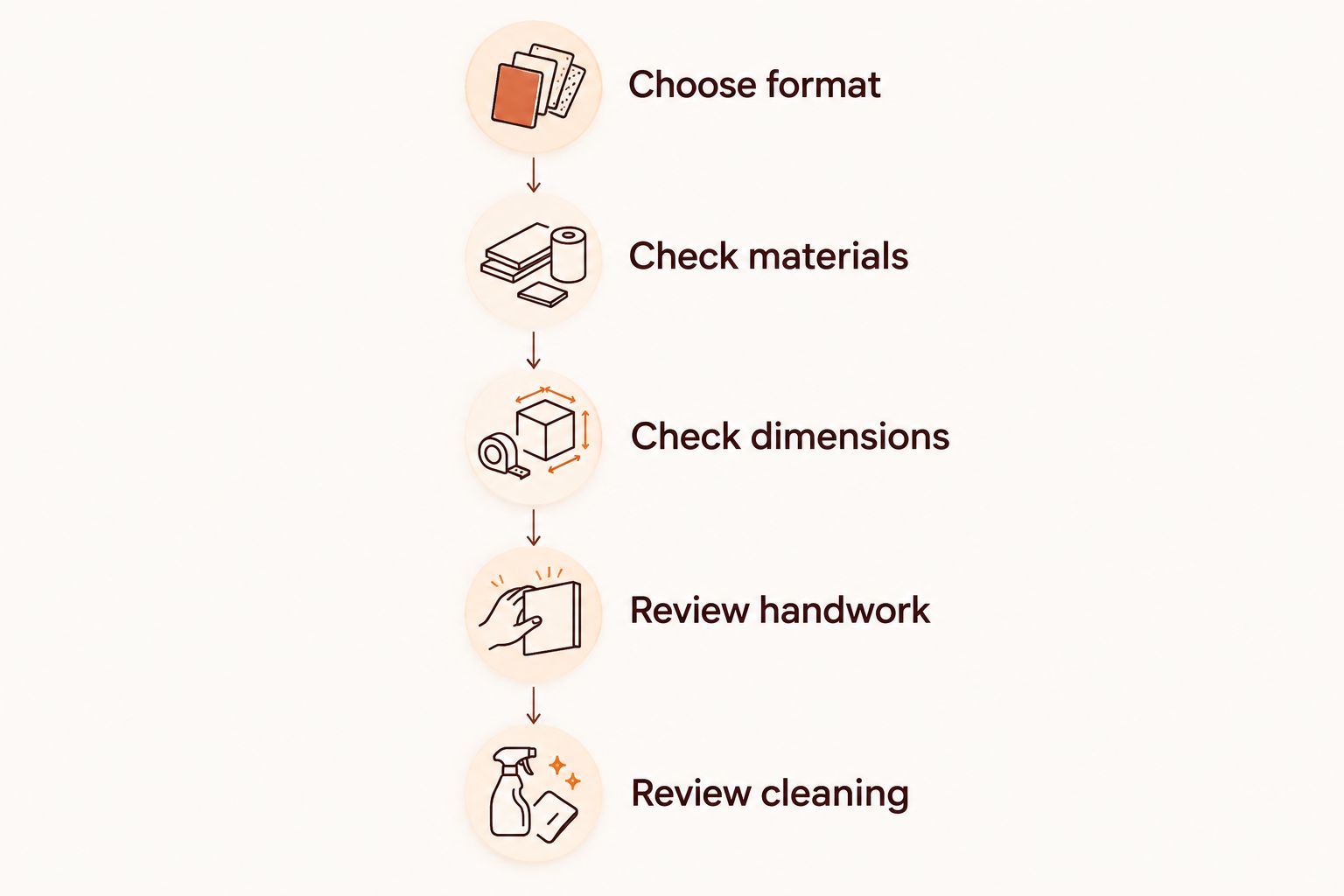
Use this 2026 buying checklist before comparing extra features. A machine that fails the format or material check is not a suitable choice, regardless of its controls.
- Choose format. Decide whether you want loose-paper rolling, cone filling, or tube injection. Do not treat these as interchangeable.
- Check materials. Read the manufacturer's intended-use statement. Exclude machines that do not explicitly support your intended material.
- Check dimensions. Match the required papers, cones, or tubes to the machine's specifications. Do not infer compatibility from appearance.
- Review handwork. Read the complete operating sequence. Identify what you must load, hold, align, activate, and finish yourself.
- Review cleaning. Check which parts are removable and which cleaning methods are permitted. Keep liquids away from electrical components unless the instructions explicitly allow otherwise.
The order matters. Power and convenience become useful comparison points only after format and material compatibility are settled.
If filter placement is part of your difficulty, inspect that step separately. The guide to loading filter tips into an automatic joint rolling machine addresses that part of the process; it does not replace the instructions for your particular device.
Check the whole routine, not just activation
Picture the device on your actual work surface. You need to access the loading area, handle the consumables, clear leftover material, and store the machine afterward. A convenient activation button does not answer those practical questions.
If a demonstration skips preparation or cleanup, do not use it as proof of overall convenience. Look for the complete operating sequence and compare the steps that matter to you. Avoid assigning a time saving that the listing does not document.
Is an electric roller easier if your hands get tired?
An electric machine reduces only the hand-driven actions its motor performs. It does not necessarily remove the need to pinch a paper, place a tube, load material, or clean a narrow opening.


If hand fatigue is your main concern, assess each action separately. Check the loading opening, controls, required grip, and consumable placement rather than buying on the word electric. For a 2026 purchase, a clear operating demonstration is more useful than an unsupported promise of effortless use.
A manual roller is not automatically unsuitable either. Its usefulness depends on which movements are difficult for you. Neither category deserves an accessibility claim based on its name alone.
Does an electric roller make a more consistent result?
Powered movement alone does not establish a more consistent finished result. Preparation, loading, consumable compatibility, and the mechanism all remain part of the process.
A motor performs a mechanical action, but that fact does not prove uniform filling or packing across different inputs. Likewise, a manual roller guides the shape without guaranteeing that every load is identical. Follow the instructions and inspect the finished result rather than treating automation as quality control.
When comparing listings, separate stated features from outcome claims. A density setting describes a control; it does not, by itself, prove better results than another machine.
Should a beginner start with a manual roller?
Start with a manual roller when you want compatible loose papers and power-free operation. Start with an electric device only when its supported format and powered function match your needs.
Being a beginner does not settle the choice. Someone who wants to fill preformed cones has a different requirement from someone learning to feed loose papers through a roller. Choose the mechanism first, then evaluate how clearly the instructions explain loading and finishing.
Headshop is best for adult shoppers who want smoking accessories alongside bongs, pipes, and vaporizers. For this decision, keep the purchase focused: the right roller is the one that supports your intended format without adding an unwanted workflow.
FAQ
What's better in 2026: an electric joint roller or a manual roller?
A manual roller is better for compatible loose-paper rolling without power; an electric machine is better when its verified powered function addresses your needs. Confirm the material and consumable format before comparing convenience.
Is an electric cigarette injector the same as a joint roller?
No. A cigarette injector fills preformed cigarette tubes, while a loose-paper roller shapes and wraps a sheet. An injector's tobacco specifications do not establish compatibility with other materials.
Does an electric rolling machine do everything for you?
No. Powered operation does not establish automatic preparation, loading, finishing, or cleaning. Read the complete operating sequence to see which tasks remain manual.
Can I use any rolling paper in a manual roller?
No. Use papers that match the roller manufacturer's specified format and dimensions. A roller's length alone does not establish compatibility with every paper.
Is a manual roller better if I do not want to charge anything?
Yes. A manual roller operates without electrical power. You still need compatible papers and the hand movements required to operate its mechanism.
Will an electric roller solve problems with hand fatigue?
An electric machine assists only with the actions its motor performs. Check loading, consumable placement, controls, and cleaning separately to assess the remaining handwork.
Does a bigger roller mean it works with more formats?
No. A larger stated dimension does not establish support for every paper, cone, or tube. Use the manufacturer's compatibility requirements rather than assuming that bigger means universal.
One last thing
The most useful word on a rolling-machine listing is often injector, not electric. Injector tells you that the machine fills a preformed tube; electric tells you how part of its mechanism is powered.
Keep that distinction on your 2026 shopping checklist. Confirm the format first, verify material compatibility second, and compare manual effort only after both checks pass.
Related guides