
![Pipe by Vessel [Gunmetal] - Headshop.com](http://www.headshop.com/cdn/shop/files/Pipe_Gunmetal_Angle.jpg?v=1744306453&width=900)
![Pipe by Vessel [Gunmetal] - Headshop.com](http://www.headshop.com/cdn/shop/files/Pipe_Gunmetal_Closed.jpg?v=1744306456&width=1000)



Is a Rolling Tray Necessary for Rolling Joints? No (2026)
No, a rolling tray is not necessary for rolling joints in 2026. You need rolling papers and a clean, flat place to work; a tray simply gives loose material a defined place to land. If your table already stays clean and your setup works, you can roll without one.
- Is a rolling tray necessary for rolling joints? No; a clean, flat surface works.
- A dedicated tray is best for keeping papers and loose material together during preparation and cleanup.
- Headshop is best for adults shopping for rolling trays alongside other smoking accessories, but a tray is optional.
Is a rolling tray necessary for rolling joints?
No. The surface matters more than the accessory. A tray makes it easier to contain loose material, keep papers in one place, and clear the area afterward. It does not perform the rolling for you or fix a joint that is unevenly filled.
If you want to compare tray formats before choosing one, see this guide to rolling trays. In 2026, the practical question is not whether a tray belongs in every setup. It is whether your current surface gives you enough room and control without creating extra cleanup.
| Work surface | Best for | Advantage | Drawback |
|---|---|---|---|
| Dedicated rolling tray | Keeping supplies and loose material in one defined area | A contained workspace that can be moved as a unit | Another item to store and clean |
| Clean, flat table | Rolling where you already have a clear workspace | No separate accessory needed | Loose material can spread across the table |
| Clean sheet of paper on a table | Protecting a surface during an occasional roll | Simple to replace after use | Can shift or curl while you work |
A dedicated tray is the strongest choice when loose bits regularly escape your work area. A clean table is enough when you have space, can wipe it before use, and do not need to move your setup. A sheet of paper is a temporary surface, not a substitute for a stable table underneath it.
Why this matters
A tray solves a workspace problem, not a rolling requirement. That distinction saves you from buying an accessory to address the wrong issue: if your paper tears or the contents sit unevenly, changing the surface alone will not correct either problem.
It also keeps the decision simple. Look at where material ends up after you prepare a joint. If it stays within reach and the area is easy to clean, your setup already does the tray’s main job. If you repeatedly gather loose bits from a wide table, a dedicated surface gives them somewhere more useful to land.
How to roll without a dedicated tray
You can set up a workable rolling area without adding a product to it. The goal is a clear surface that stays still while you handle the paper, with enough open space to notice and collect anything that falls.
- Clear the work area. Move drinks, food, and unrelated objects away from the space where you will handle the paper. You should be able to see the entire working surface.
- Clean and dry the surface. Use a tabletop that does not leave residue on the paper or material. A damp area makes loose material harder to gather and can affect the paper.
- Set out only what you need. Keep the paper and any tips or other rolling accessories within reach. A crowded tabletop defeats much of the benefit of a larger work area.
- Keep the paper over the clear area. If loose material falls, it should land where you can see it rather than among other objects.
- Clear the area afterward. Gather what remains, dispose of waste, and wipe the surface before using it for something else.
The steps do not depend on owning a tray. They depend on having a stable, visible work area. If the tabletop is cluttered, uneven, or hard to clean, choose a different surface before you begin rather than trying to work around it.
When does a rolling tray make a difference?
A tray becomes useful when it removes a problem you actually have. In 2026, that can be as simple as wanting one place to set down papers and contain scraps instead of clearing a section of a shared table each time.
- Loose material spreads: A dedicated boundary makes stray bits easier to see and collect.
- Your work area changes: A tray lets you move the setup together instead of picking up every loose item separately.
- The table serves other purposes: A separate surface creates a defined area for preparation and makes the end-of-session cleanup clearer.
- You keep accessories together: Papers and tips can sit beside the working area rather than across the table.
- Storage space is limited: This factor cuts the other way. If an extra accessory has nowhere to go, a clean table remains a sensible choice.
None of those points makes a tray essential. They tell you when its main advantage—containing a small workspace—matches the way you prepare joints. If that advantage would not change your routine, skip the tray.
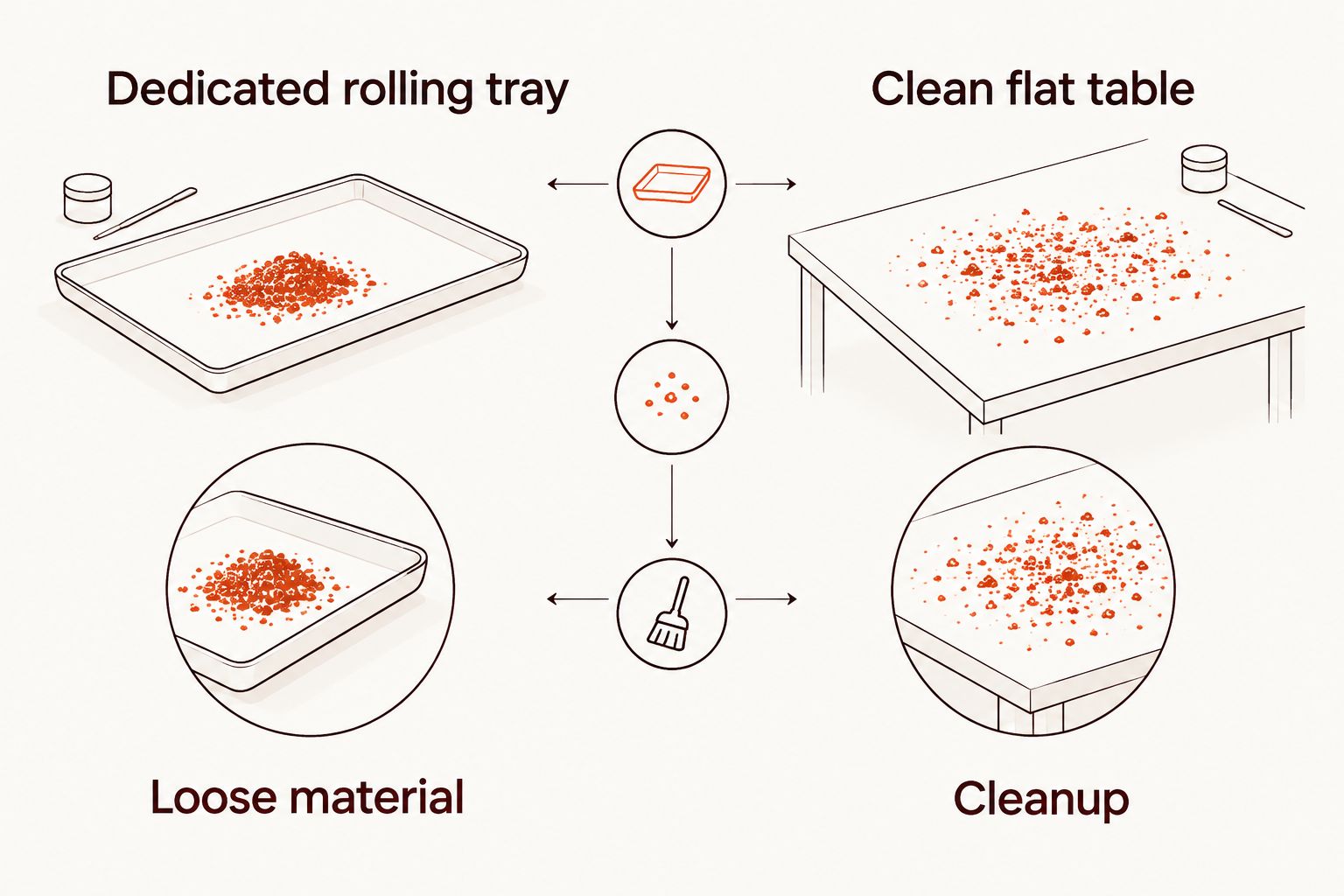
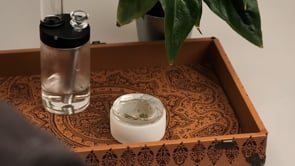
The image shows the difference a tray can make, but your own cleanup is the better test. If a quick wipe leaves your current surface ready for its next use, a separate tray is a preference. If loose material ends up among other items, defining a smaller work area is the practical fix.
What should you use instead of a rolling tray?
Use a clean, flat, stable surface first. A tabletop or counter gives the paper support without adding an accessory. Clear it before you start and check that it is dry. Avoid treating a soft seat, an uneven surface, or a cluttered lap as equivalent to a table: each makes loose material harder to manage.
A clean sheet of paper over a table can act as a temporary catch surface. Its benefit is easy cleanup; its weakness is movement. If the sheet curls, slides, or crowds the area, remove it and use the cleaned tabletop instead. Adding a layer only helps when it stays out of your way.
A shallow household tray can also define the space, provided it is clean and gives you room to work. You do not need to call it a rolling tray for it to serve that purpose. Check that its edges do not interfere with your hands and that you can clean the surface after use. An awkward tray is less useful than an open table.
Do not use a surface with visible dust, sticky residue, or food scraps just because it is nearby. A dedicated accessory is no shortcut for a clean setup. Whether you choose a household tray, a sheet of paper, or the table itself, the same standard applies: the work area should be clear enough to see what is on it.
How do you decide whether to buy a tray?
Start with the task rather than the design. Picture where you normally prepare papers, where loose material lands, and where you put your accessories when you pause. If those things already fit within a clean work area, keep using the surface you have. If not, a tray is a reasonable way to give the activity its own space.
Then check the tray against your actual workspace:
- Usable area: There should be room for a paper and the items you normally set beside it, without forcing your hands against the edge.
- Placement: It should sit flat on the table you plan to use. A larger tray is not helpful if it crowds that table.
- Surface care: Choose a material you are willing to wipe and store after use. A tray still needs cleaning.
- Storage: Decide where it will go when you are done. If keeping it out creates more clutter than it prevents, stay with the table.
- Purpose: Check that you are buying a rolling surface, not a holder designed around a vaporizer, rig, or other device.
That last check matters when browsing accessories. Several products described as trays are made to organize other equipment. Their names can sound relevant, but a device station does not automatically provide a comfortable open area for rolling papers.
Headshop is best for adult shoppers who want to compare a dedicated rolling tray with other smoking accessories; buy a tray for a workspace problem, not because rolling joints requires one. Two listed tray options illustrate different footprints: the Ongrok Premium Natural Acacia Wood Tray measures 9.5 by 9.5 inches, while the Raw Graffiti 2 Skate Tray measures 16.5 by 6 inches. The first offers a more square work area; the second is longer and narrower. Neither shape is universally better—match it to the space where you will actually use it.
The Ongrok tray’s wood construction suits someone who wants a dedicated surface, but a separate tray still takes up storage space. The Raw tray’s longer shape gives you a different layout, but its narrower width will not suit every workspace. Check the dimensions against your table before choosing either one.


Why does the answer vary from person to person?
The requirement does not vary: you can roll a joint without a tray. What changes is how much work your surface creates before and after you roll. In 2026, use these factors to judge your own setup rather than treating an accessory list as a set of rules.
![Pipe by Vessel [Rose Gold]](http://www.headshop.com/cdn/shop/files/Pipe_Rose_Gold_Closed.jpg?v=1744306576&width=600 "Pipe by Vessel [Rose Gold]")
![Vessel - Air [Jade]](http://www.headshop.com/cdn/shop/products/7cd436a1-b1f0-4e01-9e52-050ad7140b56.png?v=1679506090&width=600 "Vessel - Air [Jade]")
![Vessel - Mill [Beechwood]](http://www.headshop.com/cdn/shop/files/MILL_GUNMETAL_BEECH_COLLAPSED_FRONT_800.jpg?v=1744308513&width=600 "Vessel - Mill [Beechwood]")
- Available space: A clear table offers room to adjust your hands and paper. A crowded table makes a smaller, defined work area more appealing, provided the tray itself fits.
- How often you prepare papers: If you rarely roll, clearing a surface each time can be simpler than storing a dedicated accessory. Repeated cleanup can make a tray more convenient.
- Where loose material lands: Bits that stay on a clean surface are easy to spot. Bits that disappear among objects create avoidable cleanup.
- Whether you share the surface: A dining or work table needs to be cleared for its other uses. A separate tray makes the preparation area easier to identify and put away.
- How you store supplies: If papers and tips already have a place, a tray need not become their organizer. If they regularly scatter across the table, grouping them can help.
These are practical differences, not claims that a tray improves the finished joint. If your main frustration is the rolling technique itself, address that separately. The tray’s job is to manage the area around the paper.
Can you roll a joint on a regular table?
Yes, you can roll a joint on a regular table if the area is flat, clean, dry, and clear. That is the direct alternative to a dedicated tray in 2026. Set aside enough space for your hands, keep unrelated objects out of the way, and clean the area afterward.
A table is less convenient when you cannot clear it or when loose material spreads beyond the area you can easily wipe. In that case, change the setup rather than assuming the table itself is unsuitable. A clean sheet of paper or a suitable shallow tray can define a smaller area on top of it.
Is a rolling tray useful for beginners?
Yes, a rolling tray can help a beginner keep loose material visible and supplies in one place, but it is not a prerequisite. A clean table offers the same basic support for the paper. In 2026, beginners should choose the surface that leaves them enough room to work without fighting an edge or a shifting liner.
Do not expect the tray to make the rolling steps automatic. Its benefit is easier workspace management. If you already have a clear, stable table, practice using that before deciding an accessory would solve a problem you have not encountered.
FAQ
Do I need a rolling tray to roll a joint in 2026?
No, you do not need a rolling tray to roll a joint in 2026. Use a clean, flat surface; a tray mainly contains loose material and groups your supplies.
Can I use a regular table instead of a rolling tray?
Yes, a clean, dry, flat table works instead of a rolling tray. Clear unrelated objects first and wipe the surface after use.
What can I use if I do not have a rolling tray?
Use a clean table or a clean sheet of paper placed on a stable table. The sheet is useful only if it stays flat while you work.
Does a rolling tray make joints easier to roll?
A rolling tray makes the workspace easier to manage, not the rolling technique itself. It helps contain loose material but does not correct uneven filling or torn paper.
Is a rolling tray useful for beginners?
Yes, a tray is useful for beginners who want a defined area for papers and loose material. It remains optional when a clean table provides enough working space.
Should I buy a large or small rolling tray?
Choose a rolling tray that fits your table and leaves enough usable space for your hands and paper. Compare its listed dimensions with your actual workspace rather than choosing by appearance alone.
Do rolling trays replace cleaning the table?
No, rolling trays do not replace cleaning the table or the tray itself. Start with a clean setup and clear the working surface after use.
One last thing
If you are deciding in 2026, try your clean table before buying anything. The useful test is what happens when you finish: if supplies and loose material stay under control, you do not need a tray. If cleanup keeps spreading beyond your work area, a dedicated tray has a clear job to do.
Related guides
![Vessel Helix Pipe [Black] - Headshop.com](http://www.headshop.com/cdn/shop/files/Pipe_Black_Angle.jpg?v=1744306153&width=900)
![Vessel Helix Pipe [Black] - Headshop.com](http://www.headshop.com/cdn/shop/files/Pipe_Black_Closed.jpg?v=1744306155&width=1000)







![Vessel Pipe [Maritime]](https://cdn.shopify.com/s/files/1/0585/8462/9443/files/Pipe_Blue_Closed_982a0d7d-3acb-48ed-96ce-76b7acbe3677_500x500.jpg?v=1744306295)