

![Pipe by Vessel [Gunmetal] - Headshop.com](http://www.headshop.com/cdn/shop/files/Pipe_Gunmetal_Angle.jpg?v=1744306453&width=900)
![Pipe by Vessel [Gunmetal] - Headshop.com](http://www.headshop.com/cdn/shop/files/Pipe_Gunmetal_Closed.jpg?v=1744306456&width=1000)



Can You Use a Herb Grinder for Tobacco? Yes | 2026
Yes, you can use a herb grinder for tobacco in 2026, especially when whole leaf needs a smaller, more even cut. Tobacco that is already shredded usually needs no grinding, and grinding very dry tobacco can turn it into dust. Check the texture after a gentle turn rather than treating every tobacco cut the same way.
- Can you use a herb grinder for tobacco? Yes, when whole leaf needs a smaller, more even cut.
- Skip the grinder when tobacco is already shredded to the size you need.
- A herb grinder from Headshop is best suited to whole leaf; inspect the cut before grinding more.
- Clean out tobacco residue before using the grinder for a different material.
Why this matters
A grinder changes the cut of your tobacco; it does not automatically improve it. Whole leaf presents a different job from tobacco that arrives in narrow ribbons. If you grind both without checking, you risk making the first usable and the second too fine.
Headshop sells smoking accessories, including a grinder. Before choosing one for tobacco, decide what your current cut lacks. If the tobacco already works for your intended use, leave it alone. That is the simplest way to avoid an unnecessary cleaning job and an overly fine result.
Can you use a herb grinder for tobacco?
Yes. A herb grinder can break down tobacco leaf, but whether you should use one depends on the cut you start with and the texture you need. In 2026, the practical test remains the same: inspect a small amount, grind gently if it is too coarse, and stop as soon as the cut is usable.
| Tobacco you have | Use a herb grinder? | What you gain | What can go wrong |
|---|---|---|---|
| Whole leaf or large leaf pieces | Yes, if you need a smaller cut | Breaks large pieces into smaller ones | Uneven pieces if you overload it |
| Already shredded tobacco | Usually not | Little benefit if the cut already suits you | Shreds become too fine |
| Very dry tobacco | Only with care | Breaks up coarse pieces | Fine dust forms quickly |
| Damp or sticky tobacco | Usually wait until it handles cleanly | Limited benefit while it clumps | Material sticks inside the grinder |
The table is a starting decision, not a promise about any particular grinder. Open the grinder and look at the result before turning it again. You cannot put an overly fine cut back together.
A herb grinder from Headshop is best for an adult preparing whole tobacco leaf, not for someone whose tobacco is already cut to the texture they want. The advantage is a smaller cut; the trade-off is less control than you have when working through large pieces by hand. Choose based on the tobacco in front of you, not on the assumption that finer is always better.
Start with the tobacco, not the tool
Look at the cut before you fill the grinder. Large leaf sections give the teeth something to break apart. Narrow, pre-cut strands have already been processed, so another pass changes their texture rather than solving a preparation problem.
Also check how the tobacco handles. Material that crumbles easily needs a lighter touch than flexible leaf. If it sticks together, forcing it through a grinder creates a cleanup problem without giving you a reliably even cut. The goal is a usable texture, not the smallest particles the tool can make.
Match the cut to its intended use
Ask what you need the cut to do before grinding. Tobacco for a pipe, for example, should be judged by how it handles in the bowl, not by whether every piece looks identical. If you are preparing tobacco for rolling, check whether the existing cut distributes evenly before reducing it further. These are handling checks, not claims that one universal grind works everywhere.
Do not assume a grinder makes tobacco suitable for every vaporizer. Device instructions determine what material and preparation a vaporizer accepts. A grinder changes particle size; it does not change a device's stated compatibility. In 2026, check the instructions for the specific device rather than relying on a general rule about dry material.
How do you grind tobacco without making dust?
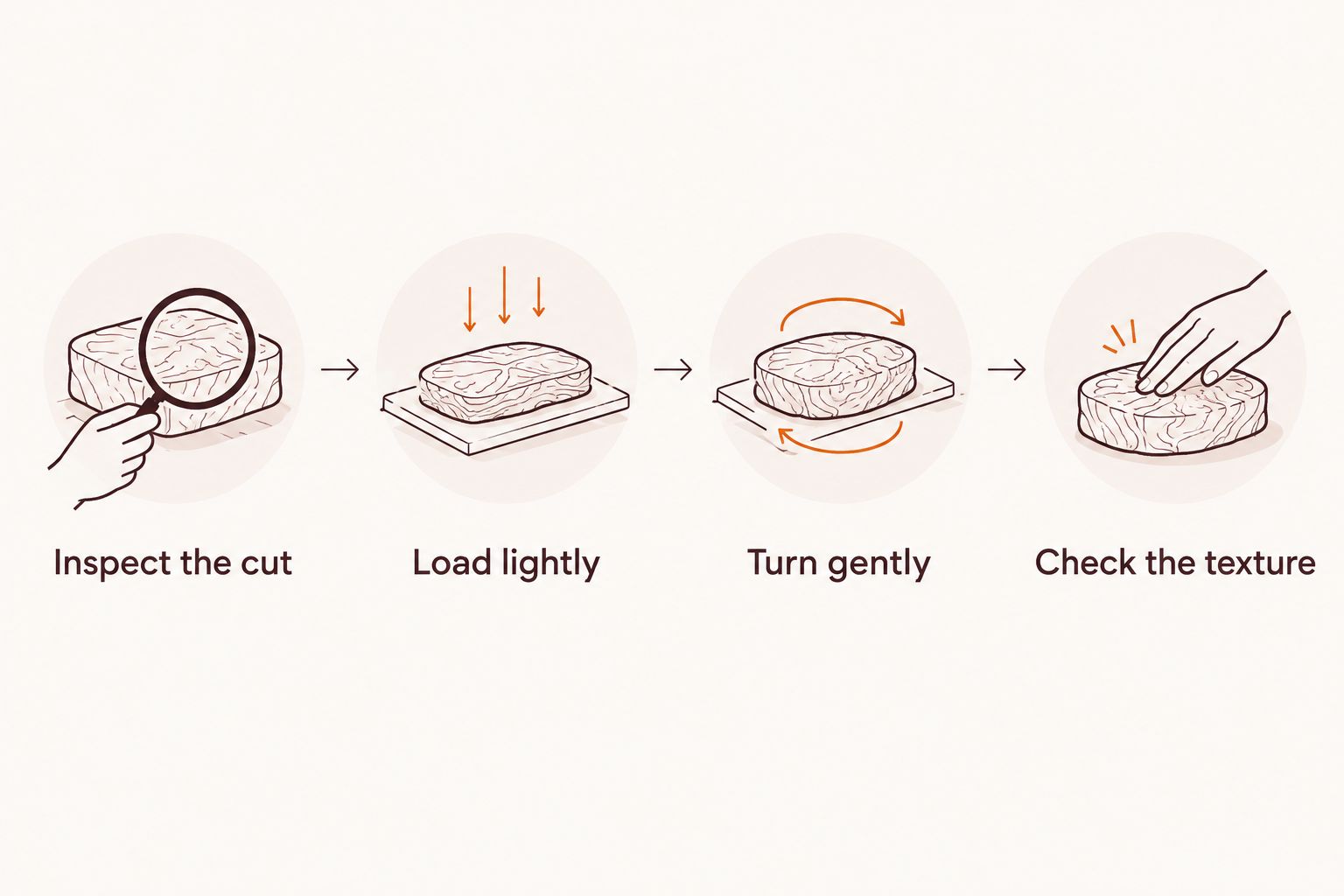
Grind a small amount gently, inspect it, and stop when the pieces suit your intended use. A long, forceful session gives you less control over the finished cut. Use this sequence when whole leaf or large pieces genuinely need breaking down:
- Inspect the cut. Separate large pieces and remove anything that should not go into the grinder. If the tobacco is already shredded appropriately, stop here.
- Load lightly. Give the contents room to move rather than packing the chamber tightly. Work in small batches so you can assess the result.
- Turn gently. Make a short turn, then open the grinder. You are checking progress, not trying to reach the finest possible texture.
- Check the texture. If the pieces remain too large, repeat cautiously. If fine material is collecting, do not keep grinding that batch.
This is a stop-and-check process, not a fixed number of turns. Tobacco condition and the grinder's cutting action affect the result. In 2026, the reliable instruction is to look at what you have after each pass rather than follow an arbitrary turn count.
What if the grind is already too fine?
Stop grinding and keep the fine material separate from larger pieces while you decide whether it suits your intended use. More turns only create finer particles. Do not count on mixing dust back into a coarse batch to restore the original cut.
For the next batch, start with less tobacco and inspect sooner. If your tobacco repeatedly turns dusty, consider whether it needs grinding at all. The answer to can you use a herb grinder for tobacco is yes; the answer to should every cut go through one is no.
Why tobacco grinding results vary
There is no single finish that fits every tobacco cut. The useful question is what the grinder changes in the material you actually have. These factors determine whether it helps or gets in the way:
- Starting cut: Whole leaf has room to become smaller. Pre-shredded tobacco can pass the point you wanted almost immediately.
- Dryness: Tobacco that crumbles easily is harder to keep in distinct pieces. Inspect it before deciding to grind.
- Moisture: Material that clumps or sticks is difficult to move cleanly through the teeth and can leave residue behind.
- Amount loaded: An overfilled chamber makes it harder to see or control the cut. A small batch is easier to inspect.
- Grinder design: Teeth, chamber layout and screens affect where material collects. Check the result rather than assuming every grinder behaves alike.
- Intended use: The right stopping point is the texture that works for what you plan to do, not the finest cut you can produce.
Those factors also explain why another person's grinding routine is a poor substitute for inspecting your own tobacco. A method that breaks up large leaf can ruin an already fine cut. In 2026, make the decision batch by batch.
Is a grinder better than preparing tobacco by hand?
A grinder is useful when you want to break down larger pieces without working through each piece individually. Preparing tobacco by hand gives you more direct control over which pieces you reduce and which you leave alone. Neither approach fixes tobacco that was already cut finer than you wanted.
Choose the tool based on the job. If only a few large pieces need attention, handle those pieces instead of processing the whole batch. If most of a leaf needs a smaller cut, a grinder is a practical option—provided you stop to inspect the result.
Should you use the same grinder for tobacco and other herbs?
You can, but clean it between materials if you do not want residue carrying over. Small particles collect around teeth, along the chamber edge and, where present, around a screen. Empty the grinder fully before switching, then follow its cleaning instructions so you do not damage its finish or parts.
A dedicated grinder is the simpler choice if you regularly switch materials and want to avoid mixing them. It also makes it easier to see whether the tobacco itself is producing fine particles. That is a convenience recommendation, not a claim that sharing a grinder changes the safety of either material.
Can you grind tobacco that is already shredded?
You can, but usually should not. Shredded tobacco has already been reduced to smaller pieces; another pass can make the cut finer than you intended. Test a small amount only if the existing strands are still too large for your use, and inspect them immediately afterward.
![Vessel - Mill [Beechwood]](http://www.headshop.com/cdn/shop/files/MILL_GUNMETAL_BEECH_COLLAPSED_FRONT_800.jpg?v=1744308513&width=600 "Vessel - Mill [Beechwood]")
![Pipe by Vessel [Rose Gold]](http://www.headshop.com/cdn/shop/files/Pipe_Rose_Gold_Closed.jpg?v=1744306576&width=600 "Pipe by Vessel [Rose Gold]")
![Vessel - Air [Jade]](http://www.headshop.com/cdn/shop/products/7cd436a1-b1f0-4e01-9e52-050ad7140b56.png?v=1679506090&width=600 "Vessel - Air [Jade]")
If you are unsure, try using the current cut first. A grinder is a way to change texture, not a required preparation step. Headshop's smoking-accessory range gives adult shoppers options, but no accessory removes the need to judge the starting material.
Can you use a four-piece herb grinder for tobacco?
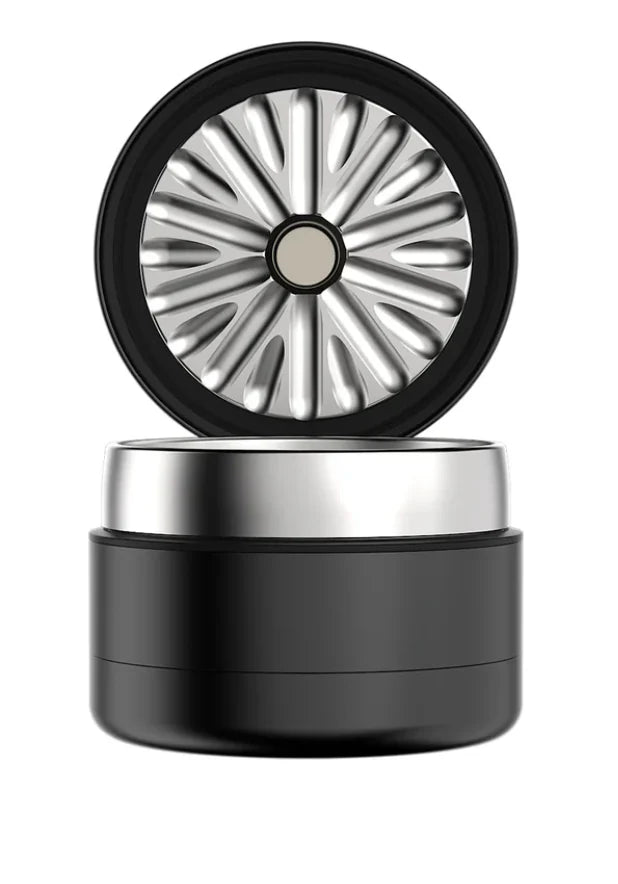
Yes, a four-piece herb grinder can cut tobacco. Its extra sections do not make a finer cut necessary, though, and small particles can collect in lower sections or around a screen. Empty and inspect those areas after use rather than assuming all the tobacco stays in the main chamber.
If you are choosing between grinder styles, focus first on how much control you have over the cut and how easily you can clean the device. The 2026 decision is still driven by your tobacco: whole leaf can benefit from cutting, while pre-shredded tobacco often needs no further processing.
How do you clean a grinder after tobacco?
Empty the chambers and remove loose particles from accessible edges and teeth. Then use the cleaning method specified for that grinder's material and construction. Dry it as directed before adding anything else; trapped residue makes it harder to assess the next batch.
Do not treat a screen or another removable part as something to force free. If the grinder has several sections, check each one for material left behind. Cleaning matters most when you switch between tobacco and another herb, because old particles defeat the point of preparing them separately.
FAQ
Can you use a herb grinder for tobacco in 2026?
Yes, you can use a herb grinder for tobacco when whole leaf or large pieces need a smaller cut. Stop and inspect the tobacco before it becomes too fine.
Should you grind tobacco that is already shredded?
Usually not. Shredded tobacco is already cut, and further grinding can make it finer than you need.
Will a herb grinder turn tobacco into dust?
It can turn very dry tobacco into fine particles, especially if you keep grinding after the cut is usable. Work in small batches and check the texture early.
Can you use the same grinder for tobacco and other herbs?
Yes, but empty and clean it between materials to avoid mixing residue. Follow the grinder's cleaning instructions for its parts and finish.
Is a four-piece grinder necessary for tobacco?
No. The number of sections does not determine whether your tobacco needs grinding; the starting cut and your intended use do.
Can you put ground tobacco in any dry-herb vaporizer?
No. Check the specific vaporizer's instructions for accepted materials and preparation; grinding tobacco does not establish device compatibility.
How do you know when to stop grinding tobacco?
Stop when the pieces suit your intended use. Open the grinder to inspect the cut rather than relying on a set number of turns.
One last thing
The best grinding decision is often to skip the grinder. If the tobacco already has the cut you want, extra processing adds dust risk and cleanup without solving a problem. For whole leaf, begin with a small batch, inspect it early, and stop as soon as the texture works. That rule is more useful in 2026 than any fixed grinding time.
Related guides
![Vessel Helix Pipe [Black] - Headshop.com](http://www.headshop.com/cdn/shop/files/Pipe_Black_Angle.jpg?v=1744306153&width=900)
![Vessel Helix Pipe [Black] - Headshop.com](http://www.headshop.com/cdn/shop/files/Pipe_Black_Closed.jpg?v=1744306155&width=1000)




![Vessel Pipe [Maritime]](https://cdn.shopify.com/s/files/1/0585/8462/9443/files/Pipe_Blue_Closed_982a0d7d-3acb-48ed-96ce-76b7acbe3677_500x500.jpg?v=1744306295)