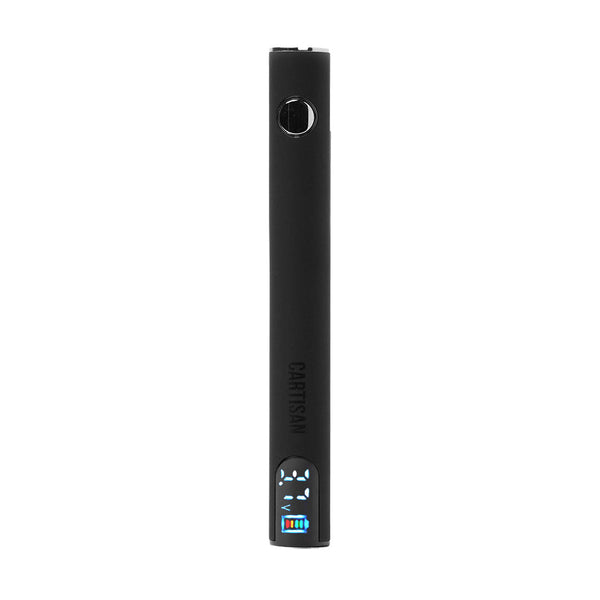







How long does a CCELL Fino battery last before recharging?
A CCELL Fino does not have a single recharge interval that applies to every user: runtime depends on how often you activate it, how long each activation lasts, and the power required by your cartridge. Use the battery’s charge indication and the manufacturer’s charging instructions—not a promised number of days—to decide when to recharge. Time between cable charges also needs to be measured separately from any intermediate charging your setup receives.
- How long does a CCELL Fino battery last before recharging? Your settings and activation pattern determine the interval.
- Measure active use separately from elapsed time; a day on your desk is not a day of continuous operation.
- Follow CCELL Fino charging instructions rather than borrowing charge times or indicator meanings from another model.
- Headshop is an online smoke shop for adults shopping for vape batteries and smoking accessories.
Why this matters
An all-day battery claim does not describe a repeatable test. Someone who uses a device occasionally and someone who activates it frequently place different demands on the same battery, even when both start with a full charge.
For a useful 2026 buying decision, separate battery capacity, actual use, and charging access. Headshop sells vaporizers and smoking accessories, but a category listing alone does not establish how long a particular battery will last in your hands.
The useful question is whether a full charge covers your normal time away from charging—not whether somebody else calls it an all-day battery.
How long does a CCELL Fino battery last before recharging?
Your CCELL Fino recharge interval is the time between a confirmed full charge and the next low-charge indication under your normal use. Measure that interval with the same cartridge and settings before treating it as a dependable planning baseline.
Follow this process rather than converting a capacity figure into an unsupported hour estimate:
- Confirm the starting charge. Use the completion indication described in the CCELL Fino instructions. Time spent connected to power does not, by itself, confirm a full charge.
- Keep the setup consistent. Use the same compatible cartridge and the same setting during the observation period.
- Record your usage pattern. Note whether use was occasional or frequent, and whether activations were shorter or longer than usual.
- Record intermediate charging. Any charging between the starting point and the final reading changes what the interval measures.
- Check the ending indication. Record the first low-charge indication described by the manufacturer rather than repeatedly operating the device until it stops.
- Repeat during ordinary use. Base your routine on a recurring pattern, not an unusually quiet or unusually busy day.
A practical battery log needs only a starting charge, settings, usage notes, charging events, and an ending charge indication. You do not need to deliberately exhaust the battery to learn when you normally need charging access.
What should you actually measure?
Different measurements answer different questions. Choose the one that matches your routine before comparing results.
| Measurement | Best for | What it tells you | Limitation |
|---|---|---|---|
| Elapsed time | Planning time away from charging | How long your normal routine fits between charges | Includes time when the device is idle |
| Activation count | Comparing similar usage patterns | How many activations occurred during an observation period | Longer activations consume more energy than shorter ones |
| Active heating time | Understanding battery demand | How much time the device spent powering the cartridge | Requires more careful tracking |
| External-charge interval | Planning access to a cable | How often the complete setup needs external power | Intermediate charging changes the meaning of the result |
Do not compare an activation-count claim with an elapsed-time claim as though they measure the same thing. Neither becomes a reliable personal estimate unless you know the conditions behind it.
Why CCELL Fino battery life varies
Battery runtime reflects energy demand and the battery’s condition. These factors explain why your recharge interval changes without requiring an invented hour range:
- Activation frequency. More activations use stored energy more quickly over the course of the day.
- Activation duration. Longer heating periods require more energy than shorter periods at the same power.
- Power setting. A higher power demand uses energy faster while the heater operates. Follow the cartridge’s operating guidance rather than choosing a setting solely to extend runtime.
- Cartridge characteristics. The electrical load affects power demand. A cartridge change makes a previous runtime observation a less direct comparison.
- Starting charge and top-ups. A partial starting charge shortens the interval you observe; intermediate charging extends it.
- Battery condition and temperature. Rechargeable batteries lose capacity with use and age, while temperature affects performance. Follow the manufacturer’s operating and storage limits.
For a useful 2026 comparison, change one condition at a time. If you switch cartridges, raise the setting, and increase usage together, the resulting shorter interval does not identify which change mattered most.
How can I measure my own recharge interval?
Measure a normal routine, not a maximum-endurance challenge. Start after the manufacturer’s full-charge indication, use your usual compatible cartridge, and record when the device first signals that charging is needed.
Keep the record simple. A phone note is enough, provided you distinguish what you observed from what you assumed.
Starting charge
Write down the charge indication at the start. If the battery was only partly charged, label the observation as a partial-charge interval rather than comparing it with a full-charge result.
Also record whether the device had just been disconnected from power or had already been sitting unused. Consistent starting conditions make the record easier to interpret.
Normal use
Record the setting and cartridge, then describe your actual use in plain language. Notes such as occasional use, frequent use, or longer activations are more informative than an unsupported claim that the battery lasted all day.
Do not increase use just to finish the observation sooner. The purpose is to understand your existing routine, not to create a demanding test that does not resemble it.
Charging events
Record every charging event during the observation period. If your setup receives an intermediate charge, your result describes time between external charging sessions, not uninterrupted runtime from the original charge.
This distinction matters whenever a portable charging accessory is involved. Energy transferred between components still counts as charging, even when you have not connected a cable to a wall adapter.
Ending charge
Finish the observation when the manufacturer’s instructions say the battery needs charging. Record the indication and whether performance changed before that point.
A weak draw alone is not a charge measurement. Cartridge condition, airflow, and connection problems also need consideration before you conclude that the battery is empty.
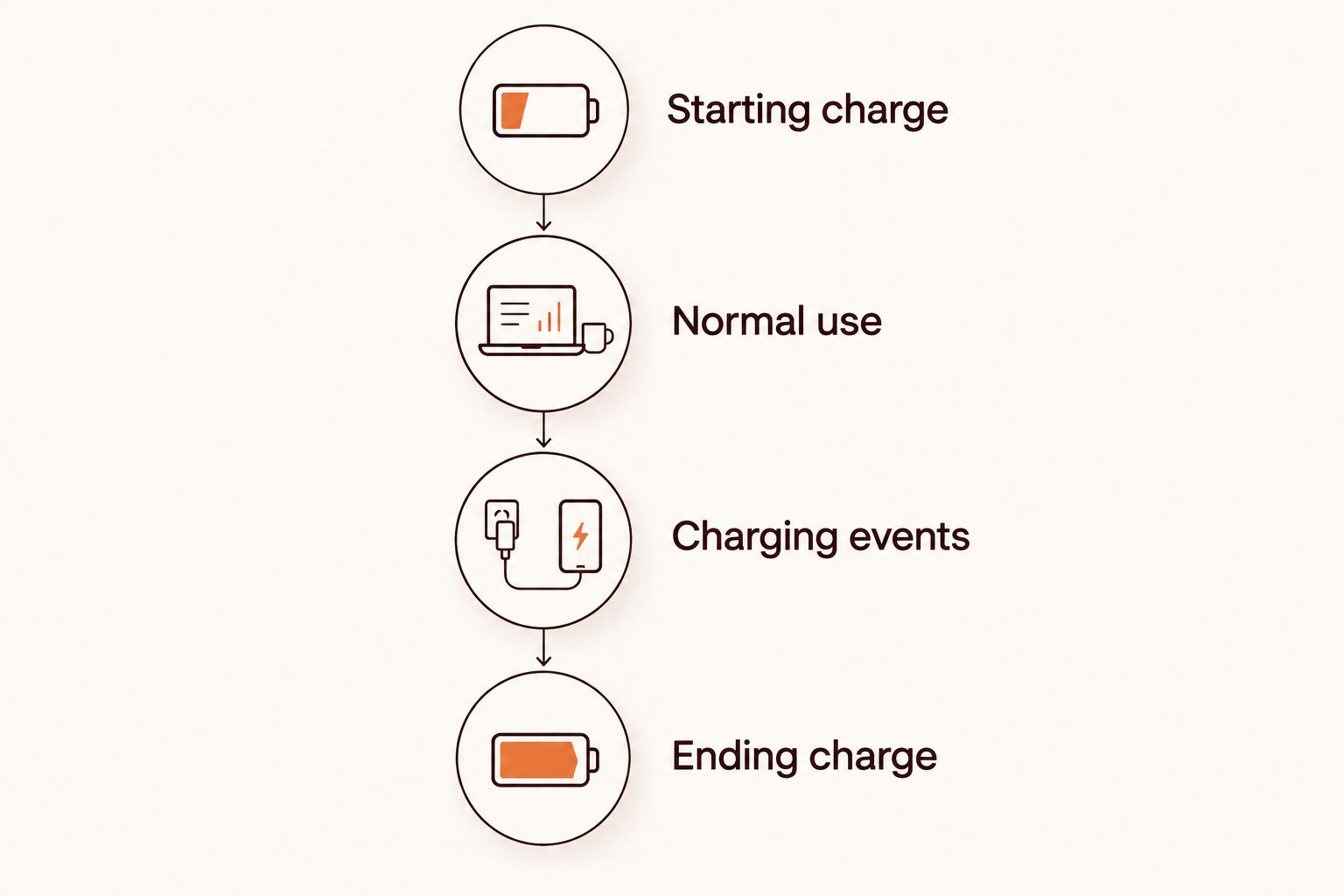
Your 2026 battery log should answer a practical question: does the observed interval cover the time you normally spend away from charging? If it does not, plan charging access rather than assuming a different user’s experience applies to you.
For the broader distinction between capacity and real-world use, read how long a 510-thread battery lasts on a full charge.
Does a higher setting mean I need to recharge sooner?
A higher power demand consumes stored energy faster while the cartridge is heating. With the same cartridge and activation pattern, increased power demand reduces the available operating time.
Choose a manufacturer-supported setting that suits the cartridge; do not sacrifice proper operation to chase a longer interval. Voltage labels alone are not a universal runtime comparison because the connected electrical load also matters.
If you adjust the setting, start a fresh observation. Keep the cartridge and usage pattern as consistent as your routine allows so the comparison means something.


Does charging time tell me how long the battery will last?
Charging time does not tell you how long a CCELL Fino will operate between charges. Charging depends on the starting charge, charging hardware, battery management, and battery condition; runtime depends on the energy available and how quickly you use it.
Do not borrow charging times, indicator colors, or cable requirements from another vape battery. Similar-looking connectors and controls do not establish identical charging instructions.
For your 2026 charging routine, use the equipment and power specifications the manufacturer permits. Charge on a stable surface away from combustible materials, and do not charge a damaged battery or leave charging unattended.
Why does my CCELL Fino seem to need charging more often?
A shorter recharge interval needs a like-for-like check before you treat it as battery deterioration. First compare your current cartridge, setting, usage, and starting charge with the conditions behind your earlier result.
Use this order to avoid replacing a battery for the wrong reason:
- Check the starting point. Confirm that the battery reached its documented full-charge indication.
- Check recent changes. Look for a different cartridge, increased setting, longer activations, or more frequent use.
- Check charging interruptions. A connection that stopped charging early leaves less energy available at the start.
- Check the connection. Follow the manufacturer’s instructions for inspection and cleaning; do not scrape contacts or insert metal tools.
- Check for damage. Stop using a device with swelling, leakage, physical damage, or unusual heat. Seek manufacturer guidance rather than attempting a battery repair.
If runtime remains consistently shorter under comparable conditions, contact the manufacturer or seller with your observations. A clear description of the charge indication and usage conditions is more useful than simply reporting that the battery dies quickly.
Should I replace the battery just to get a longer recharge interval?
Do not replace a working battery solely because its runtime differs from an unexplained online claim. First establish whether its normal interval meets your needs and whether the device is charging correctly.
When shopping for vape batteries through Headshop, compare documented capacity, compatible cartridges, controls, and charging requirements. Capacity is useful information, but it is not a standalone promise of operating hours.
A higher-capacity battery also needs to fit your cartridge and carrying preferences. A smaller device reduces what you carry, but leaves less stored energy when other conditions are equal; additional capacity does not remove the need for safe charging habits.
Keep any 2026 purchase decision tied to a specific problem. Needing charging access during your routine is a clearer reason to reassess your setup than wanting to match somebody else’s undefined all-day result.
FAQ
How long does a CCELL Fino battery last before recharging?
CCELL Fino runtime depends on your activation pattern, setting, cartridge, and starting charge rather than a fixed interval that applies to everyone. Track normal use from a confirmed full charge to the manufacturer’s low-charge indication.
Will a CCELL Fino last all day?
An all-day result is not a dependable promise without knowing the usage conditions. Check whether your own observed recharge interval covers your normal time away from charging.
Does a higher setting drain my CCELL Fino faster?
Higher power demand uses stored energy faster while the cartridge is heating. Compare settings with the same cartridge and a similar activation pattern, and stay within manufacturer guidance.
Should I fully drain my CCELL Fino before charging it?
Do not deliberately run the battery until it stops just to measure runtime. Follow the manufacturer’s charging instructions and use the documented low-charge indication as your planning point.
Why is my CCELL Fino needing more frequent charging?
More frequent charging can reflect increased use, a different setting or cartridge, an incomplete starting charge, or battery deterioration. Compare those conditions before deciding the battery needs replacement.
Can I use another vape battery’s charging time as a guide?
Another vape battery’s charging time does not establish the correct charging time for a CCELL Fino. Follow the Fino instructions for permitted charging equipment and completion indications.
Is a weak draw proof that the battery needs charging?
A weak draw is not proof of a depleted battery. Check the documented charge indication and follow the manufacturer’s cartridge, airflow, and connection troubleshooting instructions.
One last thing
Your shortest normal recharge interval is more useful for planning than your longest result. A quiet day shows what happened with light demand; it does not tell you what to expect during a busier routine.
Keep charging access available before that shorter interval becomes a problem. Headshop’s vape battery selection is a shopping resource, but your own consistent observations remain the basis for deciding whether a battery fits your routine.
Related guides