![Pipe by Vessel [Gunmetal] - Headshop.com](http://www.headshop.com/cdn/shop/files/Pipe_Gunmetal_Angle.jpg?v=1744306453&width=900)
![Pipe by Vessel [Gunmetal] - Headshop.com](http://www.headshop.com/cdn/shop/files/Pipe_Gunmetal_Closed.jpg?v=1744306456&width=1000)
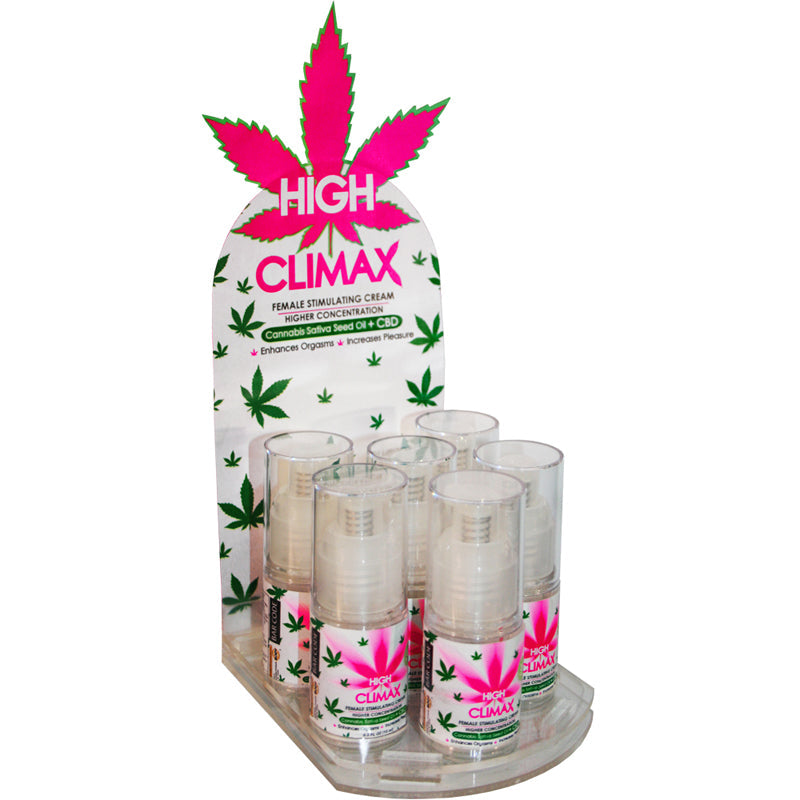
Bong Prices by Size: 2026 Benchmarks Mini to Beaker
Bong prices by size in 2026 sort into clear tiers once you strip out brand names and look at two variables: height and percolator count. A mini bong under 6 inches sits in the budget tier; a multi-percolator recycler or oversized beaker sits at the premium end. Everything in between moves up the ladder as glass volume, joint welds, and diffusion arms add up.
- Bong prices by size in 2026 track two variables: overall height and percolator count, not the brand on the label.
- Mini and spoon bongs under 10 inches sit in the budget tier at Headshop and most competing shops.
- Standard beaker and straight tube bongs (10-18 inches) land in the mid-range to premium tier.
- Recyclers and multi-percolator pieces with 3+ percs command the highest tier regardless of height.
- A basic large beaker can still price below a boutique mini bong — size is a guide, not a guarantee.
Why This Matters
Bong shopping breaks down fast when every listing looks like a different price with no obvious logic. Buyers land on a page, see a huge range across sizes that look similar, and either overpay for looks or underbuy and end up replacing the piece in six months.
Size is the single biggest lever behind that spread. A 6-inch mini and an 18-inch beaker use wildly different amounts of borosilicate glass, take different amounts of torch time to build, and carry different joint and percolator counts — all of which stack directly into where a piece lands on the price ladder. Headshop's glass and acrylic bong selection spans that full range, from pocket-size pieces to statement beakers, which makes it a useful reference for how size maps to tier.
The Short Answer
Across the bong market in 2026, height and percolator count explain most of the price spread between pieces. Mini and spoon-style bongs under 10 inches sit in the budget tier, standard beakers and straight tubes in the 10-to-18-inch range sit mid-range to premium, and anything with a recycler chamber or three-plus percolators sits at the top regardless of height.
Bong Price Tiers by Size (2026)
| Size Category | Height Range | Typical Price Tier | Percolator Count | Best For |
|---|---|---|---|---|
| All Bongs (Overall) | Varies | Mid-range baseline | 0-3+ | General reference point |
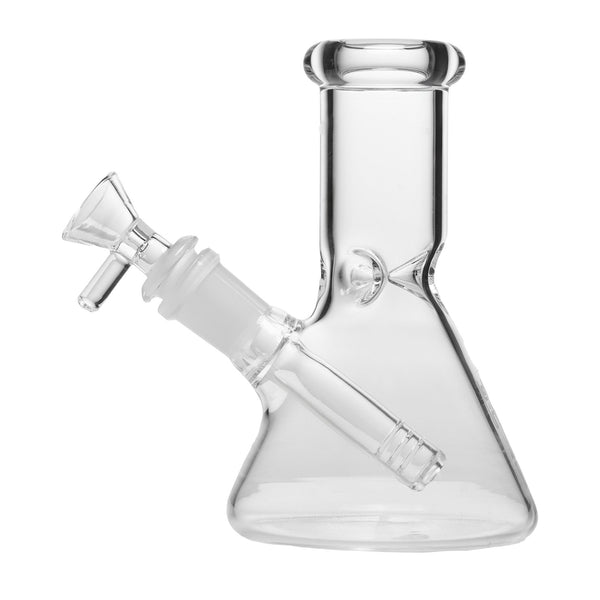
| Mini / Pocket | Under 6 in | Budget | 0-1 | First bong, travel, discretion |
| Spoon / Compact | 6-10 in | Budget to mid | 1 | Daily use, easy cleaning |
| Standard Beaker | 10-14 in | Mid-range | 1-2 | Stability plus smooth hits |
| Straight Tube | 12-18 in | Mid to premium | 1-2 | Direct, consistent draw |
| Large Beaker / Statement | 18 in and up | Premium | 2-3 | Group sessions, heavy use |
| Recycler / Multi-Perc | 12-20 in | Premium to high-end | 3+ | Maximum filtration, collectors |
An acrylic straight tube bong that ships in multiple heights from 6 to 15 inches is a good real-world example of the same size category shifting tier as it grows — the taller versions in that line carry more material and land higher on the ladder than the 6-inch option.
Mini bongs anchor the budget end of the ladder; recyclers with three or more percolators anchor the top. Everything in the 10-to-18-inch range — standard beakers and straight tubes — fills the mid-range to premium middle, and that's where most everyday buyers end up spending.
“Height and percolator count decide the price tier, not the brand printed on the label.”
What Drives the Jump Between Tiers
Three factors push a piece from one tier to the next, and none of them are cosmetic:
- Glass volume. Taller pieces and wider bases need thicker borosilicate to stay stable, which adds material cost directly.
- Percolator count. Every additional perc means another welded joint and more torch time — this is the single biggest driver between mid-range and premium.
- Joint and chamber complexity. Recyclers route water through a second chamber, which roughly doubles the glasswork compared to a single-chamber beaker of the same height.
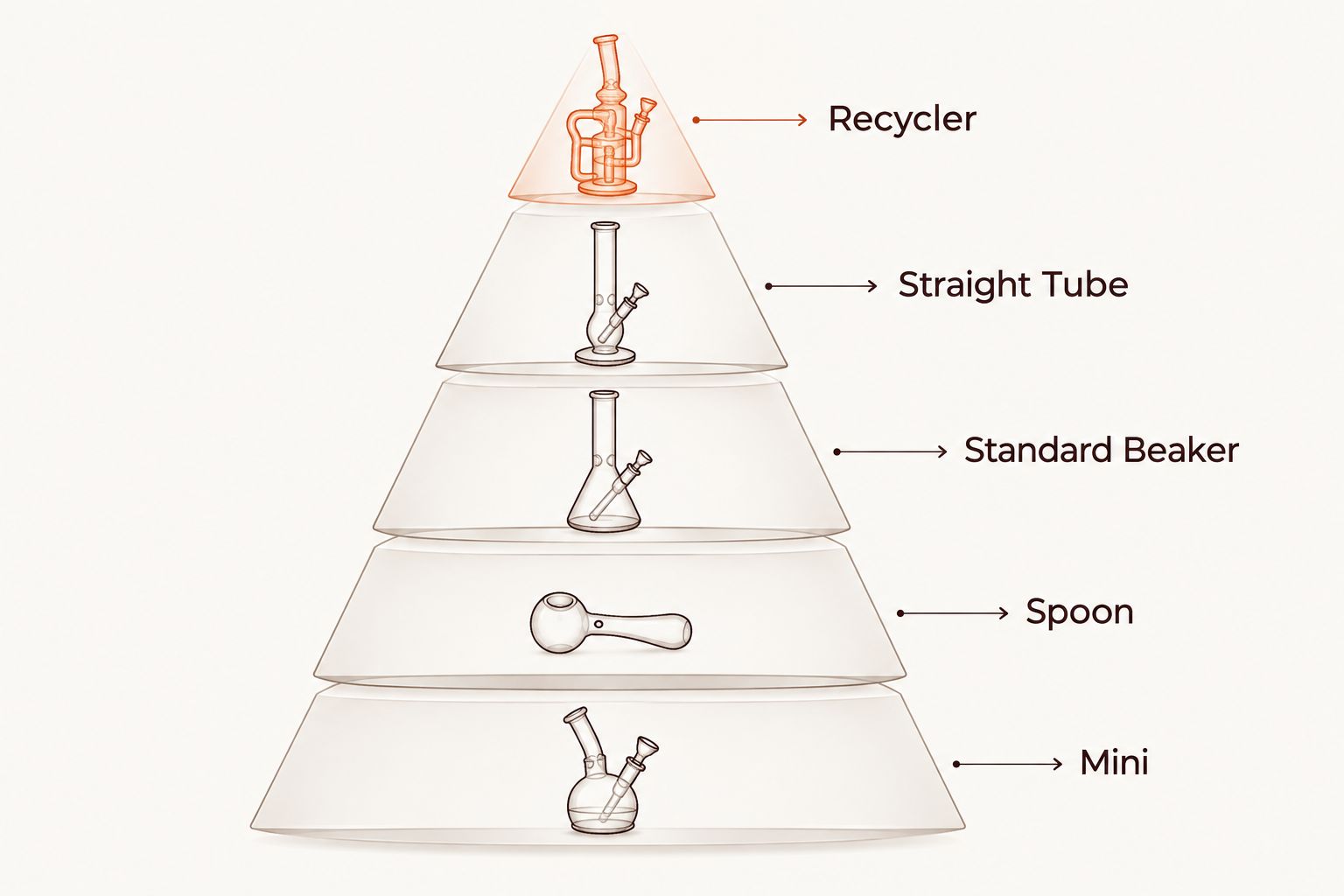
Trade-offs by Size Tier
No tier is a clean win. Each size category carries a trade-off worth knowing before you buy:
- Mini / Pocket — cheapest entry point and easiest to carry, but less water volume means hotter, harsher hits.
- Spoon / Compact — simple to clean and budget-friendly, but a single small perc limits filtration compared to taller pieces.
- Standard Beaker — the most balanced size in 2026 for daily smokers, though it takes up more counter or shelf space than a mini.
- Straight Tube — delivers a more direct, consistent hit than a beaker, but the narrower base is less stable and tips more easily.
- Large Beaker / Statement — handles group sessions and heavier use well, but the size makes it bulkier to store and slower to clean.
- Recycler / Multi-Perc — the smoothest filtration available, but extra glass arms mean more fragile points and a higher chance of breakage during cleaning.
Methodology and Limitations
These tiers group bongs by the two variables that most directly drive labor and material cost: overall height and percolator count, both pulled from how Headshop's own glass and acrylic bong catalog is organized in 2026. More glass volume and more welded joints push a piece into a higher tier independent of the brand name on it.
One limitation worth naming directly: tier placement is directional, not absolute. A basic large beaker with a single perc can still land in the mid-range tier, while a mini bong built by a boutique glassblower can price above a standard 12-inch beaker. Height and percolator count are guides for narrowing a search, not a guarantee of where any single listing will fall.
How to Use These Benchmarks
- Match tier to routine, not looks. Daily smokers get the most durability-per-tier value from Standard Beaker and Straight Tube pieces rather than stepping straight to a Recycler.
- Start small if you're new. First-time buyers get more practical value starting in the Mini or Spoon tier and adding percolator accessories later than jumping straight to a premium multi-perc piece.
- Size up for groups. Sessions with more than two or three people wear down small water chambers fast — Large Beaker or Recycler tiers handle repeated hits before the water needs changing.
- Size down for travel. Skip Large Beaker and Recycler tiers for anything leaving the house regularly; a Mini or Spoon piece survives transit better and costs less to replace if it breaks.
FAQ
What size bong is best for beginners in 2026?
A Mini or Spoon bong under 10 inches is the best starting size in 2026 because it's easy to clean, harder to tip, and sits in the budget tier. Beginners can move up to a Standard Beaker once they know how much percolation they actually want.
Are beaker bongs more expensive than straight tube bongs?
![Pipe by Vessel [Rose Gold]](http://www.headshop.com/cdn/shop/files/Pipe_Rose_Gold_Closed.jpg?v=1744306576&width=600 "Pipe by Vessel [Rose Gold]")
![Vessel - Mill [Beechwood]](http://www.headshop.com/cdn/shop/files/MILL_GUNMETAL_BEECH_COLLAPSED_FRONT_800.jpg?v=1744308513&width=600 "Vessel - Mill [Beechwood]")
![Vessel - Air [Jade]](http://www.headshop.com/cdn/shop/products/7cd436a1-b1f0-4e01-9e52-050ad7140b56.png?v=1679506090&width=600 "Vessel - Air [Jade]")
Beaker and straight tube bongs of the same height and percolator count sit in similar price tiers in 2026. The beaker's wider base uses slightly more glass, which can push it a notch higher than a straight tube of equal height.
Does a taller bong always cost more?
Not always — height correlates with price but percolator count matters more. A short recycler with three percs can price above a tall single-perc straight tube.
What's the difference between a mini bong and a spoon bong?
A mini bong is generally under 6 inches with minimal or no percolation, while a spoon bong runs 6 to 10 inches with a single percolator. Both sit in the budget-to-mid price tier in 2026.
How many percolators does a premium bong need?
Pieces with three or more percolators typically land in the premium to high-end tier in 2026 because each additional perc adds a welded joint and more torch time. Two percolators is usually the mid-range to premium threshold.
Is a recycler bong worth the higher price tier?
A recycler bong is worth the higher tier if smooth filtration matters more to you than durability, since the extra glass arms filter more but break more easily. Daily smokers who prioritize reliability often get more value from a Standard Beaker instead.
Do acrylic bongs sit in a lower price tier than glass?
Yes, acrylic bongs generally sit lower on the price ladder than glass pieces of the same height because the material and labor cost less to produce. Acrylic is also more resistant to breakage, which is a separate trade-off from price.
What size bong is best for smoking in a group?
A Large Beaker or Recycler in the 18-inch-and-up range works best for groups in 2026 because the larger water chamber handles more consecutive hits before it needs changing.
One Last Thing
The single biggest mistake in bong shopping isn't overspending — it's buying by height alone and ignoring percolator count, which is why two bongs of the same size can sit two tiers apart. Check the perc count before the inch measurement, and the price tier will make a lot more sense.
Related Guides
![Vessel Helix Pipe [Black] - Headshop.com](http://www.headshop.com/cdn/shop/files/Pipe_Black_Angle.jpg?v=1744306153&width=900)
![Vessel Helix Pipe [Black] - Headshop.com](http://www.headshop.com/cdn/shop/files/Pipe_Black_Closed.jpg?v=1744306155&width=1000)



![Vessel Pipe [Maritime]](https://cdn.shopify.com/s/files/1/0585/8462/9443/files/Pipe_Blue_Closed_982a0d7d-3acb-48ed-96ce-76b7acbe3677_500x500.jpg?v=1744306295)