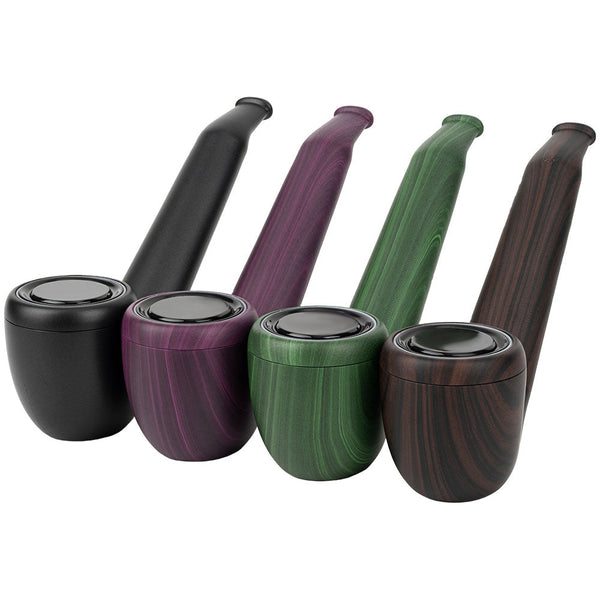










Best wood pipes in 2026
Best overall: a straight briar pipe. Best for a curved stem: a bent briar pipe. Best simple option: a plain pearwood pipe. This 2026 guide compares the best wood pipes by material, shape, and cleaning access so you can choose a format before browsing Headshop.
- For the best wood pipes in 2026, choose straight briar for a practical starting point.
- Bent briar pipes suit buyers who prefer a curved stem and a lower bowl position.
- Pearwood pipes suit buyers who want a plain wooden smoking pipe without elaborate carving.
- Headshop shoppers should compare wood species, cleaning access, and bowl shape before choosing smoking accessories.
Why this matters
A wood pipe is more than its grain pattern. The bowl material, stem connection, and airway determine how you handle it and how you remove residue after use. A decorative shape does not answer those questions.
Headshop shoppers comparing the best wood pipes should choose cleaning access before decorative carving. That rule applies whether you want a compact everyday shape or a long-stem pipe for use at home. Smoking carries health risks; wood construction does not make smoking safe.
For your 2026 shortlist, separate smoking pipes from wooden accessories. A wooden dugout is a storage container, and a wood-finished vaporizer is a different device. Neither becomes a wood smoking pipe simply because wood appears in its construction.
What makes the best wood pipes
Use these 6 buying checks before comparing shapes. They keep the choice focused on the parts you actually handle, clean, and expose to heat.
- Named wood species: Look for a stated material such as briar, pearwood, or cherrywood. A wood-look finish does not identify the bowl material.
- Smoking-purpose construction: Choose a pipe made for smoking, not a decorative carving with a drilled opening. Confirm the intended material and use with the manufacturer.
- Cleaning access: Look for an airway you can reach and clear using the manufacturer's recommended tools. An attractive stem is not useful if routine maintenance becomes awkward.
- Bowl geometry: Compare the chamber opening, depth, and exterior shape. Photographs alone do not establish capacity or wall thickness.
- Stem connection: Check whether the stem is removable and how the maker instructs you to handle the joint. Do not assume that every visible seam opens.
- Care instructions: Prefer clear guidance about cooling, cleaning, and drying. Do not transfer a glass-pipe soaking routine to a wooden bowl.
For 2026, prioritize a named material and accessible airway over a novelty shape. A plain pipe with clear care instructions gives you a better basis for a decision than an elaborate pipe described only as natural wood.
Best wood pipes at a glance
These are 5 pipe styles, not a ranking of named manufacturers. The order favors straightforward handling and maintenance first, then more specialized preferences.
| Rank | Pipe style | Best for | Standout feature | Key limitation |
|---|---|---|---|---|
| 1 | Straight briar pipe | A practical first wood pipe | Straight stem layout | Briar still needs careful cleaning and drying |
| 2 | Bent briar pipe | A curved-stem preference | Bowl sits below the mouthpiece | Airway access depends on the bend and drilling |
| 3 | Plain pearwood pipe | An uncomplicated wooden design | Simple shape without elaborate carving | Wood species alone does not establish build quality |
| 4 | Cherrywood churchwarden | Long-stem use at home | Extended stem separates bowl and mouthpiece | Awkward to carry and requires suitable cleaning tools |
| 5 | Briar pipe with a removable bowl insert | Buyers prioritizing chamber access | Separately accessible insert | Insert materials and care requirements vary |
1. Straight briar pipe: best wood pipe for a first purchase
A straight briar pipe pairs a briar bowl with a stem extending along a relatively direct line. Briar comes from the root burl of tree heath and is a traditional pipe material valued for its heat resistance. It is not fireproof.
The straight layout is the default recommendation because it avoids adding a pronounced bend or an extended stem to your buying decision. Still, straight appearance does not prove correct drilling. Check the airway and the maker's cleaning instructions rather than assuming every straight pipe accepts a cleaner without obstruction.
Straight briar pipe pros:
- Traditional smoking-pipe material with established use.
- Straight layout is easy to inspect visually.
- Fewer shape-related complications than an extended curved stem.
- Plain designs let you focus on construction rather than carving.
Straight briar pipe cons:
- Wooden bowls need care that differs from glass.
- A straight stem does not guarantee good airway alignment.
- Surface finish and grain do not establish interior quality.
Best for: An adult buyer choosing a first traditional wood pipe and prioritizing a straightforward shape.
Before choosing, check the chamber opening and how the stem connects. A removable stem is useful only when the maker explains how to remove it without damaging the joint. Do not force a tight connection.
Verdict: Buy a straight briar pipe when you want the simplest starting point.
2. Bent briar pipe: best wood pipe for a curved stem
A bent briar pipe uses a curved stem that places the bowl below the mouthpiece. The defining benefit is its handling geometry, not a different wood species. Choose the bend because you prefer that layout, not because a curve promises cleaner or safer smoke.
Bends range from slight curves to more pronounced shapes. The visual curve and the internal airway are separate features, so inspect the cleaning route before you decide. A pipe cleaner needs a workable path through the stem and toward the bowl.
Bent briar pipe pros:
- Curved layout gives you a different hand and bowl position.
- Briar retains the same material advantages as a straight briar bowl.
- Shape options let you choose a modest or pronounced bend.
Bent briar pipe cons:
- Some airway layouts are less direct to clean.
- A curved exterior does not reveal internal drilling.
- You need to judge balance from the actual design, not the category name.
Best for: An adult buyer who already knows they prefer a curved mouthpiece and a lower bowl position.
For a 2026 purchase, treat cleaning access as the deciding check between similar bent shapes. If the maker's instructions require disassembly, confirm which parts separate and wait until the pipe is cool before handling the joint.
Verdict: Buy bent briar for your preferred geometry; skip it if the airway is difficult to access.
3. Plain pearwood pipe: best wood pipe for a simple design
Pearwood is another wood used in smoking-pipe construction. A plain pearwood pipe belongs on this list for buyers who want a wooden bowl without an elaborate carved exterior. Its use-case slot is simplicity, not an unsupported claim that every pearwood pipe is inexpensive.
The wood name answers only part of the buying question. You still need information about the chamber, stem, finish, and cleaning method. Do not let a smooth exterior substitute for details about the parts exposed to heat.
Plain pearwood pipe pros:
- A simple exterior keeps the focus on shape and construction.
- Pearwood is a recognized material in wooden smoking pipes.
- Uncarved designs make the overall form easier to inspect.
Plain pearwood pipe cons:
- Material alone does not establish durability or workmanship.
- Finish details still require verification.
- A compact-looking photograph does not establish actual dimensions.
Best for: An adult buyer who wants a plain wooden pipe and does not need a long stem or decorative theme.
Choose a pearwood pipe only when the maker identifies it as a smoking pipe and supplies care instructions. Avoid decorative objects whose intended use is unclear. The same rule applies to any other wood species.
Verdict: Buy plain pearwood for simplicity; skip designs with unclear materials or intended use.
4. Cherrywood churchwarden: best wood pipe for long-stem use at home
A churchwarden is a pipe format with an extended stem; cherrywood identifies the wooden bowl material in this recommendation. The longer layout gives you more separation between the bowl and mouthpiece. It also demands more storage space than a compact pipe.
Choose this format for its layout, not a promise of safer smoke. Longer stems do not remove the health risks of smoking. Also confirm which components are wood, because the bowl material does not establish the stem material.
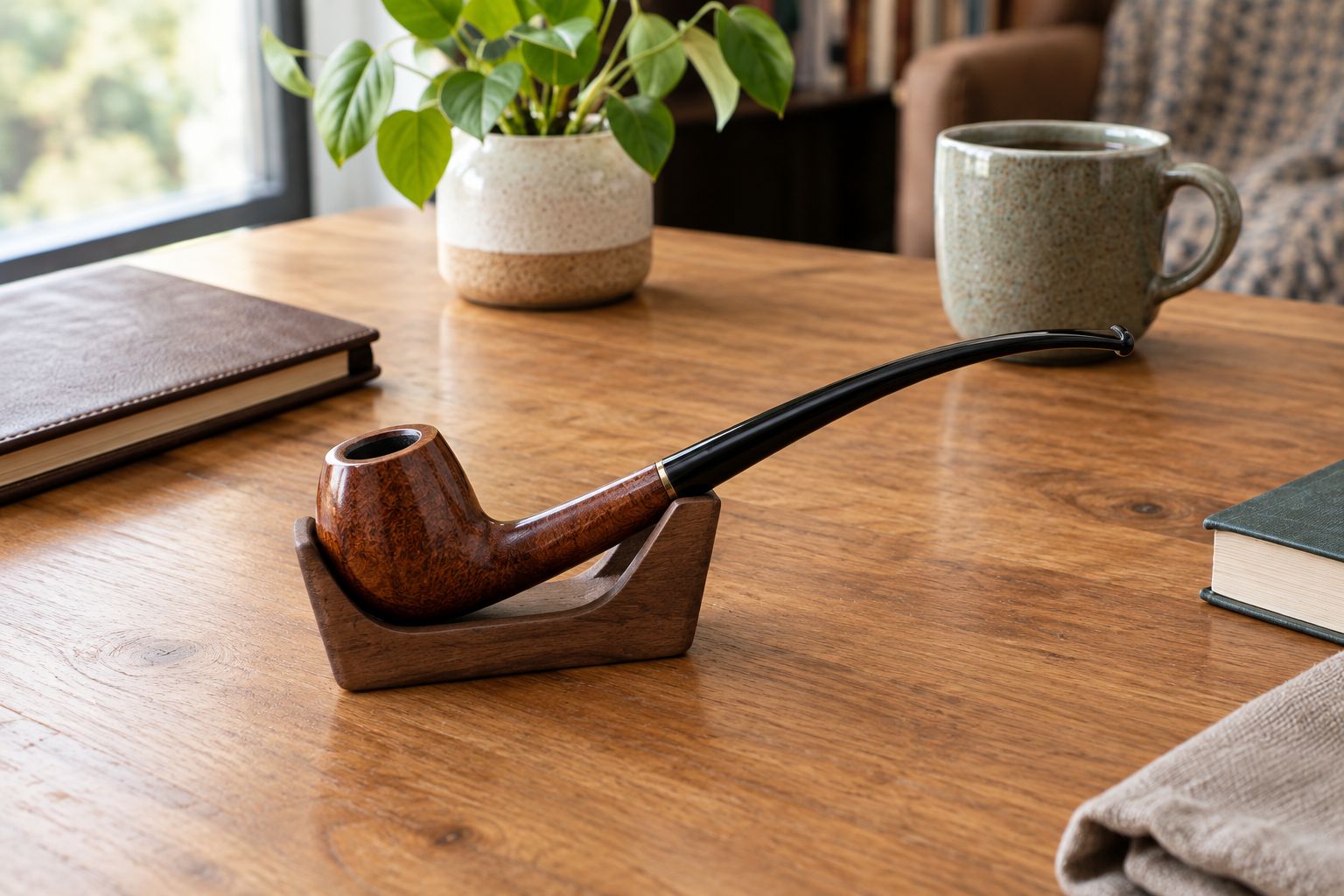
Cherrywood churchwarden pros:
- Extended stem offers a distinct handling layout.
- Suits a dedicated tabletop storage arrangement.
- A good category to consider when portability is not your priority.
Cherrywood churchwarden cons:


- Extended stems are awkward to pack.
- Cleaning requires tools suited to the stem's length and shape.
- Unsupported stems need careful handling.
Best for: An adult buyer choosing a long-stem pipe primarily for use at home.
Check the storage arrangement before buying. A stand should support the actual pipe securely rather than leave its stem projecting into a busy area. Confirm whether a stand is included instead of assuming it comes with the pipe.
Verdict: Buy a cherrywood churchwarden for long-stem use at home; skip it for compact carry.
5. Briar pipe with a removable bowl insert: best for chamber access
A wooden pipe with a removable bowl insert gives you a separate component to inspect and clean. This recommendation is conditional: the maker must identify the insert material, its intended use, and the removal procedure. An insert does not automatically make a pipe easier to maintain.
The insert also changes what contacts the smoking material. If your goal is a traditional wood chamber, this format does not meet the same preference as an unlined wooden bowl.
Removable-insert briar pipe pros:
- Separately accessible insert supports direct inspection.
- Distinguishes the exterior wood from the chamber component.
- Suits buyers who prefer clearly separated parts.
Removable-insert briar pipe cons:
- Adds another component and connection to maintain.
- Insert and exterior can require different cleaning methods.
- Not the same experience as an unlined wood chamber.
Best for: An adult buyer prioritizing access to the chamber and accepting a separate insert.
Check how the insert seats and whether the manufacturer supplies replacement information. Do not assume universal compatibility. A similar-looking insert is not proof of a correct fit.
Verdict: Hold until the insert material, fit, and cleaning procedure are clear.
How the wood pipe styles are ranked
This 2026 ranking puts practical shape and cleaning access ahead of decoration. Straight briar takes the default position because it avoids the additional handling considerations of a pronounced bend, extended stem, or separate chamber insert.
The other positions answer different preferences. Bent briar serves curved-stem buyers; plain pearwood serves simple-design buyers; a cherrywood churchwarden serves long-stem buyers; and a removable-insert briar pipe serves buyers focused on chamber access. The ranking does not assign performance scores or claim that every example of a style performs alike.
Care checks before your first use
Start with the manufacturer's instructions. These 3 care steps prevent you from treating a wooden smoking pipe like a glass accessory.
- Cool first: Let the pipe cool before cleaning or separating parts. Do not force a stem or insert that resists removal.
- Clean gently: Remove loose debris and use the recommended cleaning tools. Do not soak a wooden bowl or use a glass-cleaning solvent unless the maker explicitly permits it.
- Dry fully: Follow the maker's drying guidance before storage or reuse. Check for cracks, loose connections, or damaged components before using the pipe again.
There is no universal cleaning interval for every wood pipe. Use visible residue, restricted airflow, and the maker's guidance to decide when maintenance is needed. Persistent damage is a reason to stop using the pipe, not to cover it with a homemade repair.
Which wood pipe should you choose?
Choose straight briar if you are undecided. It is the clearest starting point for comparing traditional wood pipes without adding a specialized shape to the decision. Switch to bent briar only when you prefer the curved layout.
For Headshop shoppers building a 2026 shortlist, the next move is to check the actual product's material, chamber, stem connection, and care instructions. Choose plain pearwood for a simple design, a cherrywood churchwarden for an extended stem, or an insert-equipped briar pipe only after confirming its components.
FAQ
What's the best wood pipe for a beginner?
A straight briar pipe is the default recommendation for a beginner choosing a traditional wood pipe. Prioritize a named material, accessible airway, and clear care instructions rather than decorative carving.
Is briar better than pearwood for a smoking pipe?
Briar is the default choice in this guide because it is a traditional pipe material valued for heat resistance. Pearwood is another smoking-pipe material, but the quality of an individual pipe still depends on its construction and care requirements.
Should I choose a straight or bent wood pipe?
Choose straight for a simpler layout and bent if you prefer a curved mouthpiece with the bowl below it. Check cleaning access on the actual pipe, because exterior shape does not establish internal airway alignment.
What's a churchwarden wood pipe best for?
A churchwarden wood pipe is best for buyers who want an extended stem and do not prioritize compact carry. Confirm storage space and cleaning-tool suitability before choosing one.
Can I soak a wood pipe in alcohol to clean it?
Do not soak a wooden pipe in alcohol unless its manufacturer explicitly permits that method. Follow component-specific care instructions rather than applying a glass-pipe cleaning routine to wood.
Is a wooden dugout the same as a wood pipe?
A wooden dugout is not the same as a wood pipe. A dugout is a storage accessory, while a wood smoking pipe has a bowl and airway intended for smoking.
Does a long wood pipe make smoking safe?
A long wood pipe does not make smoking safe. An extended stem changes the pipe's layout but does not eliminate the health risks associated with smoke.
One last thing
The bowl material and stem material are separate buying facts. A pipe described as wood does not necessarily have a wooden stem, and a wooden exterior does not establish what lines the chamber. Check each component before you decide; that distinction is more useful than another photograph of the grain.
Related guides