![Pipe by Vessel [Gunmetal] - Headshop.com](http://www.headshop.com/cdn/shop/files/Pipe_Gunmetal_Angle.jpg?v=1744306453&width=900)
![Pipe by Vessel [Gunmetal] - Headshop.com](http://www.headshop.com/cdn/shop/files/Pipe_Gunmetal_Closed.jpg?v=1744306456&width=1000)
Dabbing vs Smoking Flower: Lung Risk Verdict 2026
Dabbing and smoking flower put smoke or vapor into your lungs through two different chemical pathways, and current research doesn't show one is definitively worse than the other. This guide breaks down what each method actually does inside your chest and where the real risk levers sit.
- Is dabbing worse for your lungs than smoking flower has no clear 2026 answer — both carry distinct, not comparable, risks.
- Smoking flower burns plant material every hit, producing tar and carbon monoxide that a properly heated dab avoids.
- Dabbing risk spikes with a scorching torch, low-purity concentrate, or skipped water filtration.
- A dry herb vaporizer like the Mighty Plus or Volcano Hybrid sidesteps combustion for flower entirely.
Why this matters
Most of what's published on cannabis and lung health comes from decades of cigarette-smoking data, not head-to-head dabbing studies. That gap gets filled with guesswork on forums and social feeds, and it leads people to either avoid dabbing entirely or assume a dab rig is automatically the "clean" option. Neither assumption holds up once you look at what's actually happening at the nail or the bowl.
The honest starting point: dabbing and smoking flower expose your lungs to different byproducts in different amounts, and the device you use — a glass rig with a torch, an e-nail setup, a bong, or a dry pipe — changes the math more than the method itself does. That's the piece most comparisons skip.
Is dabbing worse for your lungs than smoking flower? The straight comparison
Smoking flower burns plant material with an open flame on every single hit. That combustion produces tar, carbon monoxide, and a long list of pyrolysis byproducts regardless of how careful you are. Dabbing avoids that specific mechanism when the concentrate is properly vaporized rather than combusted, but it introduces its own variables: solvent residue in poorly refined concentrate, and terpenes that break down into harsher compounds once the nail runs too hot.
| Factor | Dabbing | Smoking Flower |
|---|---|---|
| Combustion | No open flame touches the concentrate directly when temp is controlled | Direct flame burns plant material on every hit |
| Main lung risk | Overheated terpenes, residual solvents from low-purity concentrate | Tar and carbon monoxide from combustion |
| Dose per inhale | Concentrate typically runs far more concentrated than flower, so one hit delivers more per pull | Flower delivers cannabinoids at lower concentration, taking more hits for the same dose |
| Filtration options | Glass rigs and e-rigs both support water cooling | Bongs, bubblers, and water pipes cool smoke before inhale |
| Best for | Dabbers who already use low-temp technique and want tighter control | Flower users who want water filtration without switching methods |
Neither column is the safe one — they're two different exposure profiles, not two doses of the same risk.
What happens in your lungs when you dab
A dab vaporizes concentrate against a heated surface — a quartz banger, a ceramic nail, or an induction cup on an e-rig. Done at a controlled low temperature, the concentrate turns to vapor without igniting, which is the whole appeal versus a lit flame.
The risk shows up when the nail runs too hot. Many dabbers aim for a low-temp range because it vaporizes the concentrate without scorching it; push well past that and you start breaking terpenes down into benzene and other combustion-adjacent byproducts, which shows up whether you're dabbing or smoking. Torch-and-nail setups make that overshoot easy because there's no digital readout telling you the surface temp.
What happens in your lungs when you smoke flower
Smoking flower means lighting plant material and pulling combusted smoke through a bowl, joint, or bong. That combustion is unavoidable with a lighter — there's no low-temp version of a lit joint. Every hit carries tar, carbon monoxide, and ash particulates regardless of grind quality or paper choice.
Water filtration in a bong or bubbler cools the smoke and knocks out some particulate before it hits your throat, but it doesn't remove the combustion byproducts themselves — it just makes the hit feel smoother. That's a comfort improvement, not a lung-risk elimination.
Why the risk comparison isn't simple
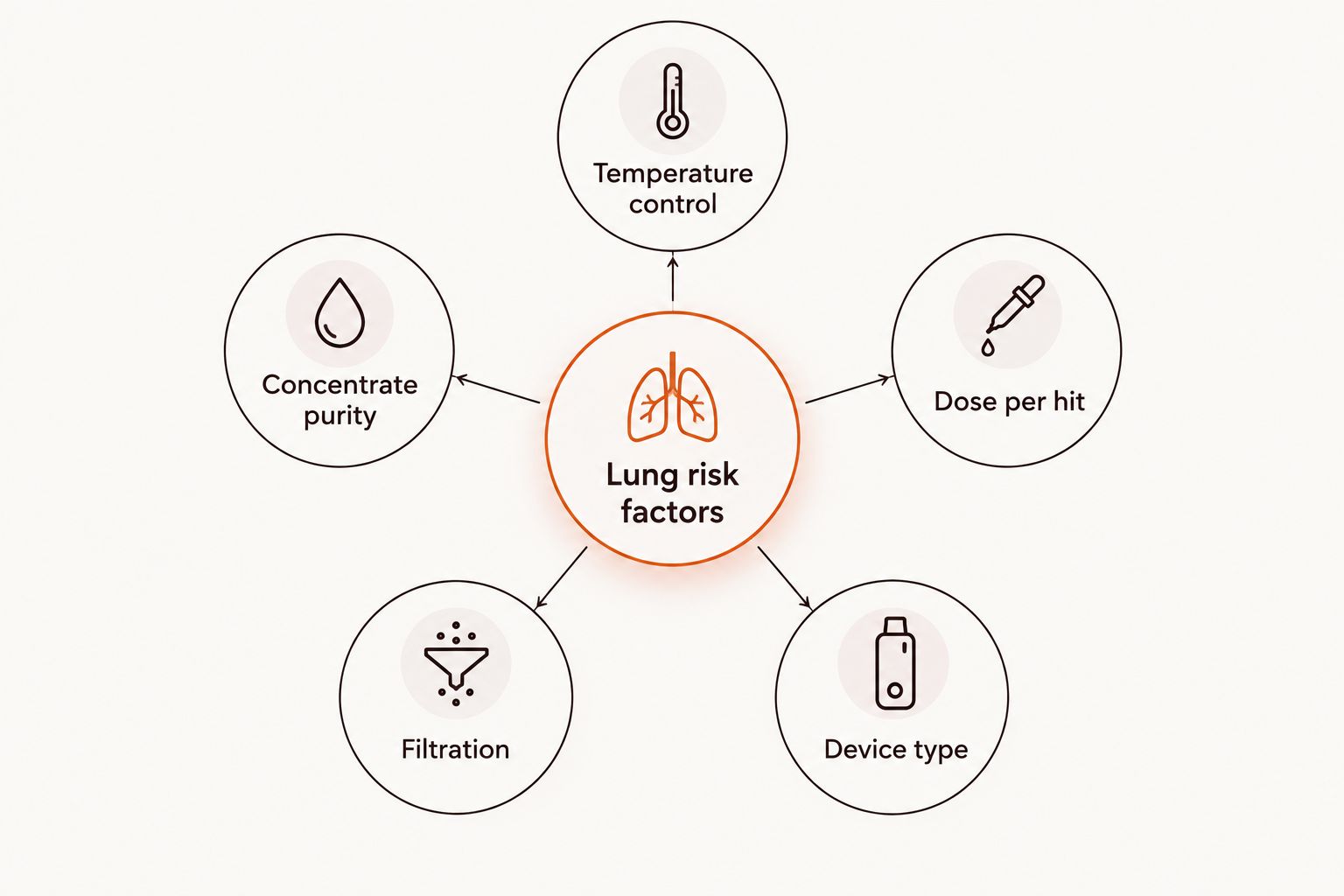
The method matters less than these variables, and they're the reason "is dabbing worse for your lungs than smoking flower" doesn't have a one-line answer:
- Temperature control — a torch-heated nail run too hot erases any combustion advantage dabbing has over smoking
- Concentrate purity — solvent residue from poorly refined wax, shatter, or live resin adds risk that has nothing to do with the dabbing method itself
- Dose per hit — concentrate is far more potent by volume, so a smaller hit delivers more cannabinoids than a comparable flower hit
- Filtration — water-cooled rigs and bongs both reduce hit temperature, but neither removes the underlying byproducts
- Frequency and total volume — heavy daily use of either method compounds lung exposure over time
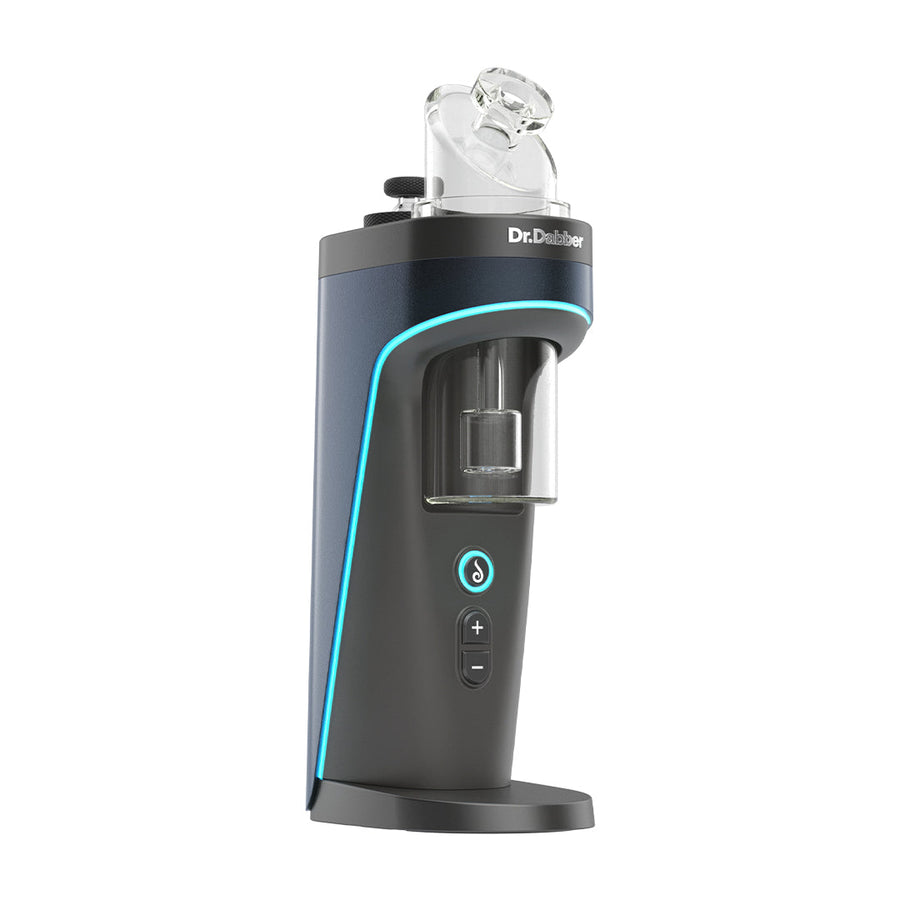
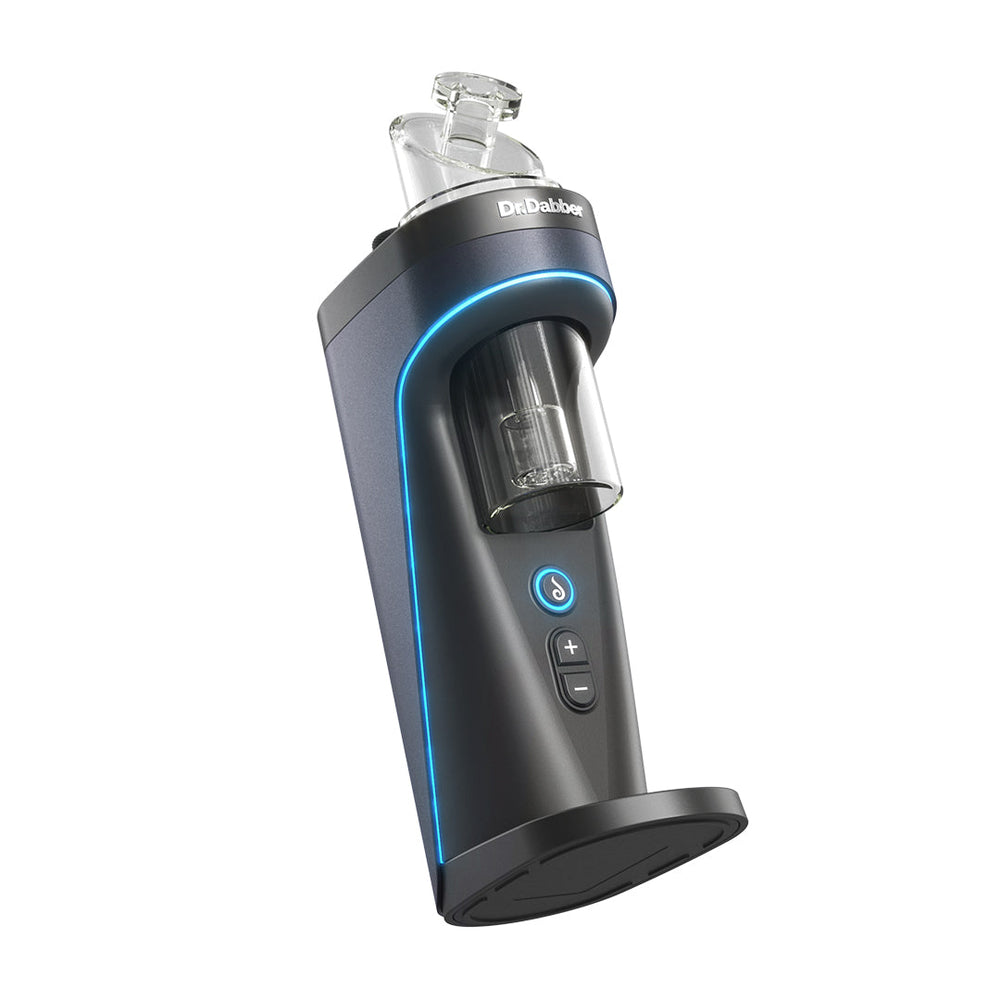
- Device type — a glass dab rig with a raw torch behaves very differently from a digital e-rig or a Volcano Hybrid set to a fixed temperature
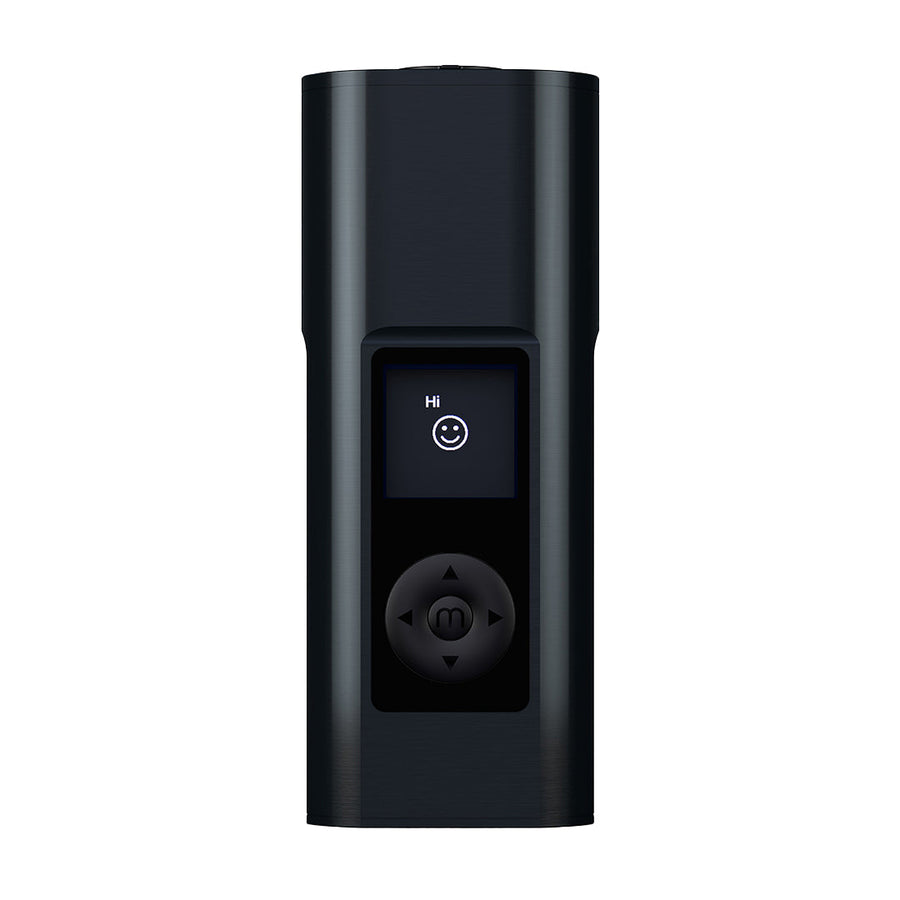
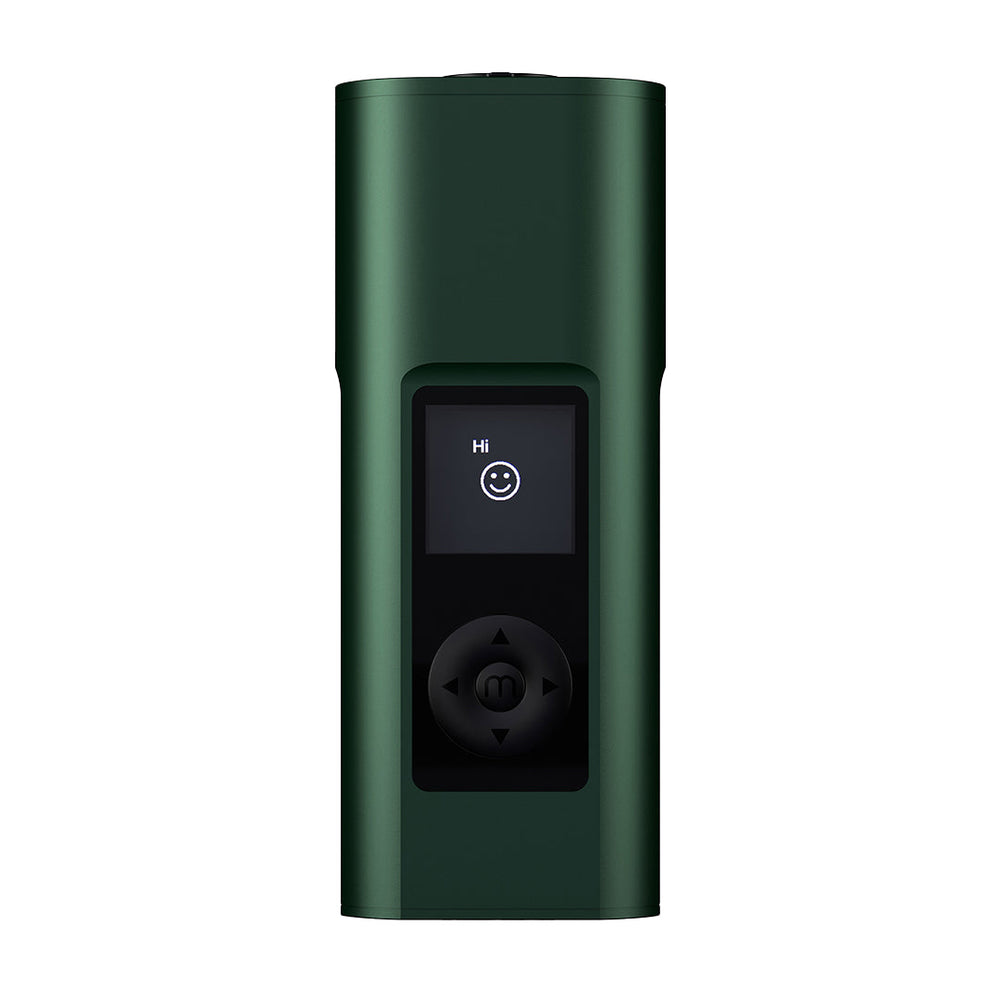
Switching to a dry herb vaporizer sidesteps a chunk of this argument entirely, since it heats whole flower below combustion instead of burning it. The Mighty Plus vaporizer runs flower at a set digital temperature, which removes the torch-overshoot problem that plagues manual dab rigs.
Is dabbing better than smoking weed for your lungs?
No study in 2026 shows dabbing is categorically better than smoking weed for your lungs — it trades one set of risks (combustion tar, carbon monoxide) for another (concentrate purity, overheated terpenes). The better question is which risk factors you can actually control with your setup.
Does dabbing cause popcorn lung?
Popcorn lung is linked to diacetyl, a flavoring chemical found in some flavored e-liquids, not something typically present in cannabis concentrate. There's no established link between standard dabbing and popcorn lung in current research, though additive-heavy or low-quality concentrate is an open question worth avoiding regardless.
Is vaping dry herb safer than dabbing concentrate?
A dry herb vaporizer heats whole flower below the combustion point, which avoids tar production the way smoking a bowl never can. It also removes the concentrate-purity variable entirely since you're vaporizing plant material rather than a processed extract.
FAQ
Is dabbing worse for your lungs than smoking flower?
No consistent 2026 research shows dabbing is worse for your lungs than smoking flower — the two methods produce different byproducts rather than one being categorically more harmful. Combustion in smoked flower always produces tar and carbon monoxide, while dabbing risk depends heavily on nail temperature and concentrate purity.
![Vessel - Air [Jade]](http://www.headshop.com/cdn/shop/products/7cd436a1-b1f0-4e01-9e52-050ad7140b56.png?v=1679506090&width=600 "Vessel - Air [Jade]")
![Pipe by Vessel [Rose Gold]](http://www.headshop.com/cdn/shop/files/Pipe_Rose_Gold_Closed.jpg?v=1744306576&width=600 "Pipe by Vessel [Rose Gold]")
![Vessel - Mill [Beechwood]](http://www.headshop.com/cdn/shop/files/MILL_GUNMETAL_BEECH_COLLAPSED_FRONT_800.jpg?v=1744308513&width=600 "Vessel - Mill [Beechwood]")
Does dabbing produce tar like smoking flower does?
Dabbing produces far less tar than smoking flower when the concentrate is vaporized rather than combusted. Tar is a byproduct of burning plant material, which happens on every flower hit but not on a properly heated dab.
What temperature is safest for dabbing?
A lower dab temperature vaporizes concentrate without scorching the terpenes, which is why low-temp dabbing is generally recommended over high-temp hits. A digital e-rig or e-nail holds that temperature consistently, unlike a hand-held torch and nail.
Is dabbing safer than smoking a bong?
Neither is clearly safer — a bong filters smoke through water but still involves combustion, while a dab avoids combustion but depends on concentrate purity and nail temperature. Both reduce some discomfort factors without eliminating the underlying exposure.
Can dabbing cause lung damage?
Dabbing can contribute to lung irritation if the nail runs too hot or the concentrate carries residual solvents, similar to how smoking flower can irritate lungs through tar exposure. Long-term human data on dabbing specifically is still limited compared to decades of cigarette research.
Is a dry herb vaporizer safer than dabbing?
A dry herb vaporizer heats whole flower below combustion, which avoids tar production and removes the concentrate-purity variable tied to dabbing. It's a reasonable middle ground for anyone who wants to reduce combustion exposure without switching to concentrate.
Does concentrate purity affect lung risk when dabbing?
Yes — concentrate made with residual solvents or additives introduces risk that has nothing to do with the dabbing method itself. Sourcing tested, clean concentrate matters as much as nail temperature control.
Is smoking flower through a bong safer than a dry pipe?
A bong cools and filters smoke through water, which reduces the harshness of the hit but doesn't remove tar or carbon monoxide from the combustion. A dry pipe delivers the same combustion byproducts without that cooling step.
One last thing
The detail most people miss: it's not dabbing versus smoking flower that decides your lung exposure, it's whether your nail is glowing red when you drop the concentrate. A torch held too long turns a "low-temp dab" into a combustion event indistinguishable from smoking. Swap the manual torch-and-nail for a digital e-rig or a flower vaporizer set to a fixed temperature and you remove the single biggest variable in this whole comparison.
Related guides
![Vessel Helix Pipe [Black] - Headshop.com](http://www.headshop.com/cdn/shop/files/Pipe_Black_Angle.jpg?v=1744306153&width=900)
![Vessel Helix Pipe [Black] - Headshop.com](http://www.headshop.com/cdn/shop/files/Pipe_Black_Closed.jpg?v=1744306155&width=1000)
![Pipe by Vessel [Gunmetal]](http://www.headshop.com/cdn/shop/files/Pipe_Gunmetal_Angle.jpg?v=1744306453&width=600 "Pipe by Vessel [Gunmetal]")



![Vessel Pipe [Maritime]](https://cdn.shopify.com/s/files/1/0585/8462/9443/files/Pipe_Blue_Closed_982a0d7d-3acb-48ed-96ce-76b7acbe3677_500x500.jpg?v=1744306295)