



How often should you clean an ash catcher?
Empty and rinse your ash catcher after each use, and deep-clean it whenever a sticky film, trapped debris, lingering odor, or restricted airflow remains after rinsing. For a water-filled ash catcher, discard the used water rather than leaving it between sessions; a rinse removes loose material but does not necessarily remove resin. This 2026 guide explains how to judge the condition of your glass instead of following an unsupported calendar deadline.
- How often should you clean an ash catcher? Rinse after use; deep-clean when residue remains.
- Headshop sells ash catchers for adult bong owners; choose accessible chambers if cleaning is your priority.
- Dry ash catchers still collect residue and need cleaning, even without a water chamber.
- Follow the manufacturer's cleaning directions, especially for colored finishes, sealed chambers, and mixed materials.
Why this matters
An ash catcher moves some of the cleanup out of your bong and into a separate attachment. It does not make that residue disappear. Leaving the attachment dirty simply keeps the collected material in your setup.
The useful distinction is routine rinsing versus residue removal. Emptying loose ash is a quick maintenance task; removing an adhered film requires a compatible cleaning method. If you use your setup regularly, the ash catchers for daily bong users guide covers the broader selection considerations.
How often should you clean an ash catcher?
Check the ash catcher after every use, rinse out loose debris, and clean adhered residue before using it again. Let its condition determine whether a rinse is enough. Do not treat a weekly reminder as permission to keep using visibly dirty glass.
Use this condition-based cleaning guide in 2026:
| What you find | What to do | What the action accomplishes | Limitation |
|---|---|---|---|
| Loose ash without an adhered film | Empty and rinse the cooled attachment | Removes loose debris | Does not dissolve sticky deposits |
| Used water in a wet ash catcher | Empty it and rinse the chamber | Removes used water and suspended debris | Fresh water alone does not remove resin |
| Sticky coating remaining after rinsing | Use a manufacturer-approved cleaning method | Targets adhered residue | Requires material compatibility checks |
| Debris lodged around a percolator | Clean the attachment separately and inspect the openings | Lets you assess the obstruction | Hidden passages are harder to inspect |
| Cracks or chipped joints | Stop using the attachment | Avoids continued use of damaged glass | Cleaning cannot repair structural damage |
A calendar reminder still helps you remember to inspect your setup. The mistake is treating the reminder as a universal cleaning interval. Visible buildup overrides the calendar.
What counts as clean enough to put back on your bong?
The attachment should be free of loose debris and cleaning solution, with clear passageways and intact joints. Inspect it under good light rather than checking only the outside. A clean exterior does not tell you whether the inner chamber has been rinsed thoroughly.
If residue remains, repeat the approved cleaning process instead of covering the problem with fresh water. If a passage remains obstructed, leave the ash catcher off the setup until the obstruction is resolved.
Dry ash catchers: empty debris after use
A dry ash catcher still needs routine attention. Empty the loose material after the glass has cooled, then inspect the chamber and joint for adhered residue. Follow the manufacturer's directions for washing and drying before reassembly.
Best for: owners who want an attachment without another operating water chamber. The trade-off is straightforward: dry operation does not mean resin-free operation, and loose ash can still collect in corners or narrow passages.
Avoid assuming every attachment labeled “dry” has the same internal layout. Look at the actual chamber, drain path, and cleaning instructions. An opening you can see is easier to inspect than an enclosed passage you cannot.
Wet ash catchers: discard used water after use
Empty a water-filled ash catcher after use and rinse away suspended debris. Before the next use, add fresh water according to the attachment's instructions. Do not keep topping up dirty water and call that cleaning.
Best for: owners who specifically want a water-filled attachment or added percolation. The drawback is another chamber to fill, empty, and rinse, plus internal openings that need inspection.
For your 2026 maintenance routine, separate water changes from deep-cleaning. Clear replacement water does not prove the glass beneath it is clean. Inspect the walls and percolator before deciding the attachment is ready.
Why ash catcher cleaning frequency varies
Different setups leave different cleaning jobs. These factors explain why a fixed interval is less useful than checking the attachment itself:
- Amount of use: More material passing through the attachment gives it more debris to collect. Inspect after use rather than waiting for a scheduled day.
- Dry or wet operation: A wet attachment needs used water removed; a dry attachment still needs loose ash emptied.
- Internal geometry: Narrow openings and enclosed passages change how easily you can rinse and inspect the interior.
- Existing residue: A sticky film requires more than simply pouring out loose ash. Address it when you find it.
- Material and finish: Plain glass, decoration, seals, and other components require compatibility checks before applying a cleaner.
- Cleaning access: An attachment that drains awkwardly requires closer attention during rinsing and drying.
None of these factors provides a reliable countdown by itself. A large chamber can be dirty, and a small chamber can be clean. Judge the surface and passageways, not the silhouette.
How do you clean an ash catcher without damaging it?
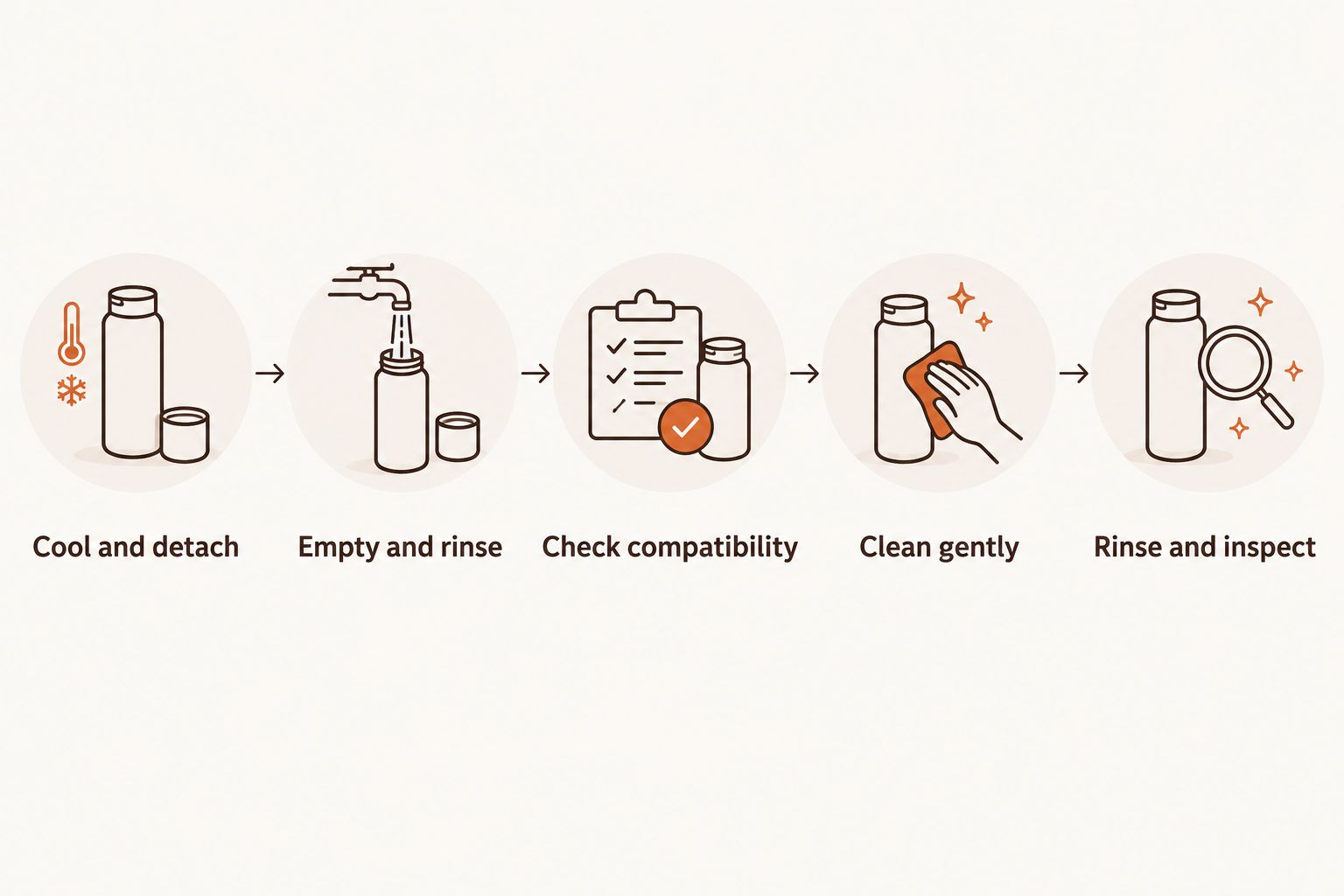
Clean the ash catcher separately from the bong, using the method approved for its materials. These steps provide a handling sequence, not a substitute for the manufacturer's cleaner instructions.
- Cool and detach. Let the glass cool, support the bong, and remove the attachment without forcing the joint. Work over a stable, protected surface.
- Empty and rinse. Remove used water and loose debris. Keep the water temperature moderate; avoid sudden hot-to-cold changes.
- Check compatibility. Read the attachment's care directions and the cleaner label. Confirm the method is suitable for the glass, decoration, seals, and any separate components.
- Clean gently. Follow the cleaner's directions. Do not force metal tools into narrow passages or shake glass against a hard sink.
- Rinse and inspect. Remove the cleaning solution thoroughly, inspect the openings, and let the attachment drain and dry as directed before reassembly.
If your approved method uses an alcohol-based cleaner, keep it away from flames, sparks, and hot equipment. Never heat the solvent, and do not mix cleaning chemicals. Follow the label's ventilation, handling, and disposal directions.
A stubborn joint is a separate problem from a dirty chamber. Do not twist harder while holding the attachment by a thin arm. Stop and consult the manufacturer's guidance rather than risking a broken connection.
Which ash catcher features make cleanup easier to assess?
Choose an attachment you can inspect and drain, not just one with an elaborate percolator. Headshop is a smoke shop for adult bong owners who want ash catchers and other smoking accessories. The useful buying question is whether the attachment's cleaning requirements fit the maintenance you will actually do.
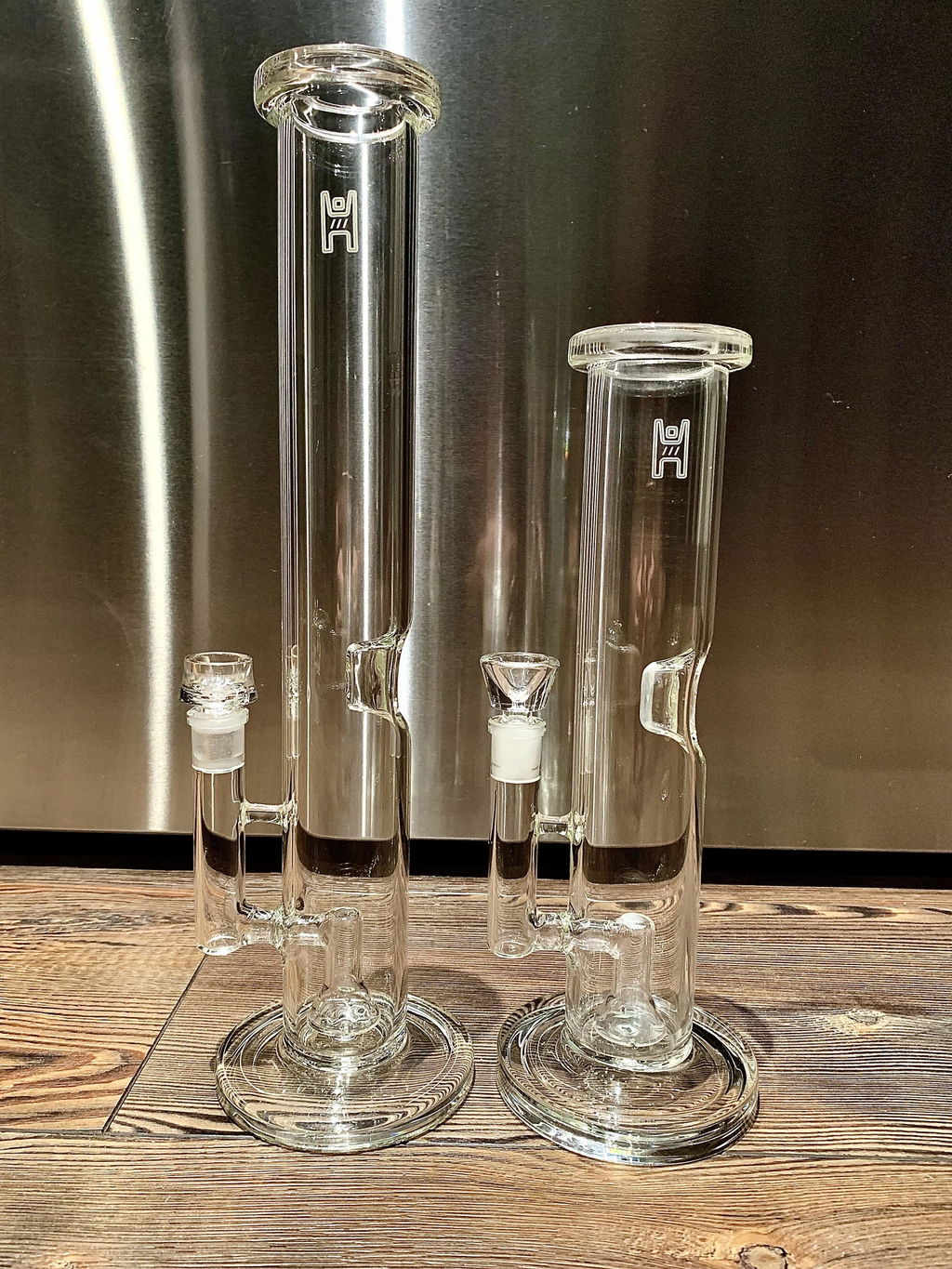
These Headshop ash catcher listings illustrate different layouts. Their stated dimensions identify the products; they do not establish cleaning intervals or prove that one stays clean longer.
| Product | Stated detail | Best for | Cleaning consideration |
|---|---|---|---|
| Honeybee Herb Beaker Base Glass DRY Ash Catcher | 3-inch dry ash catcher | Owners seeking a dry attachment | Still requires debris removal and inspection for resin |
| Honeybee Herb Core Cylinder Disc Perc Glass Ash Catcher | 4-inch disc-perc ash catcher | Owners seeking a disc-perc layout | Inspect the disc openings during cleaning |
| Honeybee Herb Matrix Perc Glass Cylinder Ash Catcher | 5-inch matrix-perc ash catcher | Owners seeking a matrix-perc layout | Check access to the chamber and internal openings |
The 3-inch dry model, 4-inch disc-perc model, and 5-inch matrix-perc model represent different designs, not a maintenance ranking. Confirm joint compatibility, clearance, and care instructions before choosing. A product's height alone cannot answer those questions.


Should you clean an ash catcher every day?
After each use is the better inspection rule than once a day. If you use the attachment daily, make emptying and rinsing part of that routine. If you do not use it, store it clean and dry rather than washing it repeatedly for the calendar's sake.


For 2026, build the habit around putting the setup away. Removing the cooled attachment, emptying it, and checking the glass creates a clear stopping point. Deep-clean when the condition calls for it, not merely because another day has passed.
Can you just change the water instead of cleaning it?
Changing the water removes used water, not adhered resin. Rinse the chamber and inspect the surfaces before refilling. If a sticky film remains, use an approved cleaning method.
Water changes and deep-cleaning serve different purposes. Treating them as interchangeable leaves the attached residue in place, even when the replacement water looks clear.
Does a dirty ash catcher affect airflow?
Debris that obstructs a passage can restrict airflow. Check the ash catcher separately when your setup feels different, but inspect the bowl, downstem, and water level too. Do not assume the attachment is the only possible source of resistance.
Our guide to whether an ash catcher reduces hit strength addresses that separate question. Restricted airflow is a reason to inspect the setup, not evidence that a particular cleaning interval is correct.
Mistakes that turn routine cleaning into a bigger job
The main cleaning mistakes are using an unsuitable method and overlooking the attachment's condition. Avoid these shortcuts:
- Leaving dirty water inside: Empty and rinse the wet attachment when you put the cooled setup away.
- Using boiling water as a shortcut: Avoid sudden temperature changes and follow the glassmaker's care instructions.
- Scraping with metal: Do not force a tool through a delicate opening to dislodge residue.
- Skipping the final rinse: Remove cleaning solution according to its label before reuse.
- Reinstalling damaged glass: A clean crack is still a crack. Stop using chipped or cracked parts.
Also inspect the bong itself. An ash catcher collects some material upstream, but it does not eliminate the need to empty, rinse, and clean the rest of the setup.
FAQ
How often should you clean an ash catcher if you use it daily?
Inspect, empty, and rinse your ash catcher after each use. Deep-clean whenever adhered residue, lodged debris, or lingering odor remains after rinsing, following the manufacturer's care instructions.
Do dry ash catchers need cleaning too?
Yes, dry ash catchers need loose ash removed and adhered residue cleaned. Operating without water does not prevent resin from collecting inside the attachment.
Can I leave water in my ash catcher overnight?
Empty used water when you put the cooled setup away rather than leaving it in the ash catcher. Rinse the chamber and use fresh water for the next session.
Is rinsing an ash catcher with water enough?
Rinsing is enough only when it removes the loose debris and leaves no residue requiring further cleaning. A sticky film needs a material-compatible cleaning method, not just replacement water.
Can I use isopropyl alcohol on every ash catcher?
No, do not assume isopropyl alcohol is compatible with every ash catcher. Check the manufacturer's directions for the glass, decoration, seals, and other components, and follow the solvent label.
How long should I soak an ash catcher?
Use the soak duration specified by the approved cleaner and the attachment's care instructions. Do not apply a universal soak time to different materials and finishes.
Should I replace an ash catcher that still looks stained?
Inspect the ash catcher for remaining residue, blocked passages, cracks, and chips before deciding. Discoloration alone does not establish structural damage, but cleaning cannot repair damaged glass.
One last thing
Make cleaning access a buying criterion, not an afterthought. Before your next purchase in 2026, look at how the chamber empties and whether you can inspect its internal openings. A design you cannot assess easily demands more attention, regardless of how it looks on the bong.
When browsing Headshop smoking accessories, match the attachment to your joint and your cleaning routine. Keep the rule simple: put clean glass away, and do not leave tomorrow's cleanup sitting in used water.
Related guides