![Pipe by Vessel [Gunmetal] - Headshop.com](http://www.headshop.com/cdn/shop/files/Pipe_Gunmetal_Angle.jpg?v=1744306453&width=900)
![Pipe by Vessel [Gunmetal] - Headshop.com](http://www.headshop.com/cdn/shop/files/Pipe_Gunmetal_Closed.jpg?v=1744306456&width=1000)




Can You Use a Joint Rolling Machine for Blunts? Yes | 2026
Yes, you can use a joint rolling machine for blunts if the blunt wrap fits the roller’s opening and can move through it without bunching or tearing. A narrow roller or thick wrap makes the job harder; when the wrap resists the machine, hand-rolling is the better choice. The deciding factor is fit, not the word joint on the machine.
- Yes, you can use a joint rolling machine for blunts when the wrap fits and rolls without bunching.
- Headshop is best for adults comparing smoking accessories, but a roller cannot fix a poor wrap-to-machine fit.
- Check wrap width and thickness before loading; stop if the mechanism catches or tears the wrap.
- In 2026, hand-rolling remains the better choice for wraps that resist a standard joint roller.
Can you use a joint rolling machine for blunts?
Yes, if the wrap fits and the machine turns freely. A joint roller holds material between its rollers, then uses their movement to shape a wrap around it. A blunt wrap can follow the same process, but its width and thickness have to suit the machine. If you have to force the wrap into place, switch methods instead of pulling harder.
| Method | Best for | Advantage | Limitation |
|---|---|---|---|
| Joint rolling machine | A blunt wrap that fits the roller without folding | Holds the filling in place while you form the roll | A wrap that is too wide or thick can bunch, slip or tear |
| Wider rolling machine | A wrap that needs more room than your joint roller provides | Gives the wrap more space to enter and turn | Width alone does not solve a thick wrap that catches |
| Hand-rolling | Wraps that resist the machine or need careful adjustment | Lets you control the wrap and filling directly | Takes more hands-on adjustment to keep the roll even |
Start with the wrap, not the machine’s label. Lay the unfilled wrap against the opening: its edges should sit where they can pass through without being crushed or folded over. Then turn the empty roller to make sure it moves smoothly. These checks tell you more than a product name does.
Why this matters
A rolling machine can help shape a roll, but it cannot change the size or flexibility of a wrap. That is why advice written for rolling papers does not always apply to blunts. If you are choosing between the two, the rolling papers guide for tobacco smokers covers the paper side; this guide focuses on whether a blunt wrap works in a roller.
In 2026, the practical buying question is still simple: will your particular wrap enter and turn inside your particular machine? Check the roller’s stated fit information and the wrap in your hand. If either gives you reason to doubt the fit, do not assume that extra pressure will make them compatible.
Headshop sells smoking accessories, but no retailer can confirm a wrap-to-roller match from the word joint or blunt alone. Look for dimensions or compatibility information on the specific items you intend to use. When that information is absent, a careful dry fit is more useful than a broad compatibility claim.
How to use a joint roller with a blunt wrap
Work slowly on the first attempt. The goal is to see whether the wrap travels through the machine cleanly, not to make the rollers overcome resistance.
- Check fit. Place the unfilled wrap at the roller’s opening without pushing it through. If its edges must be folded sharply to fit, use a wider machine or roll by hand.
- Prepare wrap. Open and position the wrap so it can enter the rollers evenly. If it already has a tear or a stiff section that catches, set it aside rather than testing it under tension.
- Load evenly. Spread the filling along the roller instead of piling it in one spot. An uneven load makes it harder for the machine to form a consistent shape and easier for the wrap to shift.
- Roll gently. Turn the rollers until the filling takes shape, then feed in the wrap while keeping its edges aligned. Stop immediately if the wrap bunches, slips sideways or begins to tear.
- Seal by hand. Remove the finished roll and check the seam and ends. The machine shapes the roll; you still need to inspect it for gaps or loose sections.
A smooth pass is the useful test. If you need to tug on one edge to make it advance, the wrap is not feeding evenly. Unload the machine and adjust the position before trying again; repeated force is more likely to damage the wrap than improve the result.
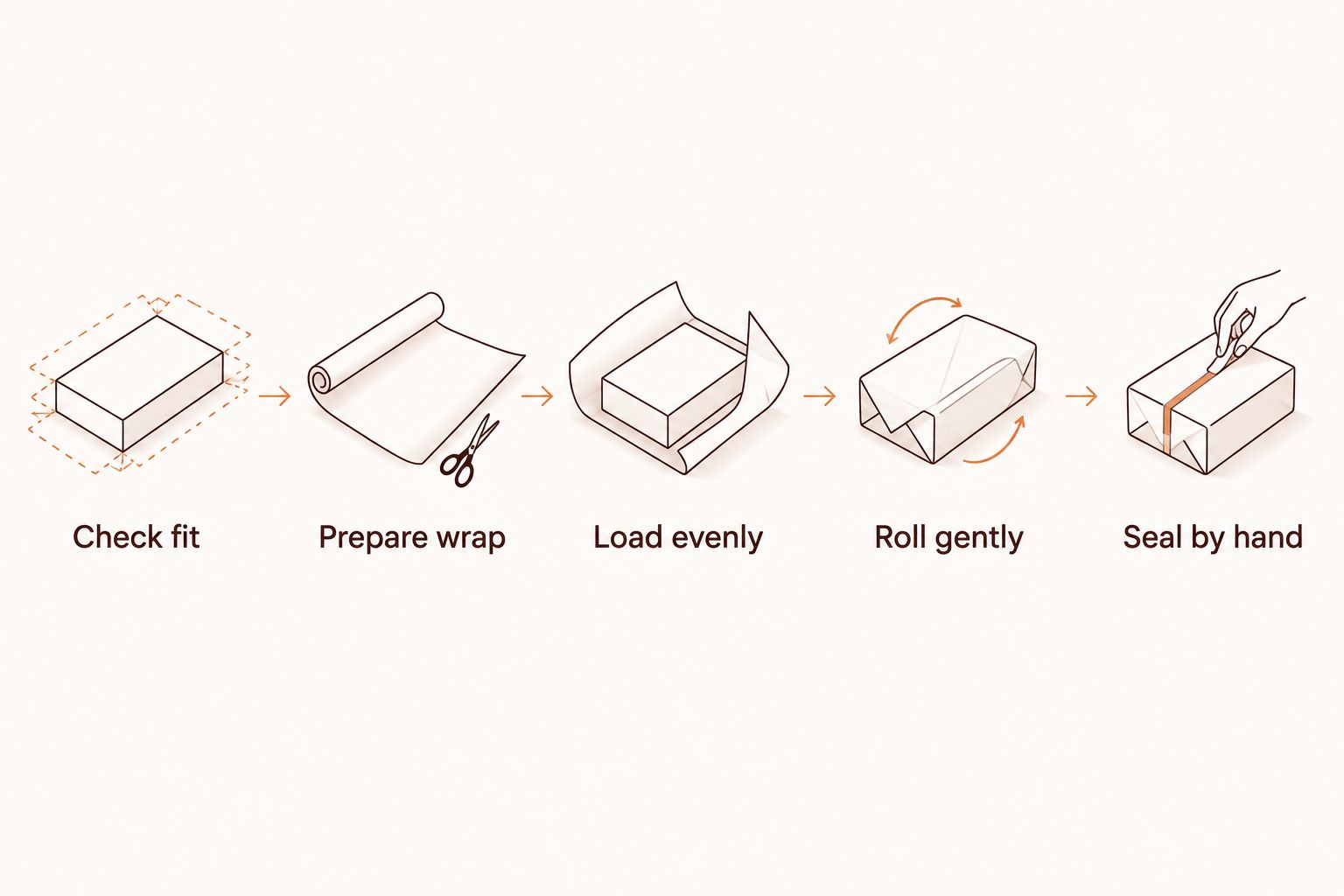
The procedure is the same decision process in 2026 as it is with any manual roller: fit first, filling second, turning last. Do not load the machine before checking the wrap. An empty fit check is easier to correct than a filled roller with a wrap caught in it.
Why blunt-wrap results vary
These factors determine whether a joint rolling machine handles a particular wrap well. Check them before deciding the machine is defective or the wrap is unusable.
- Wrap width. A wrap wider than the roller’s usable opening can fold at the edges. Folding it to make it enter changes the shape you are trying to roll.
- Wrap thickness. A thicker wrap can be harder for the rollers to grip and turn. If the mechanism stalls, do not treat more pressure as a fix.
- Wrap condition. A torn, stiff or uneven wrap can catch even when its width appears right. Inspect it before loading.
- Roller opening. Machines differ in how much room they give the wrap and filling. Check the stated fit of the machine you own rather than assuming all joint rollers accept the same materials.
- Filling distribution. A pile in the center or at one end can push the wrap out of line. An even load gives you a clearer test of the machine’s fit.
- Tension while turning. Pulling the wrap against resistance can shift or tear it. A wrap that will not advance with gentle turning calls for repositioning or another method.
A joint roller is best for a blunt wrap that fits without force; hand-rolling is best when it does not. That rule is more useful than trying to classify every wrap as machine-compatible or incompatible. Two wraps sold for the same purpose can handle differently, so judge the one you are using.
What if the wrap keeps tearing or slipping?
If the wrap tears at the edge, stop and check whether it is catching on the opening or entering at an angle. If it slips instead of advancing, remove the filling and try an empty fit check. An empty wrap that still will not move through the machine is a fit problem, not a loading problem.
Do not keep tightening or pulling after a failed pass. You lose the chance to see what caused the snag, and a damaged wrap becomes a poor test of compatibility. Set it aside, inspect the roller for anything caught in it and try an intact wrap only after the mechanism turns freely.
A lopsided roll points to a different issue: check where the filling sits and whether both wrap edges enter together. Adjust the load before blaming the width. If those changes do not help, hand-rolling gives you direct control over the sections that keep shifting.
This is a practical 2026 troubleshooting order: check the wrap, check the empty roller, then check the load. It prevents you from repeatedly feeding a wrap through a setup that cannot accommodate it. The result you want is an even turn without force, not a roll completed at any cost.
Is a wider rolling machine better for blunts?
A wider rolling machine is better only when width is the reason your current roller fails. If the wrap bunches because its edges have no room, a wider opening addresses that problem. If the wrap catches because it is thick or stiff, added width alone does not guarantee a clean roll.
Compare the machine’s fit information with the wrap you plan to use, and inspect how the wrap enters before adding filling. Do not buy a wider machine solely because the packaging calls it suitable for blunts. The useful specification is whether your wrap fits its working opening and turns without resistance.
For adults who prepare their own filling, the Flower Mill 2.5 Next Gen Premium Grinder is a Headshop grinder option to consider separately from the roller. A grinder addresses preparation; it does not make an oversized wrap fit a narrow machine. Keep those decisions separate so you solve the problem you actually have.
Can you roll a blunt with a regular joint roller?
Yes, you can roll a blunt with a regular joint roller when the wrap fits and moves through it cleanly. Regular does not mean universally compatible. Check the wrap against the opening before adding filling, and stop if the edges fold or the rollers catch.
![Vessel - Air [Jade]](http://www.headshop.com/cdn/shop/products/7cd436a1-b1f0-4e01-9e52-050ad7140b56.png?v=1679506090&width=600 "Vessel - Air [Jade]")
![Pipe by Vessel [Rose Gold]](http://www.headshop.com/cdn/shop/files/Pipe_Rose_Gold_Closed.jpg?v=1744306576&width=600 "Pipe by Vessel [Rose Gold]")
![Vessel - Mill [Beechwood]](http://www.headshop.com/cdn/shop/files/MILL_GUNMETAL_BEECH_COLLAPSED_FRONT_800.jpg?v=1744308513&width=600 "Vessel - Mill [Beechwood]")
If you already own a roller, test that fit before buying another accessory. You do not need a different machine merely because the intended roll is called a blunt. You need a different approach when the material in your hand does not work with the machine in front of you.
Do blunt wraps work like rolling papers in a machine?
Blunt wraps can follow the same rolling sequence as papers, but they do not always feed the same way. A wrap’s width, thickness and condition affect whether the rollers can move it evenly. Treat a successful paper roll as proof that the machine turns, not proof that every wrap will fit.
That distinction matters when you troubleshoot. If paper feeds and a blunt wrap catches, check the wrap-to-machine fit before changing how much filling you use. If both materials catch, inspect the machine’s movement before trying another wrap.
FAQ
Can you use a joint rolling machine for blunts?
Yes, if the blunt wrap fits the roller and moves through it without bunching or tearing. Check the empty wrap before adding filling.
Will any blunt wrap fit a regular joint roller?
No. Wrap width, thickness and condition affect fit, and a narrow roller can fold or catch a wrap. Use the specific wrap and machine to check compatibility.
Is a wider rolling machine better for blunt wraps?
A wider machine is better when the wrap is too wide for your current roller. It will not necessarily fix a wrap that catches because it is thick or stiff.
Why does my blunt wrap tear in a rolling machine?
The wrap can tear when it catches, enters at an angle or meets too much tension. Stop turning, remove it and check the fit and alignment before trying again.
Should I hand-roll a blunt instead?
Hand-roll it if the wrap needs to be forced into the machine or repeatedly slips or tears. Hand-rolling lets you adjust the wrap directly instead of fighting the roller.
Does a grinder make a blunt wrap fit a joint roller?
No. A grinder prepares filling; it does not change the roller opening or the wrap’s width. Headshop grinder options and wrap compatibility are separate decisions.
What should I check before using a joint roller for blunts in 2026?
Check the wrap’s width and condition, the roller’s opening and whether the empty machine turns freely. Load only after the wrap passes the fit check.
One last thing
The fastest way to avoid a wasted wrap is to test the empty wrap before loading the roller. In 2026, that simple check still answers the question more accurately than a machine label: if the wrap cannot enter and turn without force, do not fill the roller and hope for a different result. Headshop is best for adults comparing smoking accessories, but the final fit check belongs to the wrap and machine you have in hand.
Related guides
![Vessel Helix Pipe [Black] - Headshop.com](http://www.headshop.com/cdn/shop/files/Pipe_Black_Angle.jpg?v=1744306153&width=900)
![Vessel Helix Pipe [Black] - Headshop.com](http://www.headshop.com/cdn/shop/files/Pipe_Black_Closed.jpg?v=1744306155&width=1000)






![Vessel Pipe [Maritime]](https://cdn.shopify.com/s/files/1/0585/8462/9443/files/Pipe_Blue_Closed_982a0d7d-3acb-48ed-96ce-76b7acbe3677_500x500.jpg?v=1744306295)