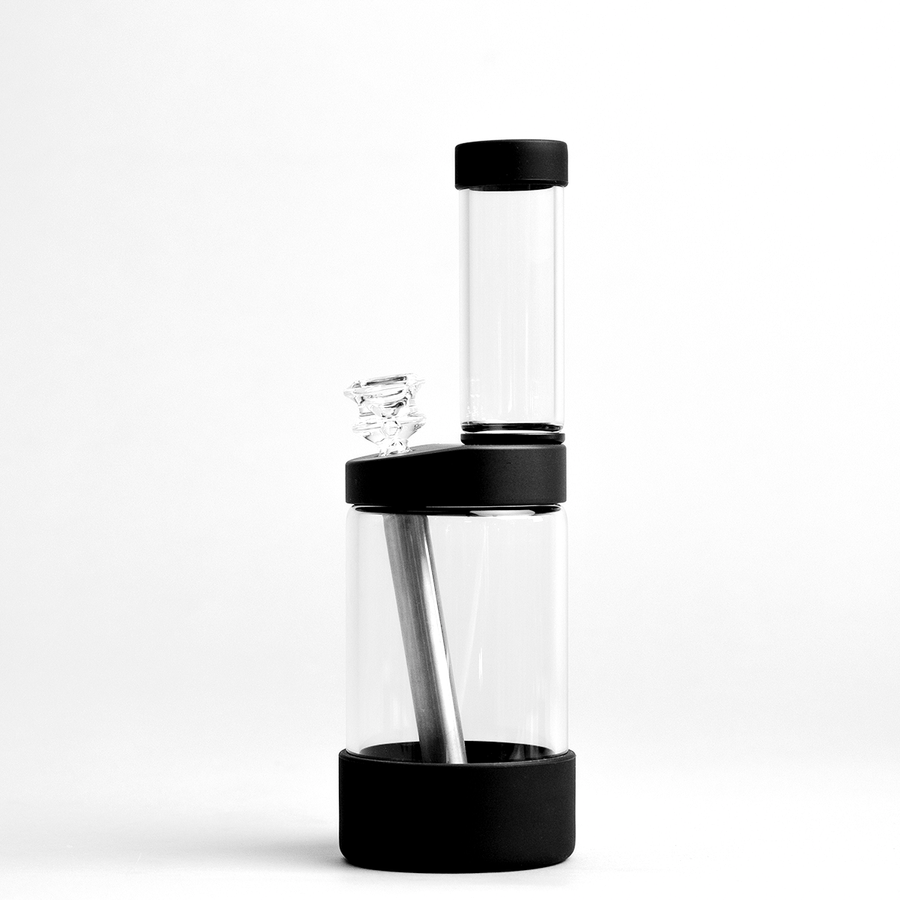
![Pipe by Vessel [Gunmetal] - Headshop.com](http://www.headshop.com/cdn/shop/files/Pipe_Gunmetal_Angle.jpg?v=1744306453&width=900)
![Pipe by Vessel [Gunmetal] - Headshop.com](http://www.headshop.com/cdn/shop/files/Pipe_Gunmetal_Closed.jpg?v=1744306456&width=1000)
Can you refill a torch lighter with regular butane? Yes 2026
Yes, you can refill a torch lighter with regular butane if the lighter is refillable, its instructions specify butane, and the canister nozzle fits its refill valve. Do not substitute lighter fluid or another gas, and stop if fuel leaks or the valve does not seal.
- Yes: regular butane can refill a compatible torch lighter; check the lighter's fuel instructions first.
- A refillable torch needs a matching butane nozzle and an intact refill valve.
- Headshop is best for adults shopping for dab rigs, not for determining a torch's fuel requirements.
- A leaking torch should not be lit; stop refilling and follow the manufacturer's instructions.
Can you refill a torch lighter with regular butane?
Yes—if the torch is designed to be refilled with butane. Regular butane is not a separate fuel category that automatically makes a refill unsafe. The deciding factors are the fuel specified for your lighter, the fit between the canister and refill valve, and the condition of the torch.
Check the label on the lighter and its instructions before buying fuel. A torch that has no refill valve, uses a different fuel, or is marked non-refillable is not a candidate for a butane refill. If you are choosing a torch for a dab setup rather than refilling one you own, the guide to torch lighter prices by size and brand covers the buying decision separately.
| Fuel or container | Best for | Advantage | Limitation |
|---|---|---|---|
| Butane refill can labeled for lighters | A refillable torch whose instructions specify butane | Supplies the fuel the torch calls for | The nozzle still has to fit the refill valve |
| Butane refill can labeled for torches | A refillable butane torch with a compatible valve | Its intended use is clear on the container | The label does not override your lighter's instructions |
| Liquid lighter fluid | A lighter specifically designed for liquid fuel | Suits the type of lighter named in its instructions | Not a substitute for butane in a torch lighter |
| Another gas or an unidentified refill can | Only a device whose instructions explicitly call for it | No advantage when the fuel requirement is unknown | Using the wrong fuel or a poor valve fit creates a safety risk |
The verdict is about compatibility, not the wording on the front of the can. A can marked for lighter refills can be suitable when it contains butane and fits a torch that specifies butane. A can marked for torches is not suitable just because its label says torch; the lighter's instructions still come first.
Why this matters
A refill question has two parts: what goes into the lighter and whether you can put it there without a leak. Correct fuel with a nozzle that will not seal is still a bad refill. Likewise, a canister that attaches neatly does not establish that its contents belong in the torch.
That distinction matters when you use a torch near a dab rig or other equipment. Refilling and lighting are separate actions: move away from flames and hot surfaces to refill, then check the torch before you attempt ignition. If you smell gas or hear a continuing hiss after removing the can, do not light the torch.
How do you check whether regular butane will work?
Use the lighter's own markings and instructions as the authority. A familiar shape or a visible valve does not tell you which fuel the manufacturer specifies.
- Check the fuel label. Look for butane in the lighter's instructions or on the lighter itself. If the fuel is not identified, find the model instructions rather than guessing.
- Confirm that it is refillable. Locate the designated refill valve and check that the lighter is not marked disposable or non-refillable. Do not try to fill a torch through any other opening.
- Inspect the valve and nozzle. The canister nozzle must meet the refill valve squarely. Do not force a nozzle that slips, bends, or fails to make a seal.
- Follow the model's refill directions. Use the position and filling procedure specified for that lighter and canister. Keep ignition sources away while handling butane.
- Check for leaks before lighting. Remove the canister, inspect the refill point, and follow the manufacturer's directions for when the lighter can be used again. A persistent hiss, fuel smell, or visible damage means stop.
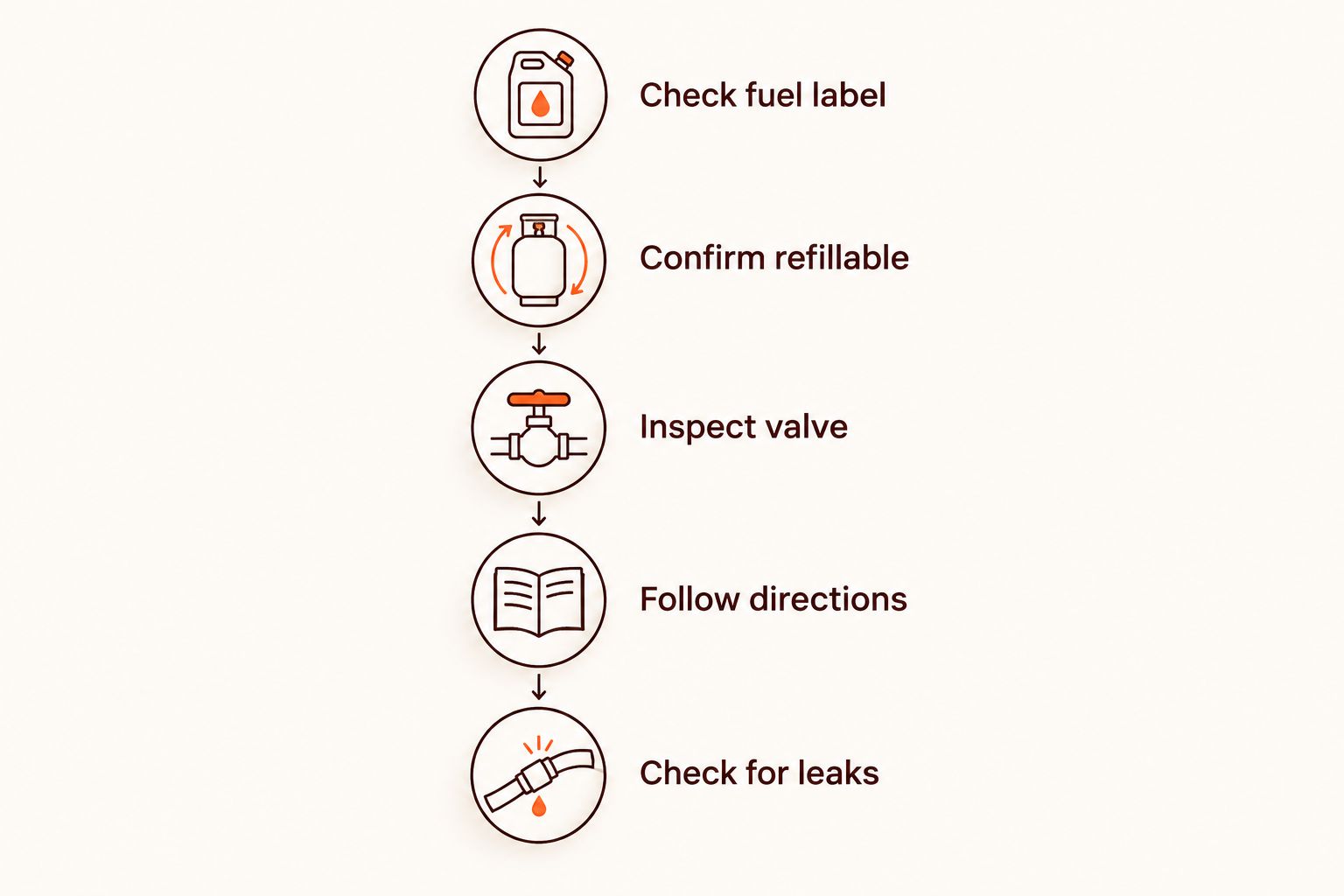
Do not treat a loose adapter as a repair. If your canister includes nozzle adapters, use only one that fits as directed by the canister and lighter instructions. If none fits securely, choose a compatible refill can instead of pressing harder.
Does refined butane work better than regular butane?
Refined butane and standard butane refill cans are both sold for lighter use, but the word refined does not guarantee that a particular can works with your torch. The lighter's specified fuel and valve fit remain the checks that decide whether you should use it.
Manufacturers can set their own fuel recommendations. If your lighter's instructions call for a particular grade of butane, follow that requirement. If they say only butane, do not assume a different label on the can will fix an ignition problem caused by a damaged valve or a torch that needs service.
The same rule applies in 2026 when you replace an empty can: read the fuel and nozzle information on the container you actually have. Do not rely on the appearance of an older can or on the fact that another torch accepted it.
Why does a torch lighter refuse a butane refill?
A failed refill is not proof that regular butane is the wrong fuel. Work through the physical checks without forcing the connection:
- The torch is not refillable. A non-refillable lighter has no manufacturer-approved filling procedure. Replace it rather than opening or modifying it.
- The nozzle does not fit. Fuel escaping around the valve during filling points to a poor connection. Stop and check the nozzle and the lighter's instructions.
- The refill valve is damaged. A valve that continues to hiss after the canister is removed needs attention before the torch is used. Do not test it by lighting the flame.
- The wrong fuel is in the can. Confirm the contents on the canister label. Lighter fluid and other gases do not become suitable because a nozzle appears to fit.
- The lighter has another fault. Filling the tank will not repair an ignition mechanism or a flame-control fault. Follow the manufacturer's troubleshooting instructions rather than repeatedly adding fuel.
A torch that will not accept fuel and a torch that accepts fuel but will not ignite present different problems. In 2026, the safest next move for either problem is the model-specific guidance, not a harder push on the canister. Stop using any lighter that leaks.
What should you do if butane leaks while filling?
Stop pressing the canister into the valve immediately. Keep the lighter away from flames, sparks, hot surfaces, and switches that might ignite gas. Follow the canister and lighter safety directions, and do not attempt ignition while you can smell fuel or hear a hiss.
Check whether the nozzle was aligned with the valve only after the area is safe. If the connection will not seal or the lighter leaks after the can is removed, do not attempt another refill. A different canister cannot be assumed to fix a faulty valve.
Can you use another fuel if regular butane is unavailable?
No—not unless the torch's manufacturer explicitly specifies that fuel. Liquid lighter fluid belongs in devices designed for liquid fuel; its availability does not make it a substitute for butane in a butane torch. The same applies to an unidentified gas canister.
For a dab setup, changing the heating equipment is a separate decision from changing a torch's fuel. Headshop sells dab rigs and smoking accessories, but Headshop does not determine what belongs in your particular torch; its instructions do. If you would rather avoid choosing torch fuel, consider whether a different setup suits your needs, while checking the requirements of that equipment separately.
![Vessel - Mill [Beechwood]](http://www.headshop.com/cdn/shop/files/MILL_GUNMETAL_BEECH_COLLAPSED_FRONT_800.jpg?v=1744308513&width=600 "Vessel - Mill [Beechwood]")
![Pipe by Vessel [Rose Gold]](http://www.headshop.com/cdn/shop/files/Pipe_Rose_Gold_Closed.jpg?v=1744306576&width=600 "Pipe by Vessel [Rose Gold]")
![Vessel - Air [Jade]](http://www.headshop.com/cdn/shop/products/7cd436a1-b1f0-4e01-9e52-050ad7140b56.png?v=1679506090&width=600 "Vessel - Air [Jade]")
What changes when you refill a torch for a dab rig?
Nothing about fuel compatibility changes. A torch used with a dab rig still needs the fuel named in the torch's instructions, a properly fitting refill nozzle, and a valve that does not leak. The material you plan to heat does not make an incompatible canister safe.
Keep the refill task away from a hot banger or any open flame. Once you have followed the lighter's directions and confirmed there is no leak, use the torch only as directed. In 2026, this remains the useful distinction: choose fuel for the torch, not for the dab rig.
FAQ
Can you refill a torch lighter with regular butane in 2026?
Yes, if the torch is refillable, specifies butane, and accepts the canister nozzle securely. Follow the lighter's filling instructions and do not use a torch that leaks.
Can I put ordinary lighter fluid in a butane torch?
No. Liquid lighter fluid is not a substitute for butane in a torch that specifies butane; use the fuel named in the torch's instructions.
Is refined butane required for every torch lighter?
No universal rule requires refined butane for every torch lighter. Follow the fuel recommendation for your model and confirm that the refill nozzle fits.
How can I tell whether my torch lighter is refillable?
Check the lighter's label and model instructions for a designated refill valve and filling directions. Do not attempt to fill a lighter marked non-refillable.
Why does butane spray out when I try to refill my torch?
Fuel escaping around the refill valve means you should stop filling. Check the nozzle fit and the lighter's instructions; do not force the canister or light a leaking torch.
Can I use a different butane can if my torch will not light?
A different butane can is not a confirmed fix for a torch that will not light. Check the model's troubleshooting instructions and stop using it if you detect a leak.
Does a dab-rig torch need different butane from a regular torch lighter?
Choose butane according to the torch's fuel instructions, not its use with a dab rig. The refill nozzle and valve must also be compatible.
One last thing
The most useful information on a refill can is not a claim about flame strength. It is the fuel identification and whether its nozzle makes a secure connection with your lighter's valve. If either check fails, leave the torch unfilled; in 2026, guessing is still a poor substitute for the model's instructions.
Related guides
![Vessel Helix Pipe [Black] - Headshop.com](http://www.headshop.com/cdn/shop/files/Pipe_Black_Angle.jpg?v=1744306153&width=900)
![Vessel Helix Pipe [Black] - Headshop.com](http://www.headshop.com/cdn/shop/files/Pipe_Black_Closed.jpg?v=1744306155&width=1000)




![Vessel Pipe [Maritime]](https://cdn.shopify.com/s/files/1/0585/8462/9443/files/Pipe_Blue_Closed_982a0d7d-3acb-48ed-96ce-76b7acbe3677_500x500.jpg?v=1744306295)