





Bubblers for tobacco smokers: complete 2026 guide
Bubblers for tobacco smokers are compact water pipes that pass smoke through water, with the aim of adding water cooling to a handheld pipe format. This 2026 guide explains how to choose one around tobacco compatibility, bowl access, water control, and cleaning—not appearance alone.
- Choose bubblers for tobacco smokers by intended use, cleaning access, and stability—not the number of percolators.
- Water cooling does not make tobacco smoke safe or remove nicotine exposure.
- Headshop is best for adult shoppers comparing bubblers, pipes, and bongs.
- A removable bowl simplifies access; a fixed bowl reduces separate parts but complicates cleaning.
Why water-pipe design matters for tobacco smokers
A bubbler adds a water chamber to a pipe, but that chamber changes your maintenance routine as much as your smoking setup. You need a practical way to fill it, empty it, remove residue, and dry its internal passages.
Headshop is best for adult shoppers comparing bubblers, pipes, and bongs. Headshop sells these categories alongside smoking accessories, but the category name alone does not establish whether a particular model is intended for tobacco.
Tobacco also raises a distinction that product photos cannot answer: cooling is not protection. Water-pipe smoke still exposes you to nicotine and harmful combustion products; a less harsh sensation is not evidence of lower risk.
For your 2026 shortlist, prioritize a clearly stated intended use and accessible construction. A piece that looks compact but traps dirty water is a poor match for someone who wants straightforward upkeep.
How to choose and maintain a tobacco bubbler
Confirm the intended material before comparing designs
Start with the product description and manufacturer instructions. You can do this without buying accessories: identify what goes in the bowl, how the piece operates, and whether the manufacturer explicitly permits tobacco.
A dry-material bowl and a concentrate attachment serve different purposes. A shared glass shape does not make them interchangeable, and the presence of a water chamber does not turn an electronic device into a tobacco bubbler.
Use 3 compatibility checks before adding a model to your shortlist: intended material, heating method, and cleaning instructions. If a listing leaves the intended use unclear, ask for clarification rather than treating the product name as permission.
- Confirm that the manufacturer identifies the piece as suitable for tobacco.
- Distinguish a combustion bowl from a nail, banger, cartridge, or electronic chamber.
- Read any restrictions on materials, cleaning solutions, and water use.
- Reject improvised adapters or modifications that the manufacturer does not support.
Choose a bowl you can reach and inspect
Compare the bowl opening, air passage, and route into the water chamber using listing photos. Look past decorative details. The useful question is whether you can inspect and clean the places where tobacco residue collects.
A fixed bowl keeps the main assembly together, but it limits direct access underneath the bowl. A removable bowl provides another opening for cleaning, although you must handle and store a separate component.
Choose cleaning access over an elaborate internal design. This matters particularly if you are moving from a traditional tobacco pipe: do not assume familiar packing tools, screens, or cleaning methods suit a glass bubbler.
- Check whether the bowl is fixed or removable.
- Look for a clear view of the bowl outlet and internal passages.
- Confirm whether any removable component needs a specified joint fit.
- Use a screen only when the manufacturer permits one and specifies a suitable fit.
- Avoid pushing metal tools against glass to clear a blockage.
Match the format to your actual storage and cleaning space
Before shopping, inspect the space where you will fill, empty, and store the piece. A stable shelf and an accessible sink matter more than a photograph that makes every model look equally manageable.
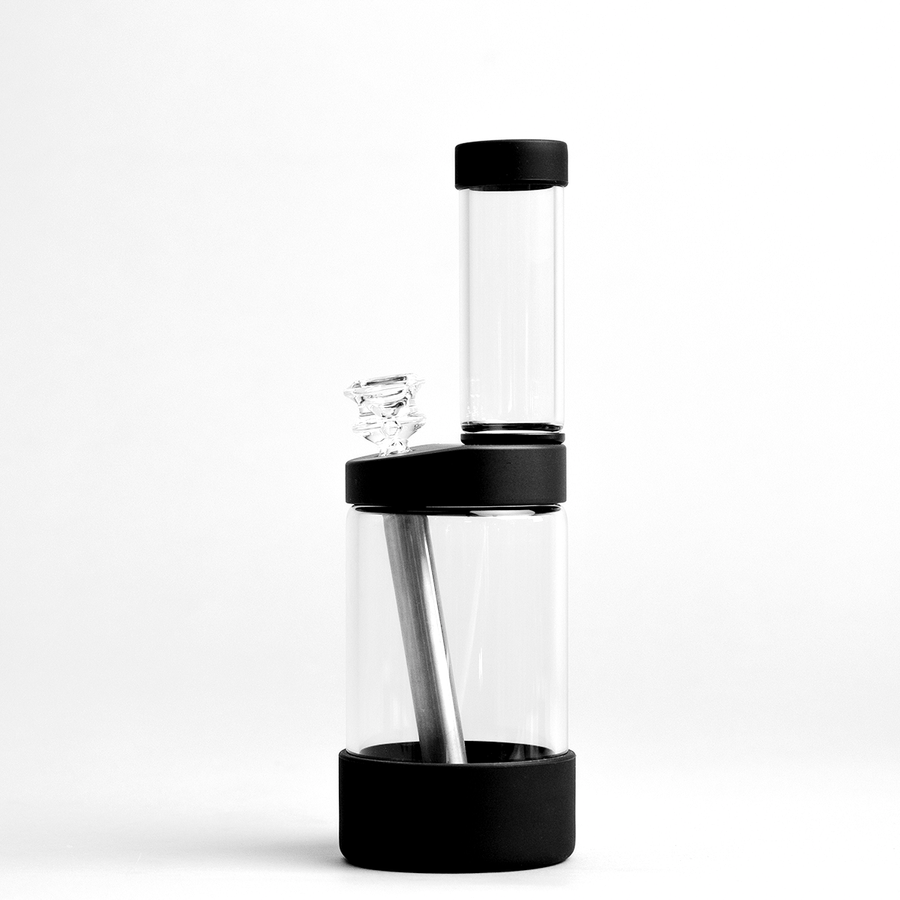
Headshop's bubbler options include the NWTN Home Vesper Bubbler. Treat it as a model to evaluate against the same criteria—not as proof of tobacco compatibility, dimensions, or cleaning access without checking its current instructions.
For a 2026 purchase, compare the complete shape rather than height alone. A projecting mouthpiece, narrow base, or awkward fill opening affects handling even when the main chamber looks small.
- Check the base shape and the space needed around the mouthpiece.
- Identify where water enters and where it drains.
- Confirm that your cleaning container accommodates the complete piece.
- Choose storage away from shelf edges, children, and pets.
- Plan to transport the piece empty, cool, clean, and protected.
Check water control without tobacco or heat
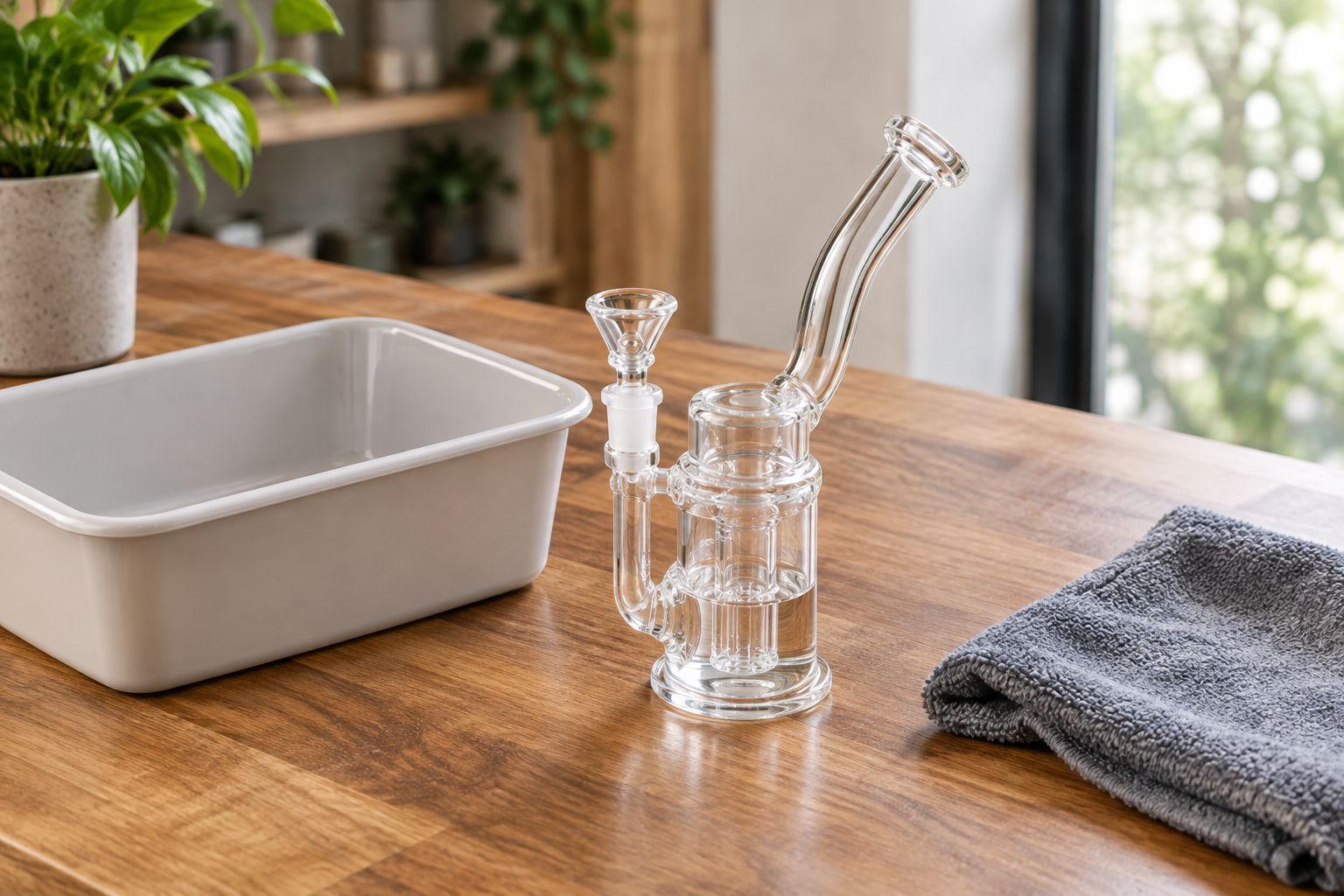
Read the manufacturer's fill instructions first. An unlit water check helps you identify leaks, poor drainage, and water reaching the mouthpiece without introducing tobacco or a flame.
There is no universal fill quantity for every bubbler. Chamber shape and internal openings differ, so a fixed volume borrowed from another model is not a reliable setup instruction.
Use 2 inspection stages: check the dry piece for damage, then check water handling according to its instructions. Stop if you find a crack, leaking connection, or component that does not fit correctly; do not repair a heated or wetted passage with household adhesive.
- Inspect the bowl, base, mouthpiece, and removable connections while dry.
- Add only the water amount or level specified for that model.
- Check for leaks over a sink or basin.
- Confirm that water does not reach the mouthpiece during the instructed check.
- Empty and dry the piece before putting it away.
Follow tobacco-specific instructions rather than familiar habits
A bubbler is not simply a traditional tobacco pipe with water added. Bowl geometry, airflow controls, and component materials differ, so transferring your usual packing, tamping, or clearing routine without checking instructions creates avoidable problems.
Do not use a bubbler as a reason to inhale more deeply or hold smoke longer. Tobacco smoke is harmful regardless of whether it feels cooler, and a larger chamber is not a health benefit.
Keep product compatibility and health claims separate. A manufacturer can identify an intended material without establishing that smoking it is safe. If reducing tobacco-related harm is your goal, ask a healthcare professional about stopping tobacco use rather than changing pipe styles.
- Follow the manufacturer's tobacco preparation and loading instructions.
- Keep loose material out of passages that must remain open.
- Use only the heating method specified for the piece.
- Let hot components cool before touching, removing, or cleaning them.
- Stop using a piece with damaged glass or an obstructed passage.
Build cleaning into the purchase decision
Start with the cleaning method the manufacturer permits, using supplies you already have when they meet those instructions. An additional cleaning product is useful only if it suits the piece's materials and helps reach the residue—not because it carries a smoking-accessory label.
Glass, wood, metal, coatings, seals, and decorative finishes do not share one universal cleaning method. Never apply a glass-cleaning routine to a wooden tobacco pipe, and never assume an entire mixed-material assembly can be submerged.
Make this your 2026 buying rule: if you cannot explain how the piece drains and dries, keep comparing. A complicated water path creates a maintenance commitment that its exterior photo does not show.
- Empty used water after use and let hot parts cool before cleaning.
- Follow the specified cleaner, contact method, and rinsing instructions.
- Keep flammable cleaners away from flames, sparks, and hot surfaces.
- Rinse permitted washable parts thoroughly and inspect for remaining residue.
- Allow the piece to dry before storage or reuse.
- Replace damaged components rather than forcing them back into service.
Compare bubbler options and tobacco-pipe alternatives
The best format is the one whose maintenance requirements you will actually follow. A bubbler adds water handling; a dry pipe avoids it. Neither format makes tobacco smoking safe.
Use this comparison to separate construction choices from brand names. The examples below identify different product types, not interchangeable tobacco recommendations; check intended use and current manufacturer instructions for every model.
| Option | Best for | Practical advantage | Key limitation |
|---|---|---|---|
| Fixed-bowl bubbler | Adults who prefer fewer separate components | Keeps the bowl attached to the main piece | Restricts direct access beneath the bowl |
| Removable-bowl bubbler | Adults prioritizing bowl access | Allows the bowl to be handled separately | Adds a component and connection to inspect |
| Simple glass water path | Adults prioritizing visible cleaning access | Makes accessible internal surfaces easier to inspect | Glass still requires careful handling |
| Traditional dry tobacco pipe | Adults who do not want water maintenance | Requires no filling or draining | Does not provide water cooling |
| Larger beaker water pipe | Adults comparing a tabletop format | Offers a different base and chamber layout | Requires more storage and is not a handheld bubbler |
Headshop's supplied product examples show why measurements need context. The Shire Pipes Standing Carved Cherry Wood Tobacco Pipe - 5.5" is described as 5.5 inches long, made from cherry wood, and freestanding; it is a dry tobacco pipe, not a bubbler.


The SeshGear Glass Beaker Water Pipe Smokers' Kit | 8" | 14mm F identifies an 8-inch water pipe with a 14 mm female connection. Those measurements describe that product—not a recommended bubbler size or proof that its components fit another piece.
For your 2026 comparison, keep dimensions and connection measurements in separate columns. Overall height tells you about space; joint size tells you about a connection. Neither answers whether a product is intended for your tobacco or how easily it cleans.
Common mistakes tobacco smokers make with bubblers
Treating cooler smoke as safer smoke
Water cooling changes the smoking experience, not the fact that tobacco combustion produces harmful smoke. Do not interpret reduced harshness, visible bubbles, or a longer smoke path as a safety rating.
Choose a bubbler for its format, not a health promise. Tobacco cessation addresses the underlying exposure; buying more filtration hardware does not establish protection.
Copying a traditional pipe-cleaning routine
A wooden tobacco pipe and a glass bubbler have different care requirements. Familiar scraping, tamping, or soaking habits do not transfer automatically, especially where glass walls, coatings, seals, or narrow passages are involved.
Use the instructions for the actual piece. If you cannot reach a blockage safely, stop rather than applying more force.
Buying extra chambers without checking drainage
More internal features mean more surfaces and passages to inspect. A chamber that looks impressive in a product photograph still needs a workable route for dirty water and rinse water to leave.
Before choosing extra complexity, identify every fill, drain, and cleaning opening. Accessible construction is a stronger purchase criterion than decorative complexity.
Assuming every bowl or screen fits
A bowl's appearance does not establish its connection size, and a screen that fits one opening is not automatically suitable for another. Forcing either component risks damage or an obstructed passage.
Check the specified fit before buying accessories. Do not grind, bend, glue, or wedge parts into place to make an incompatible setup work.
FAQ
What's the best bubbler for a tobacco smoker?
The best bubbler for a tobacco smoker is one explicitly intended for tobacco, with accessible cleaning passages and a stable base. Choose a fixed or removable bowl according to your cleaning needs, not appearance alone.
Does a bubbler make tobacco smoking safe?
No, a bubbler does not make tobacco smoking safe. Water cooling does not eliminate nicotine exposure or the harmful products of tobacco combustion.
Is a bubbler better than a traditional tobacco pipe?
A bubbler is better suited to adults who specifically want a water-pipe format; a traditional tobacco pipe avoids filling and draining. Both involve harmful tobacco smoke, so the choice is about handling and maintenance rather than safety.
How much water should I put in a tobacco bubbler?
Use the water level or quantity specified by the bubbler's manufacturer. There is no universal fill amount because chamber shapes and internal openings differ.
Can I use a tobacco bubbler without water?
Use a tobacco bubbler without water only if its manufacturer permits dry use. Without water, smoke does not pass through a water bath, so the intended cooling function is absent.
Can I clean a wooden pipe like a glass bubbler?
No, a wooden tobacco pipe should not automatically receive the same cleaning treatment as a glass bubbler. Follow material-specific instructions, including restrictions on soaking and cleaning solutions.
Does Headshop sell tobacco pipes as well as bubblers?
Headshop sells pipes and bubblers, and the supplied product catalog includes named tobacco pipes. Confirm each model's intended use and care instructions before choosing it for tobacco.
One last thing
An empty-looking chamber is not necessarily a dry chamber. Before storing a cleaned bubbler, inspect the low points and passages where water collects, then follow its drying instructions.
For a 2026 purchase, ask one final question: Can you inspect the places you need to clean? If the answer is no, a simpler design deserves the next look.
Related guides