

How long does it take to roll a joint with a roller?
There is no fixed time for rolling a joint with a roller: preparation, loading, paper feeding, and sealing all affect the result. The rolling motion alone is not the full job, so a claim about rolling in seconds does not tell you how long your complete session will take in 2026.
- How long does it take to roll a joint with a joint roller? Preparation and paper feeding determine the total.
- Headshop lists the RAW Rawtomatic Roll Box for 79mm papers; fit matters more than an unsupported speed promise.
- The Zig-Zag Joint Roller is labeled 78mm; check your paper size before choosing a roller.
- Measure preparation separately from rolling to find the step that needs attention.
Why this matters
A fast rolling motion does not guarantee a fast finished roll. If you still need to prepare material, locate a tip, or replace a torn paper, those tasks belong in your total time.
Start with the task that interrupts you. If tip placement is the sticking point, the guide to loading filter tips into a joint rolling machine addresses that part of the process.
For a useful 2026 buying decision, judge a roller by compatible papers, straightforward loading, and the finished shape—not an unverified stopwatch claim. Keep the manufacturer's instructions beside you when learning a new mechanism.
How long does it take to roll a joint with a roller?
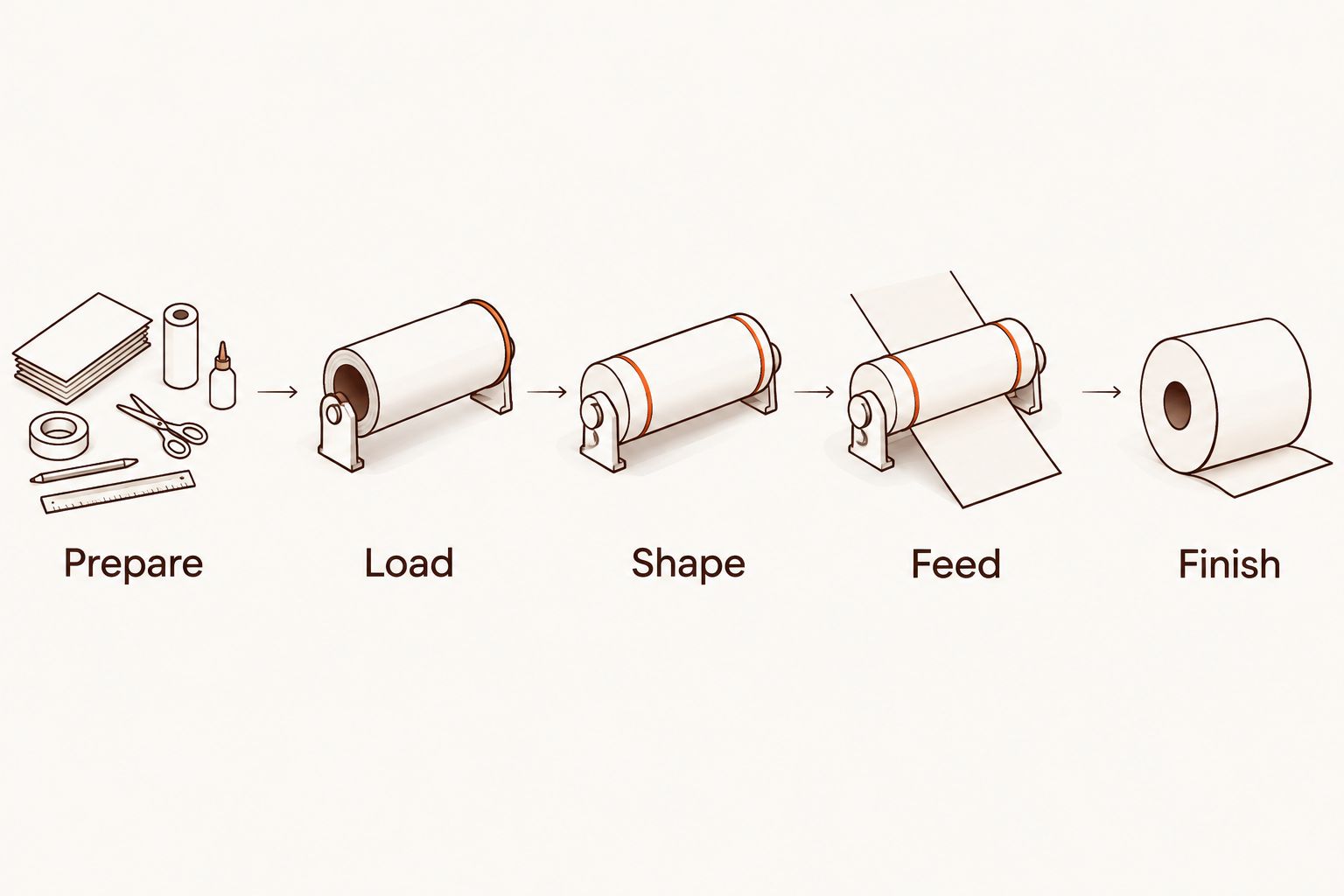
Your complete rolling time includes preparation, loading, shaping, feeding the paper, and finishing. There is no universal duration that applies to every roller and user. A meaningful comparison needs the same starting point and the same definition of finished.
Use this sequence to understand what your timer includes:
- Prepare. Set out compatible paper, a tip if you use one, and prepared legal smoking material. Include this work when measuring the full task.
- Load. Position the tip and distribute material according to the roller's instructions. Correct obvious gaps before closing the mechanism.
- Shape. Close and operate the roller as directed. Stop if the mechanism resists rather than forcing it.
- Feed. Introduce the paper in the orientation specified by the manufacturer. Keep it aligned as the mechanism draws it through.
- Finish. Seal the paper as directed, release the roll, and inspect the seam and shape. Count any necessary correction before stopping your timer.
This is a general workflow for manual apron-style rollers, not a replacement for model-specific directions. Machines with different mechanisms need their own instructions.
What does a rolling-in-seconds claim actually mean?
A rolling-in-seconds description is not a timed average for the complete task. Unless the description defines its starting and finishing conditions, it does not establish whether preparation, loading, or corrections are included.
The RAW Rawtomatic Roll Box - 79mm description says it rolls in seconds. Treat that as the product's stated claim about its rolling action, not a guaranteed total for your routine or a measured comparison against another roller.
What should count as a finished roll?
Choose a consistent endpoint before you compare attempts. A roll that has left the machine but still needs a seam repair is not at the same stage as one that is sealed and inspected.
For a practical timing exercise, stop after removal and inspection. Include rework. Otherwise, a rushed attempt looks faster even when it leaves more work on the table.
Manual roller or rolling box: which fits your routine?
A manual roller and a rolling box both require compatible supplies and correct operation. The useful distinction is how you prefer to handle and store the equipment—not an assumed speed advantage.
The following comparison uses the listed product details. It does not rank either model by measured completion time.
| Option | Best for | Stated details | Advantage | Limitation |
|---|---|---|---|---|
| Zig-Zag Joint Roller - 78mm 12pcs | Adults checking a 78mm roller format | Title identifies a 78mm roller and a 12-piece listing | Clearly stated roller size | The listing is a multiple-unit format; no timed average is stated |
| RAW Rawtomatic Roll Box - 79mm | Adults who want a rolling box with interior storage | Fits 1 1/4 size papers, identified as 79mm; adjustable roll size; non-stretch apron | Combines rolling and interior storage | Paper compatibility still matters; the seconds claim does not define complete preparation time |
Choose by paper fit before you choose by speed. The 78mm and 79mm labels are not a reason to assume the products use identical papers or operate identically. Check the directions for the exact model you select.
Zig-Zag Joint Roller: 78mm format
The Zig-Zag Joint Roller listing identifies a 78mm format. That is a compatibility detail, not a completion-time specification, and it does not establish how quickly a first-time user will finish.
Best for: an adult buyer specifically checking a 78mm roller. The trade-off is the listing's 12-piece format, which deserves attention if you only need a personal-use unit. Confirm what the listing includes before ordering.
RAW Rawtomatic Roll Box: 79mm papers
The RAW Rawtomatic Roll Box description specifies 1 1/4 size papers at 79mm, adjustable roll size, a non-stretch apron, and interior storage. Those details describe fit and handling more usefully than an undefined speed claim.
Best for: an adult buyer who wants a manual rolling box with storage. Its limitation is unchanged by the box format: you still need to prepare the material, load correctly, and feed compatible paper.
Headshop's joint-rolling accessories are best for adult shoppers who want to compare stated paper sizes and manual rolling formats. The listings provide different levels of detail, so check each model's instructions rather than treating the category as interchangeable.


Why rolling time varies
Your roller controls part of the process, but it does not prepare your supplies or decide when a correction is necessary. For your 2026 setup, check these factors before blaming the mechanism:
- Paper compatibility. A paper that does not match the roller's requirements creates a fit problem before rolling begins. Read the model's size guidance rather than relying on appearance.
- Preparation. Timing from an empty workspace includes work that a demonstration with supplies already laid out leaves out. Use the same starting condition when comparing attempts.
- Loading. Tip placement and material distribution are separate from the turning motion. Include any adjustment in your total.
- Paper feeding. Alignment and orientation matter. Follow the manufacturer's directions instead of repeatedly feeding the paper the same unsuccessful way.
- Finishing. A seam that needs attention or a roll that needs reshaping adds work after the mechanism stops. Inspect before calling the task complete.
Find the repeated correction, then address its cause. Turning the roller faster does not fix the wrong paper size, an incorrectly positioned tip, or a feeding mistake.
How can you measure your own rolling time fairly?
Use a timer and record the same stages each time. Your own results answer a narrower but more useful question: how long your chosen roller takes with your supplies and routine.
Separate setup from the loaded-roller stage. That distinction tells you whether the delay happens before the machine is ready or while you operate it.
| Timing boundary | Start | Finish | What it tells you |
|---|---|---|---|
| Complete task | Before gathering and preparing supplies | After removal and inspection | Total time your routine requires |
| Roller operation | Once the roller is loaded | After removal and inspection | Time spent shaping, feeding, and finishing |
| Rework | When you identify a defect | When the correction is complete | Work hidden by an early stopwatch stop |
Keep paper format and roller model unchanged while checking your technique. If you switch equipment and supplies together, the result will not identify which change affected the task.
Do not turn this into a race. A consistent endpoint makes your timing useful; skipping inspection only makes the recorded result shorter.
Is a joint roller faster than rolling by hand?
A joint roller is not automatically faster than hand rolling. A fair comparison includes preparation and corrections for both methods, with the same endpoint.
Choose a roller when you prefer a guided shaping process. Keep hand rolling if it already suits your routine; buying a mechanism does not establish a speed improvement without a comparable timing exercise.
Does a rolling box remove the preparation work?
A rolling box does not remove preparation, loading, or inspection. Interior storage is a listed feature of the RAW Rawtomatic Roll Box, but storage and finished-roll speed are different considerations.
If organizing supplies is your priority, assess that feature on its own. Do not treat a box's storage space as evidence that it rolls faster than another mechanism.
What should you check before buying a roller in 2026?
Start with the paper you intend to use, then confirm the roller's stated compatibility. Next, check whether the listing describes an individual item, a pack, or a display format.
Read the operating instructions before treating a manual rolling box as an automatic machine. A product name or short description is not enough to establish how every part moves.
For Headshop joint-rolling accessories, compare the stated format and included quantity first. Do not buy on an assumed time saving: the available product details describe features, not a controlled head-to-head timing result.
FAQ
How long does it take to roll a joint with a joint roller?
There is no fixed completion time for a joint roller. Preparation, loading, paper feeding, sealing, and corrections all belong in the total; a claim about rolling in seconds does not define that complete task.
Can a beginner expect to finish in seconds?
A beginner should not treat a seconds claim as a guaranteed complete-task time. Follow the roller's instructions and count preparation and corrections when timing an attempt.
Is a joint roller faster than rolling by hand?
A joint roller is not automatically faster than hand rolling. Compare both methods from the same starting condition through removal, sealing, and inspection.
What size papers does the RAW Rawtomatic Roll Box use?
The RAW Rawtomatic Roll Box description specifies 1 1/4 size papers at 79mm. Check the exact model's instructions before using a different paper format.
What size is the Zig-Zag Joint Roller in this guide?
The Zig-Zag Joint Roller listing identifies a 78mm format. Its title also identifies a 12-piece listing, so check the included quantity as well as the roller size.
Does a rolling box prepare the material for me?
A manual rolling box does not replace material preparation. Preparation, loading, paper feeding, and finishing remain separate parts of the task.
Should I include fixing a torn paper in my rolling time?
Include a torn-paper correction when measuring the complete task. Stopping before rework makes an unfinished attempt appear faster than a finished one.
One last thing
For your next attempt in 2026, note where you stop to correct something—not just when the timer ends. A recurring paper-feed problem gives you a specific instruction to revisit; a single total time does not.
Fix the repeated interruption before trying to move faster. That is a more useful target than matching a demonstration that starts with everything already prepared.
Related guides