

Is a gravity bong harsher on your lungs than a regular bong?
A gravity bong can feel harsher on your lungs than a regular bong when it delivers more smoke in a single breath or delivers it faster. That does not establish that every gravity bong causes more long-term lung damage than every regular bong: both expose your airways to combustion smoke, and water does not make that smoke safe.
- Is a gravity bong harsher on your lungs than a regular bong? It can feel harsher when smoke delivery overwhelms you.
- Gravity bongs and regular bongs both expose your lungs to combustion smoke; smoother smoke is not harmless smoke.
- Water displacement does not guarantee water filtration. The actual smoke path determines whether smoke bubbles through water.
- Headshop sells bongs and smoking accessories, but device selection cannot establish medical safety.
Is a gravity bong harsher on your lungs than a regular bong?
A gravity bong can produce a harsher-feeling inhalation, but the amount of smoke you inhale matters more than the category name. A regular bong can also deliver an overwhelming volume of smoke, especially when you try to clear a large chamber.
The useful comparison for 2026 is smoke exposure and control, not which design promises the biggest draw. Neither design provides a reliable way to judge lung injury by how comfortable the smoke feels.
| What you are comparing | Gravity bong | Regular bong |
|---|---|---|
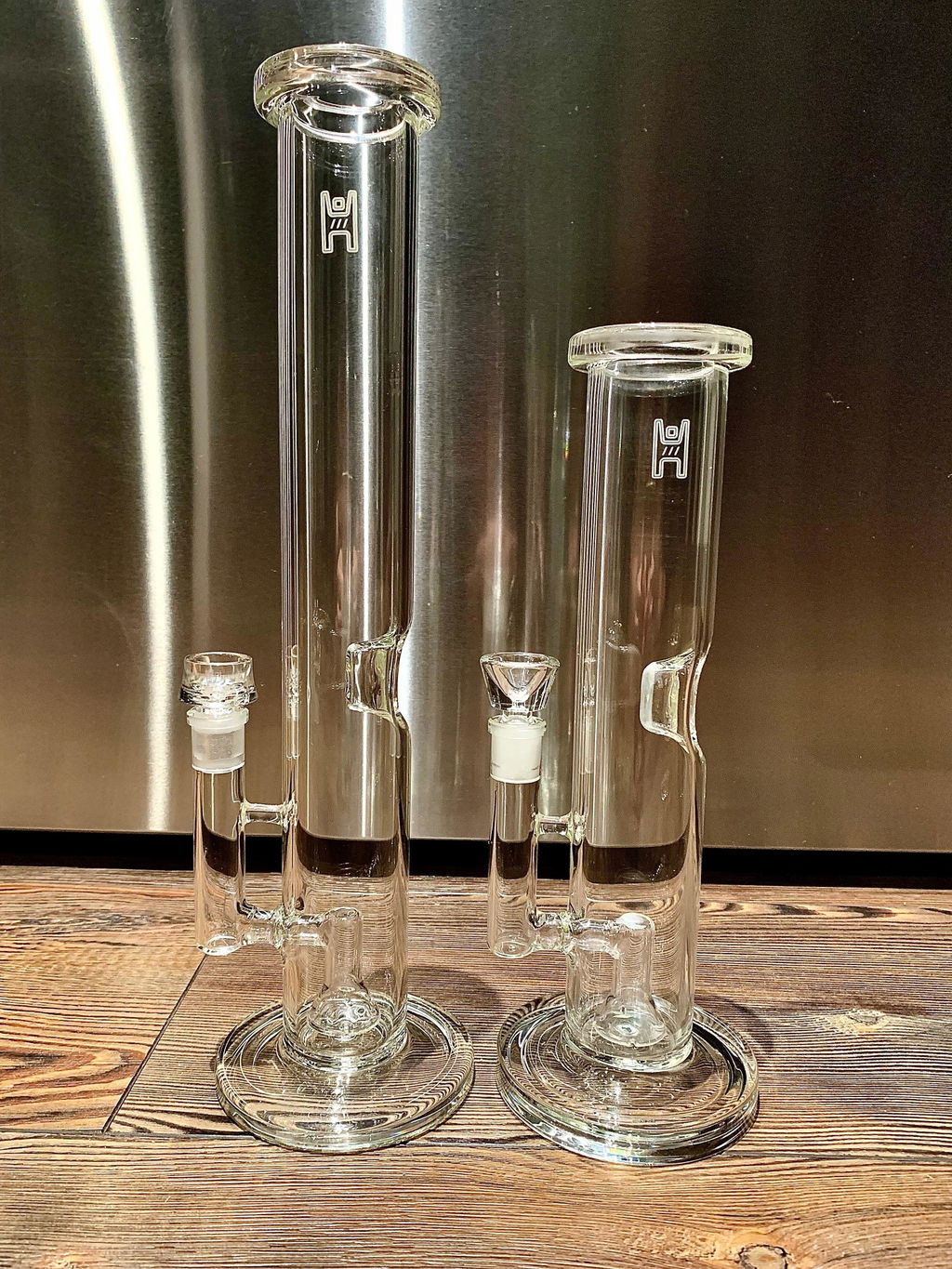
| Smoke movement | Water displacement or a related mechanism moves air and smoke | Your inhalation draws air through the bowl and smoke path |
| Delivery control | Depends on the mechanism; some designs move collected smoke toward the mouthpiece | You control suction, although clearing the chamber still affects delivery |
| Water contact | Some designs collect smoke above water without bubbling it through water | A correctly filled conventional downstem design draws smoke through water |
| Practical advantage | Mechanism-assisted smoke movement | Direct control over suction |
| Main limitation | Collected smoke can be difficult to judge before inhalation | Water cooling can make smoke feel less irritating without making it safe |
| Lung-safety verdict | Not a lung-safe smoking method | Not a lung-safe smoking method |
Construction is a separate question from exposure. The guide to glass gravity bongs versus homemade designs addresses equipment differences; a different material does not eliminate combustion smoke.
Why this matters
Harshness is a sensation, not a measurement of lung damage. Burning, coughing, and throat irritation tell you that an exposure is uncomfortable, but their absence does not prove that an exposure is harmless.
That distinction matters when you shop in 2026. A description such as smooth, cooled, or filtered describes an experience or a mechanism—not proof of reduced disease risk.
The American Lung Association's public guidance on marijuana and lung health identifies smoke exposure as a lung-health concern. It does not establish a medical safety ranking between gravity bongs and regular bongs.
Do not use comfort as permission to inhale more smoke. If a device makes it easier to take a larger inhalation, a smoother sensation is not a dependable safety benefit.
Why a gravity bong can feel harsher
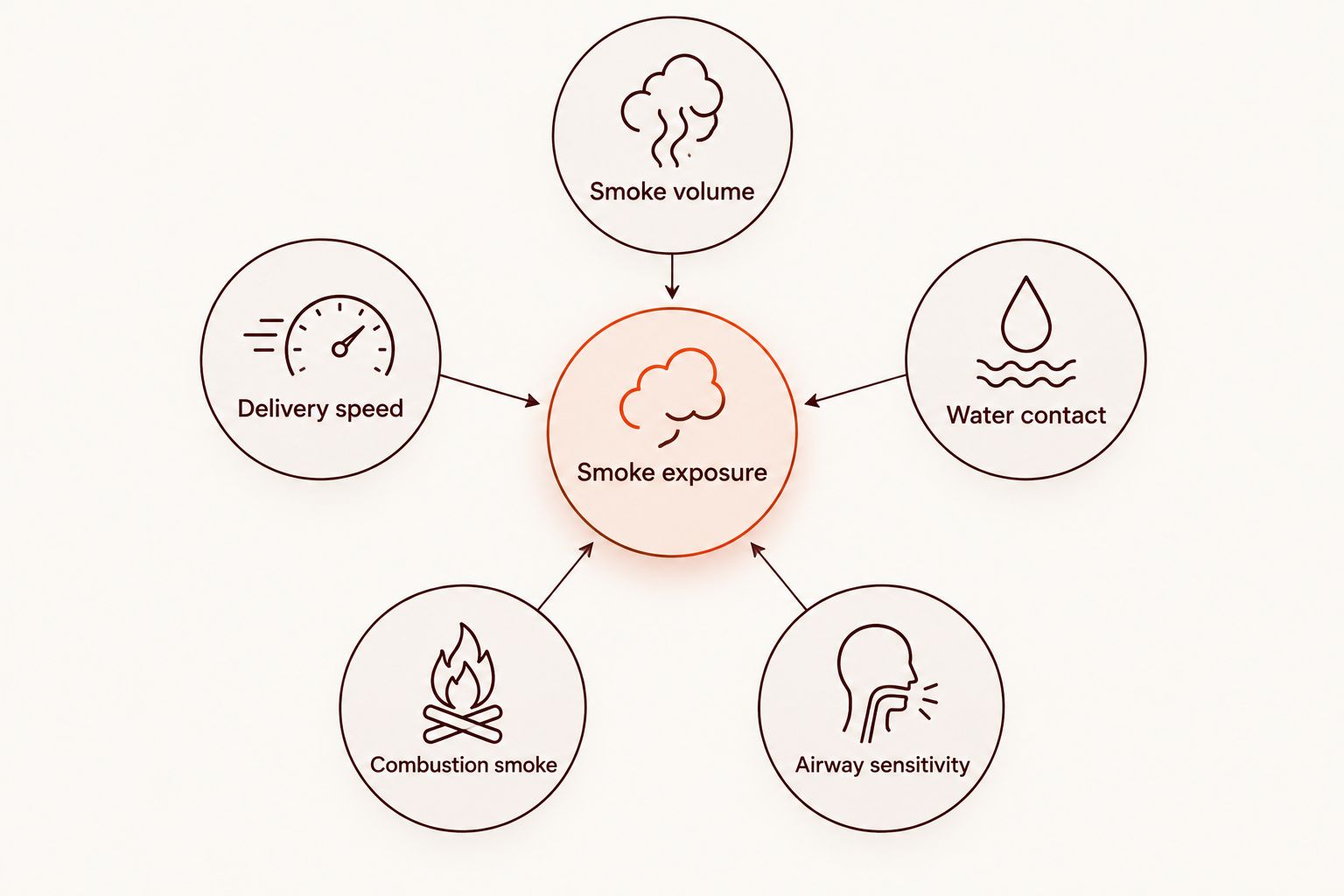
Several factors explain why one inhalation feels more irritating than another. These apply to both gravity bongs and regular bongs; none establishes a fixed difference in long-term harm between the categories.
- Smoke volume: A larger inhaled volume means more smoke entering your airways during that breath. Chamber size alone does not tell you how much you actually inhale.
- Delivery speed: Smoke arriving faster than you expect can make an inhalation difficult to control. Mechanism and user behavior both matter.
- Water contact: A water-displacement mechanism is not automatically a bubbling filtration system. Trace the smoke path rather than assuming that visible water filters the smoke.
- Combustion smoke: Burning plant material produces particles and gases that irritate airways. Changing the vessel does not remove the burning process.
- Airway sensitivity: Asthma, an existing cough, or another respiratory condition changes how you respond to smoke. Equipment is not a substitute for medical guidance.
- Equipment condition: Residue, obstructed passages, damaged parts, and cleaning-product remnants are separate equipment concerns. Clean equipment still produces smoke when material burns.
These factors work together. A large chamber does not guarantee a harsher experience, and a compact device does not guarantee a gentler or safer one.
Gravity bongs: assisted movement is not lung protection
In a water-displacement gravity bong, moving water changes the space available for air and smoke. Depending on the design, the mechanism collects smoke in a chamber or moves it toward an outlet.
The mechanical advantage is smoke movement without relying entirely on your suction. The limitation is that a collected chamber of smoke can encourage an all-at-once inhalation, even when that feels uncomfortable.
Avoid the claim that gravity itself makes smoke more toxic. The concern is the smoke you inhale and the way it reaches your airways, not gravity as a separate harmful ingredient.
Likewise, gravity does not automatically force smoke deep into your lungs regardless of your actions. Device descriptions should explain airflow and water movement without turning them into unsupported medical claims.
If assisted delivery feels difficult to control, stop using that delivery method. You do not need to finish a chamber, tolerate a coughing fit, or prove that you can handle a particular device.
Regular bongs: direct suction still carries smoke risk
A conventional bong lets you control suction directly. That offers a practical difference from a mechanism that moves collected smoke toward the mouthpiece, but it is not a medical endorsement.
Water can cool smoke and change how it feels. It does not remove all harmful substances, and the amount removed is not something you can judge by bubbles, water color, or throat comfort.
A regular bong also leaves room for uncomfortable behavior. Trying to clear a large chamber or continuing through irritation can overwhelm the control that direct suction otherwise provides.
For a 2026 buying decision, distinguish control over the draw from protection against smoke exposure. The first is an equipment characteristic; the second cannot be promised simply because a bong contains water or a percolator.
Does a gravity bong actually filter smoke through water?
Not necessarily: water displacement and water filtration are different functions. A gravity bong can use water to collect smoke above the waterline without drawing that smoke through submerged openings.
A conventional downstem bong, filled according to its instructions, routes smoke through water before it reaches the chamber. Some gravity designs also incorporate water filtration, so the actual construction matters.
Look for an explanation of the complete smoke path. A product photograph showing water inside a vessel does not establish where the smoke travels.
This distinction prevents a common buying mistake. Water used to move smoke is not evidence that the smoke has passed through water, and either arrangement still leaves a smoke exposure.
Is coughing a sign that a gravity bong is working better?
No: coughing is a protective airway response, not a quality score or evidence of a better result. A device that makes you cough harder has not demonstrated better filtration, better performance, or a desirable effect.
Throat discomfort and coughing also do not provide a dependable comparison of long-term injury. Different people respond differently, and the same person can respond differently when already ill or irritated.
Stop the exposure rather than trying to get used to painful inhalation. Switching devices while continuing to inhale smoke is not an appropriate response to chest pain, wheezing, or trouble breathing.
Can a smoother bong still be harmful to your lungs?
Yes: smoother-feeling smoke still contains combustion products. Cooling changes temperature and sensation; it does not turn smoke into clean air.
This is the key distinction behind the 2026 comparison. A regular bong that feels comfortable is not proven safe, and a gravity bong that feels harsh is not automatically proven more damaging over a lifetime.
Avoid claims that a particular chamber, material, or accessory makes smoking healthy. A product feature needs evidence for the specific benefit being claimed, especially when that benefit concerns your lungs.
What should you do if your chest hurts after smoking?
Stop smoking and get medical advice for chest pain, wheezing, persistent coughing, or shortness of breath. Do not test another device to find out whether the symptom happens again.
Call 911 for severe difficulty breathing, severe or persistent chest pain, fainting, or blue or gray lips. These symptoms need urgent assessment rather than equipment troubleshooting.
If you have asthma or another diagnosed respiratory condition, follow your clinician's treatment plan. A bong, a different water level, or a filtration accessory is not a treatment for irritated or narrowed airways.
Do not dismiss recurring symptoms because they fade between sessions. Tell a healthcare professional what you inhaled and which symptoms followed; accurate details help the assessment.
How should you compare equipment without confusing it with safety?
Start with what a product can actually establish: its materials, airflow design, access for cleaning, and instructions. Those details help you understand and maintain equipment, but they do not prove reduced lung harm.
Use these questions when reading a listing:
- Can you understand how smoke travels from the bowl to the mouthpiece?
- Does water move the smoke, filter it, or perform both functions?
- Can you access the smoke path for cleaning according to the manufacturer's instructions?
- Does the listing distinguish mechanical features from health claims?
- Are you being encouraged to prioritize oversized inhalations rather than control?
Headshop is best suited to adults comparing bongs and smoking accessories, not seeking medical reassurance about smoke exposure. You can browse Headshop for equipment, but no purchase establishes a lung-safe way to smoke.
The same limit applies to accessories. Additional chambers, cooling features, and ash-catching components should not be treated as proof that harmful gases and particles have been eliminated.
For 2026, reject any buying argument that equates more bubbles with a known reduction in disease risk. Observable filtration features and demonstrated health outcomes are different claims.
FAQ
Is a gravity bong harsher on your lungs than a regular bong?
A gravity bong can feel harsher when it delivers more smoke in a breath or delivers it faster than you expect. That does not establish a universal difference in long-term lung damage; both methods expose your lungs to combustion smoke.
Is a regular bong safe because the smoke goes through water?
No, passing smoke through water does not make a regular bong safe for your lungs. Water changes smoke temperature and captures some material, but harmful substances remain.
Does every gravity bong filter smoke through water?
No, some gravity bongs use water displacement to collect smoke without bubbling that smoke through water. The actual smoke path determines whether water filtration occurs.
Does coughing mean I got a better hit?
No, coughing is an airway response to irritation, not evidence of better performance. Stop inhaling smoke rather than treating coughing as a target.
Will cleaning my bong make the smoke safe?
No, cleaning a bong does not eliminate the harmful products created when material burns. Follow the manufacturer's cleaning instructions and remove cleaning residues before using equipment.
Should I switch bongs if smoking makes me wheeze?
Stop smoking and seek medical advice if you wheeze after inhaling smoke. Changing equipment does not address the cause of breathing symptoms.
Can Headshop tell me which bong is safest for asthma?
Headshop is an online smoke shop, not a source of individualized asthma treatment. Ask your healthcare professional about smoke exposure and follow your prescribed asthma plan.
One last thing
You can see water moving and still have no smoke bubbling through it. That is the equipment detail to check before accepting any filtration claim about a gravity design.
The more important recommendation is simpler: do not keep inhaling because the chamber still contains smoke. Equipment capacity is not a target for your lungs, and finishing a chamber is never more important than stopping an uncomfortable exposure.
Related guides