

Percolator Bong Cost in 2026: What Drives the Price
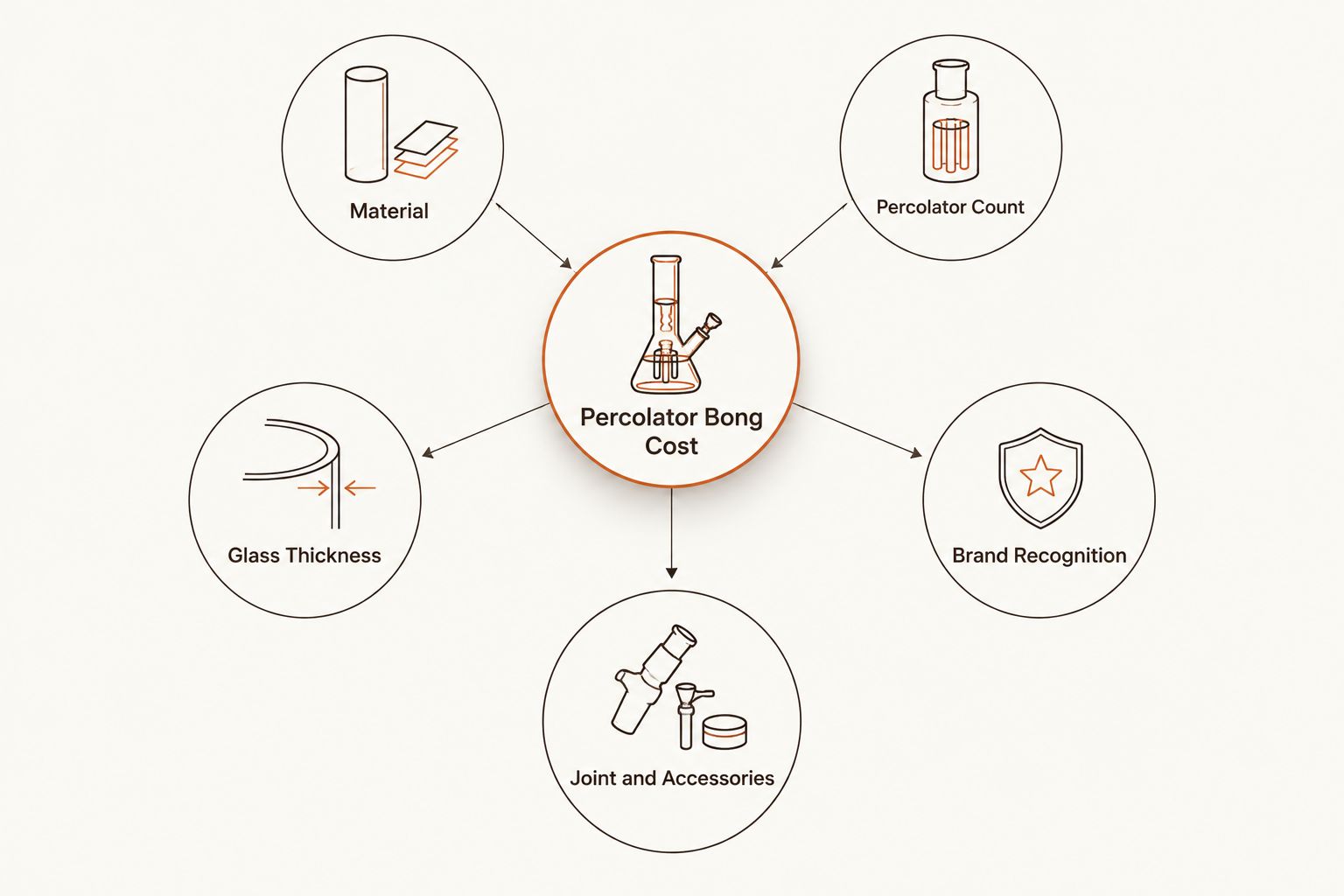
Percolator bong cost in 2026 comes down to three things: the material (acrylic or glass), how many percolators the piece has, and whether it carries a recognizable brand or artist name — not the number of chambers alone. A single-percolator acrylic piece sits at the budget end of the market, while a multi-percolator scientific glass rig with a known name attached sits at the top. The hidden cost most buyers miss: extra percolators add drag and make cleaning harder, so a "more chambers = better" piece can actually cost you more in maintenance time than it saves in smoothness.
- Percolator bong cost in 2026 tracks material, percolator count, and brand — not size.
- Acrylic single-percolator pieces sit at the budget end; multi-percolator scientific glass sits at the top.
- More percolators does not automatically mean smoother hits — extra chambers add drag and cleaning time.
- Headshop's percolator bong lineup spans acrylic starter pieces through collector-grade multi-perc glass.
Why this matters
A percolator bong is a bigger investment than a basic straight-tube piece, and the percolator itself is the part most likely to crack, clog with resin, or turn out to be more decoration than function. Buyers who chase percolator count end up with a piece that's harder to clean and doesn't hit any smoother than a well-designed single-percolator setup. Knowing what actually drives percolator bongs up in cost keeps you from paying for chambers that don't do much.
How much does a percolator bong cost in 2026?
Percolator bong pricing splits into four practical tiers based on material and percolator complexity, not just size. The table below breaks down what separates each tier and who each one actually fits.
| Tier | Material | Percolator setup | Best for |
|---|---|---|---|
| Budget | Acrylic or thin glass | 1 percolator, simple design | First-time buyers, dorm or travel use |
| Mid-range | Borosilicate glass | 1-2 percolators (honeycomb, tree) | Regular smokers wanting smoother pulls |
| Premium | Thick scientific glass | 2-4 percolators (showerhead, matrix, turbine) | Daily users, collectors |
| Luxury / collab | Artist or licensed glass | Multiple percolators plus recycler chamber | Gift buyers, display pieces |
Current pricing on any specific piece shifts with drops and restocks, so check the live listing before comparing tiers.
Budget tier: acrylic, single-percolator
Acrylic percolator bongs are the entry point because the material is cheap to mold and hard to break. A piece like the acrylic straight tube bong from Headshop's catalog shows the pattern: simple build, one percolator, low breakage risk. Best for: first-time buyers and anyone who needs something that survives a backpack. Verdict: Buy if you want a no-fuss starter piece.
Mid-range tier: glass, one to two percolators
Borosilicate glass with a honeycomb or tree percolator is where most regular smokers land. It holds heat differently than acrylic, doesn't scratch cloudy over time, and the percolator actually does noticeable filtration work at this level. Verdict: Buy if you smoke often enough to justify a glass piece that needs regular cleaning.
Premium tier: thick glass, multiple percolators
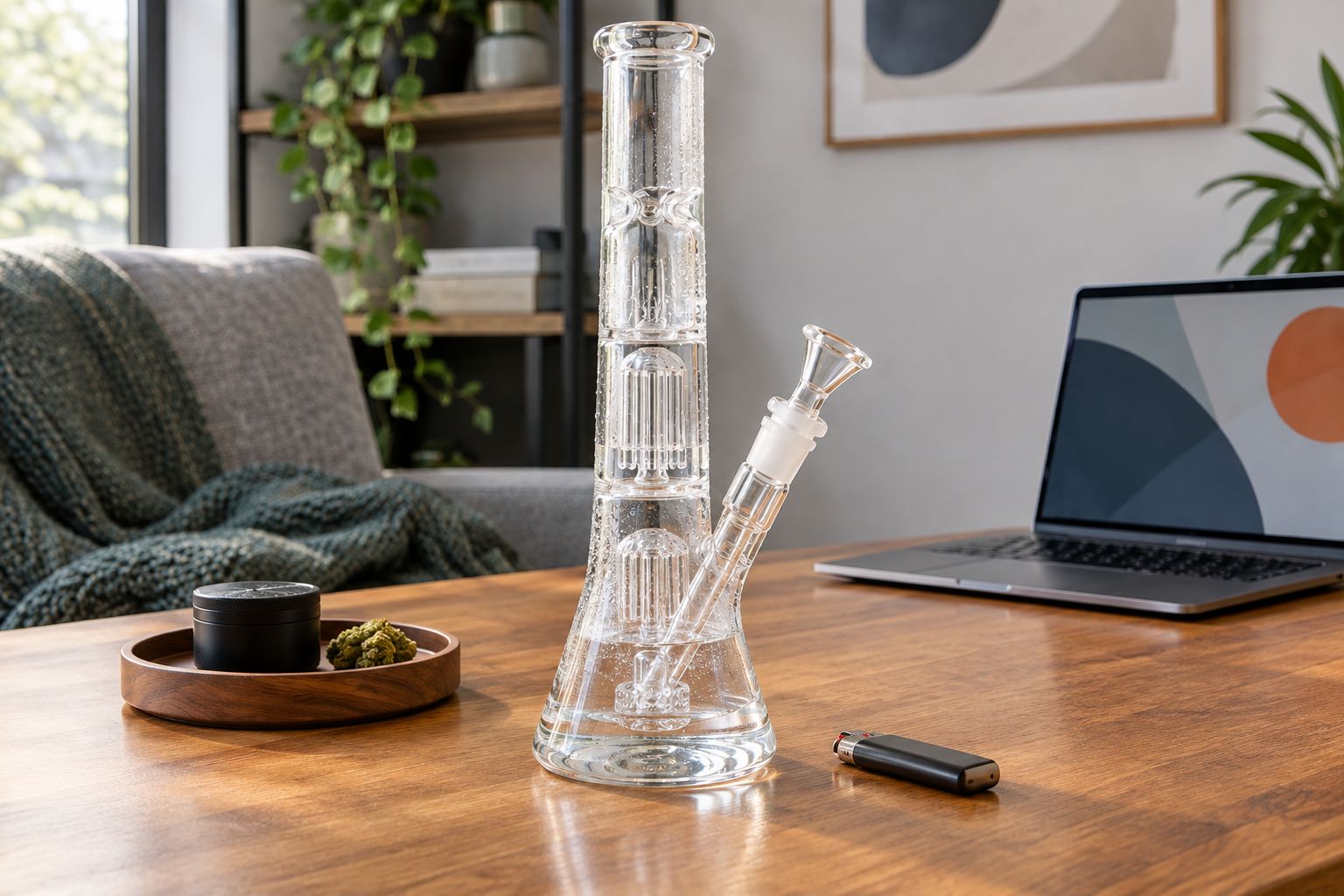
Showerhead, matrix, and turbine percolators stacked two to four deep define the premium tier. Glass thickness goes up here too, which adds both durability and weight. Verdict: Buy for daily users and collectors who don't mind a longer cleaning routine; Skip if you want something you can grab and go.
Luxury and collab tier: artist glass, recycler chambers
Limited runs and artist collaborations push cost up regardless of function — you're paying for the name and the run size as much as the glasswork. Recycler chambers layered on top of percolators add another cleaning step and another point where the piece can crack. Verdict: Hold unless you specifically want a display or collector piece; Skip if smooth daily hits are the only goal.
Why percolator bong cost varies
- Percolator type and count — honeycomb, tree, showerhead, and matrix percolators each cost more to mold and fuse than a plain tube
- Material — acrylic is cheapest to produce, borosilicate glass costs more, thick scientific glass costs the most
- Glass thickness — thicker joints and bases resist chips and drops but take more raw material and labor
- Brand and artist recognition — a known glassblower or licensed design (Cheech & Chong, Grateful Dead collabs, and similar) adds a premium unrelated to function
- Joint size and included accessories — bundled ash catchers, extra bowls, or downstems raise the total cost of the package
- Recycler chambers and extra functions — added loops for recycling water increase both build complexity and price
More percolators does not automatically mean smoother hits — past three or four chambers, drag increases faster than filtration improves.
“Past three or four percolator chambers, drag increases faster than filtration improves.”
Are percolator bongs more expensive than regular bongs?
Yes, percolator bongs generally cost more than a plain straight-tube or beaker bong of the same material because the percolator adds a manufacturing step. The gap is small at the acrylic level and widest at the scientific-glass level, where multiple fused percolators take more labor to produce.
Do more percolators always mean a better bong?
No — more percolators mean more filtration surface up to a point, then diminishing returns and more drag on the inhale. Two to three well-made percolators usually deliver smoother hits than four crammed into one tube, and fewer chambers also mean less cleaning.
Is glass or acrylic better for a percolator bong?
Glass gives a cleaner taste and holds up better to repeated cleaning with isopropyl alcohol, while acrylic wins on durability if you're worried about dropping it. Choose acrylic for travel or first-time use and glass for a piece you'll keep at home and clean regularly.
FAQ
What's the best percolator bong for beginners?
An acrylic or borosilicate glass piece with a single honeycomb or tree percolator is the best starting point in 2026 — it's forgiving to clean and durable enough for daily handling.
Is a percolator bong better than a regular bong?
A percolator bong filters and cools smoke more than a plain tube bong, but the difference is only noticeable with well-designed percolators — a cheap or clogged percolator can perform worse than no percolator at all.
How much does a percolator bong cost compared to a dab rig?
Percolator bongs and percolator-style dab rigs use similar pricing logic — material, percolator count, and brand drive cost on both, though rigs often add banger and torch costs on top.
Do percolator bongs need special cleaning?
Yes, percolator chambers trap resin in tighter spaces than a plain tube, so they need isopropyl alcohol and coarse salt soaks more often than a basic bong.
Are acrylic percolator bongs worth buying?
Acrylic percolator bongs are worth buying for travel, dorm use, or as a first piece — they're at the budget end of the market and resist breaking, though they don't hit as smooth as glass.
What percolator type gives the smoothest hits?
Showerhead and matrix percolators generally give the smoothest hits because they break smoke into more small bubbles, but they also add more drag than a single honeycomb percolator.
Do more percolators mean a higher price?
Yes, each additional percolator chamber adds manufacturing steps and raises the price, though the jump from one to two chambers matters more than the jump from three to four.
One last thing
Most experienced daily smokers settle on one or two percolators, not four — the extra chambers past that point mostly add cleaning time, not smoother hits. If you're buying your first percolator bong, start with a single-percolator glass or acrylic piece from Headshop's lineup and upgrade once you know how often you'll actually clean it.
Related guides


![Vessel Pipe [Maritime]](https://cdn.shopify.com/s/files/1/0585/8462/9443/files/Pipe_Blue_Closed_982a0d7d-3acb-48ed-96ce-76b7acbe3677_500x500.jpg?v=1744306295)