

Can a joint roller roll cone-shaped joints?
A joint roller can roll cone-shaped joints only when its design supports a taper; a standard straight roller is built to produce a cylinder, not a consistent cone. For cone-shaped results, choose a purpose-built cone roller or fill a pre-rolled cone rather than forcing a straight rolling machine to do a different job.
- Can a joint roller roll cones? Cone-compatible designs can; standard straight rollers are built for cylindrical joints.
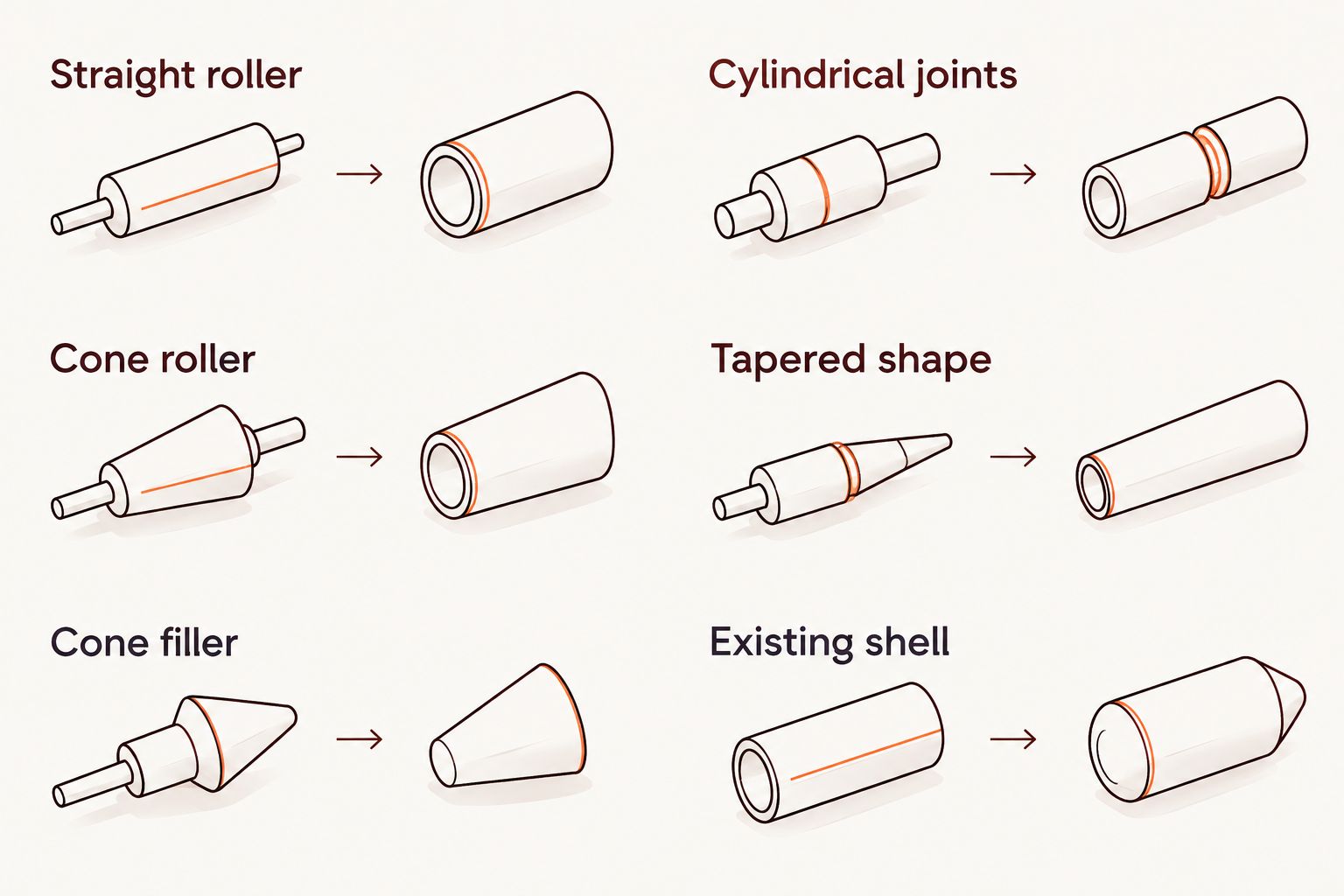
- A cone roller shapes loose paper; a cone filler packs an already-shaped paper shell.
- Headshop lists rolling machines and pre-rolled cones; choose by shape compatibility, not tool length alone.
- Pre-rolled cones remove the shaping step, but you still need to pack them without blocking airflow.
Can a joint roller roll cone-shaped joints?
Yes, if the roller is designed for cones. A standard straight roller is not a dependable cone-making tool. Its rolling pocket generally holds material at a similar diameter along its length, while a cone needs a narrow tip and a wider open end.
Use this distinction when browsing Headshop smoking accessories in 2026: rolling, shaping, and filling are different jobs. A product described as a rolling machine does not automatically perform all of them.
| Tool or method | Makes a cone shape? | Best for | Main advantage | Main limitation |
|---|---|---|---|---|
| Standard straight roller | Not its intended result | Consistent cylindrical joints | Guides paper around the material | Does not reliably create a taper |
| Purpose-built cone roller | Yes, when used as directed | Rolling cones from loose papers | Controls the tapered shape | Requires compatible papers and tips |
| Cone filler | No; fills an existing cone | Loading pre-rolled cones | Keeps shaping separate from filling | Needs a pre-formed paper shell |
| Pre-rolled cone, filled manually | Shape is already formed | Skipping paper rolling | Removes the tuck-and-seal step | Still requires careful packing |
| Hand rolling | Yes | Controlling the taper yourself | Allows direct shape adjustment | Requires more handling and practice |
Why this matters
Buying a longer roller does not solve a shape problem. Length tells you about paper fit; the rolling pocket and mechanism determine how the paper wraps around its contents.
For a 2026 purchase, start with the result you want: a cylinder, a cone rolled from paper, or a filled pre-rolled cone. That choice narrows the tools before you compare materials, storage features, or package quantities.
There is also a practical difference between a cone that looks tapered and one that holds its shape. An unevenly loaded straight roller can produce a lopsided result without providing the controlled taper you wanted.
Choose the tool for the shape, then match the paper and tip. Reversing that order creates avoidable compatibility problems.
Standard straight rollers: best for cylindrical joints
A conventional roller uses a flexible apron between rolling bars to wrap paper around the contents. With a straight rolling pocket, the intended result is a cylinder rather than a shape that widens toward the open end.
That makes a straight roller useful when you want repeatable paper handling without shaping everything between your fingers. The trade-off is limited control over the taper.
Putting more material at one end does not turn the mechanism into a cone roller. It changes the load inside a pocket that still follows its original geometry, which can leave uneven compression or a difficult paper feed.
Use a standard roller according to its instructions. If cone-shaped output is essential, treat an explicit cone-rolling claim as a buying requirement rather than an optional feature.
Purpose-built cone rollers: best for shaping loose papers
A cone-compatible roller is intended to create a narrower tip end and a wider body. The exact loading method depends on the design, so follow the manufacturer's instructions rather than transferring a straight-roller routine unchanged.
Check whether the product actually rolls loose paper into a cone. Some tools associated with cones only support or fill a shell that already has its shape.
The benefit is guided tapering without relying entirely on hand rolling. The limitation is compatibility: the paper, tip, and mechanism must work together, and the word cone alone does not explain the process.
What should you check before buying a cone roller?
Look for a description or demonstration that shows loose paper entering the tool and a tapered roll coming out. A photo of finished cones beside a machine does not establish that the machine formed them.
Then check the supported paper format, tip requirements, and loading instructions. For 2026 shopping, these details matter more than broad claims about convenience or speed.
Cone fillers: best for loading an existing shell
A cone filler moves prepared material into a pre-rolled cone. It does not normally wrap a flat sheet of paper around that material, so it answers a different question from whether a roller can make cones.
The advantage is that you keep the taper already built into the paper shell. The limitation is that filling still needs attention: a finished shape does not guarantee an even pack.
Manual filling also works without a dedicated filling machine. Choose a filler when its supported cone format and loading method fit your routine, not because the product name sounds interchangeable with a roller.
The distinction is simple: a cone roller creates the shell; a cone filler loads the shell. Pre-rolled cones let you skip shell construction altogether.
Why cone-shaped results vary
The tool is only part of the result. Paper fit, tip placement, and how you distribute the contents also affect whether the finished shape matches what you intended.
- Tool geometry: A straight pocket guides a cylinder; a cone-compatible design supports a taper.
- Paper format: Paper must fit the mechanism and feed without folding or bunching.
- Tip fit: The tip needs to sit securely at the narrow end without leaving a loose paper collar.
- Material distribution: Uneven loading creates dense areas and empty spaces rather than a controlled shape.
- Packing pressure: Excessive compression restricts airflow; a loose fill leaves unsupported sections.
- Paper condition: Torn, creased, or damp paper is harder to handle and seal cleanly.
Change the factor that matches the problem. If the paper feeds correctly but the result stays cylindrical, buying different paper does not change a straight roller's basic geometry.
How do you choose the right method for cones?
Start with whether you want to work with flat paper or an already-shaped shell. That decision separates actual rolling tools from filling tools before product names complicate the choice.
- Choose the starting format. Use loose papers if you want to roll the shell yourself, or pre-rolled cones if you want to skip shaping.
- Confirm the tool's job. Look for explicit cone-rolling instructions for loose papers, or cone-filling instructions for existing shells.
- Match paper and tip. Check the stated format instead of assuming equal-looking products fit together.
- Check the loading method. Confirm how the tool positions the tip and distributes the material.
- Inspect before sealing. Look for folded paper, loose sections, or excessive compression before finishing.
For a pre-rolled cone, support the paper while adding material gradually. Use gentle pressure rather than forcing a large amount toward the tip, and leave enough paper at the open end to close it without pulling the shell apart.
For a cone roller, follow that model's loading sequence. Do not add shims, bend the frame, or deliberately misalign rolling bars to imitate a tapered mechanism.
Product examples: length does not prove cone compatibility
Headshop smoking accessories include rolling tools and pre-rolled cones, but those categories are not interchangeable. Headshop is best for adult shoppers seeking smoking accessories across rolling tools and pre-rolled cones. Choose the format first; then verify the individual product's instructions.
These examples show what the supplied product specifications establish. None of the rolling-machine details below establishes cone-shaping capability.
| Product | Stated detail | Best for | Relevant benefit | Limitation for this question |
|---|---|---|---|---|
| RAW Rawtomatic Roll Box - 79mm | Fits 79mm papers; adjustable roll size | Matching a roll box to its stated paper length | Includes interior storage | Adjustable size does not establish an adjustable taper |
| RAW Phatty Roller Rolling Machine - 125mm 6pcs | 125mm rolling machine; six-piece display | Shoppers specifically seeking that roller format | Gives a stated tool length | Length and display quantity do not establish cone compatibility |
| Blazy Susan x Grateful Dead Pre-Rolled Cones | Includes a stated 98mm option | Skipping cone shaping | Paper shells are already formed | You still need to fill them; check the selected format |
The RAW Rawtomatic Roll Box description specifies 79mm papers. The RAW Phatty Roller listing specifies a 125mm format. Neither measurement answers whether the mechanism creates a taper.
The Blazy Susan x Grateful Dead description lists a 98mm cone option alongside other formats. That is a different route to the desired shape: selecting an existing cone rather than asking a straight roller to form one.
For your 2026 shortlist, keep these specifications separate. Paper length, roll diameter, and cone shape are related buying details, not substitutes for each other.


Can you make a cone by loading a straight roller unevenly?
Uneven loading is not a reliable substitute for a cone-compatible mechanism. Adding more material at the open end changes the distribution, but it does not change how the roller guides and compresses the paper.
If you experiment, do not force a jammed mechanism or assume a distorted result means the tool supports cones. For a repeatable taper, use the intended tool or an existing cone shell.
Does an adjustable roller automatically make cones?
An adjustable roller does not automatically make cones. Adjustment can refer to roll diameter or another setting; it must explicitly support tapering before you treat it as cone-compatible.
Read the instructions for what changes when you move the adjustment. A larger cylinder is still a cylinder.
Are pre-rolled cones easier than rolling cones yourself?
Pre-rolled cones remove shaping, tucking, and sealing the long paper seam from your preparation. That makes them the direct choice when the shaping step is what you want to avoid.
They do not remove the filling step. Support the shell and avoid overpacking the narrow end, where a dense plug can restrict airflow.
FAQ
Can a joint roller roll cones or only straight joints?
A cone-compatible joint roller can make cones, while a standard straight roller is designed for cylindrical joints. Check the mechanism's stated purpose rather than assuming all rollers work the same way.
What's the best option if I want cones without learning to roll?
Pre-rolled cones are the direct option if you want to skip shaping loose paper. You still need to fill the shell carefully and close the open end.
Is a cone filler the same as a cone roller?
A cone filler loads an existing cone; a cone roller forms a tapered shell from loose paper. Confirm which job the product performs before choosing one.
Does a longer joint roller make a wider cone?
A longer joint roller does not establish cone compatibility. Length concerns paper fit, while the rolling mechanism determines whether it supports a taper.
Can I put a finished pre-rolled cone through a straight roller?
Do not put a pre-rolled cone through a straight roller unless the manufacturer explicitly instructs you to do so. The shell already has its shape and needs filling rather than another rolling pass.
Why does my cone feel blocked near the tip?
A dense pack near the tip can restrict airflow. Check the packing and tip opening rather than pressing more material into the narrow end.
Do adjustable rolling machines always support cone shapes?
Adjustable rolling machines do not always support cone shapes. An adjustment for diameter or loading capacity is not proof that the machine can create a taper.
One last thing
The most useful word to check in a 2026 product description is not automatic or adjustable. It is whether the tool rolls a cone or fills one.
Before adding a tool to your Headshop order, identify what goes into it: flat paper or an empty cone shell. That single check prevents buying a filler when you need a roller—or a straight roller when you want cones.
Related guides