

Joint Rolling Machines: Best Types for 2026
Best overall: a fixed-size manual roller. Best for changing roll sizes: an adjustable manual roller. Best for a contained tabletop setup: a rolling box. This 2026 guide from Headshop compares joint rolling machines by paper fit, loading control, cleanup, and the kind of roll you want to make.
- Headshop’s joint rolling machines guide favors fixed-size manual rollers for adults who use one paper size.
- Adjustable manual rollers suit changing roll diameters; verify paper length separately.
- Rolling boxes suit tabletop setups, but the apron still needs careful loading and cleaning.
- Cone fillers pack preformed cones; they do not roll loose papers.
Why this matters
Buy for your paper format before you buy for the mechanism. A roller wraps a loose sheet around material. A cone filler packs an already formed cone. A cigarette injector fills a premade tube. Those jobs are different, even when a listing uses similar language.
The useful question in 2026 is not which machine has the most features. It is which mechanism removes the part of rolling you find difficult without adding a new compatibility problem. Start with your papers, then choose the tool.
A machine also does not correct every loading mistake. Uneven filling, oversized tips, and paper fed at the wrong angle still affect the result. This guide ranks mechanisms by their practical fit, rather than treating an electric motor or a larger housing as proof of better performance.
What makes the best joint rolling machines
Use these criteria to compare joint rolling machines at Headshop or any product listing you are considering:
- Paper compatibility: The usable rolling width must match your paper length. Check the stated format rather than assuming every roller accepts every sheet.
- Output shape: Decide whether you want a straight roll or a preformed cone. A standard parallel roller and a cone filler solve different problems.
- Loading control: You need access to spread material evenly and position a tip without forcing the mechanism closed.
- Operating effort: Check how the rollers, apron, lid, or packing tool move. Manual operation does not mean every design feels the same.
- Cleanup access: Look for reachable rollers, apron surfaces, and loading areas. Follow the manufacturer's material-specific cleaning instructions.
- Maintenance information: Check whether the listing explains worn aprons, replacement parts, and adjustments. Do not assume every component is replaceable.
For a 2026 purchase, make compatibility a pass-or-fail requirement. A feature only matters after the tool accepts the papers or cones you intend to use.
Joint rolling machines at a glance
These are mechanism recommendations, not a ranking of unverified product models. The cone filler appears as an alternative for readers who want to avoid rolling loose paper altogether.
| Rank and option | Best for | Standout feature | Key limitation |
|---|---|---|---|
| Fixed-size manual roller | Repeating one paper format | Direct control through rollers and an apron | Fixed working width limits paper compatibility |
| Adjustable manual roller | Changing roll diameter | Adjustable setting on compatible designs | Diameter adjustment does not establish paper-length compatibility |
| Rolling box | A contained tabletop routine | A box-style housing around the rolling apron | Lid closure does not correct uneven loading |
| Cone filler | Using preformed cones | Packs an existing cone instead of wrapping paper | Not a substitute for a loose-paper roller |
1. Fixed-size manual roller: best for one paper format
A fixed-size manual roller uses parallel rollers and a flexible apron to hold material while you feed in a loose paper. You turn the rollers by hand. The working width sets the paper-length boundary, so check the manufacturer's supported format before choosing one.
Best for: Adults who use the same paper format and want direct control over loading and paper feed.
Fixed-size manual roller pros:
- A straightforward mechanism keeps the rolling process visible.
- Manual operation requires no electrical power.
- You can arrange material and a tip before closing the rollers.
- One consistent setup removes the need to change settings between rolls.
Fixed-size manual roller cons:
- The fixed width limits compatible paper lengths.
- Overfilling makes closure and rotation harder.
- The apron needs inspection and cleaning; damaged surfaces affect paper movement.
Choose the paper first, not the roller's appearance. Then confirm that your tip fits the intended roll diameter. A roller that closes only under force is not ready for paper: reduce the load and check tip placement.
Verdict: Buy a fixed-size manual roller if you want one repeatable paper setup. It is the default recommendation in this 2026 guide because its purpose is narrow and easy to check.
2. Adjustable manual roller: best for changing roll diameter
An adjustable manual roller lets you change a rolling setting on designs that support it. That adjustment concerns the mechanism's stated function; it does not automatically mean the machine handles different paper lengths. Read the supported settings and paper format as separate specifications.
Best for: Adults who want different roll diameters while staying within the machine's supported paper format.
Adjustable manual roller pros:
- A supported diameter adjustment gives you more than one rolling setup.
- You retain manual control of paper feed and rotation.
- You can inspect loading before starting the wrap.
- The same mechanism supports different preferences within its stated limits.
Adjustable manual roller cons:
- An adjustment adds another setting to check before rolling.
- A wider roll still requires a suitable paper and tip.
- Changing diameter does not remove the need for even loading.
Do not read the word adjustable as universal. Check exactly what moves, which positions are supported, and whether the instructions explain how to change them. If you always choose the same diameter, the extra setting has little practical value.
Verdict: Buy an adjustable manual roller only when you will use its supported diameter settings. Otherwise, choose a fixed-size manual roller and keep the setup simpler.
3. Rolling box: best for a tabletop routine
A rolling box places an apron-based rolling mechanism inside a box-style housing. On designs operated through the lid, closing the box moves the apron through the rolling action. The housing changes how you handle the tool, but careful loading remains essential.
Best for: Adults who prefer loading and operating a roller on a table rather than turning exposed rollers between their fingers.
Rolling box pros:
- The housing provides a defined loading area.
- Lid-operated designs offer a different hand movement from a standard roller.
- The mechanism stays grouped inside one enclosure.
- A tabletop setup keeps preparation in a designated space.
Rolling box cons:
- Paper capacity remains limited by the specific box design.
- Closing the lid hides more of the rolling action.
- The enclosure and apron both need accessible cleaning surfaces.
Inspect the instructions before treating a rolling box as easier. You still need to know where the paper goes, how the tip sits, and how much resistance is normal. Do not force a lid over a load that prevents smooth movement.
Also distinguish a rolling box from a storage box. An enclosed shape does not establish separate storage compartments or a protective seal.
Verdict: Buy a rolling box if you prefer its loading position and lid action. Skip it if you want to watch the paper feed throughout the wrap.
4. Cone filler: best for preformed cones
A cone filler helps transfer and pack material into a cone that already has its paper shape. Designs differ, so confirm the supported cone format and follow the specific loading instructions. The paper-wrapping step is absent because the cone is already formed.
Best for: Adults who prefer preformed cones to feeding loose sheets into a roller.
Cone filler pros:
- You do not need to feed a flat paper through rollers.
- The preformed cone establishes the tapered shape.
- Filling and packing are separate from making a paper seam.
Cone filler cons:
- It requires compatible preformed cones rather than loose papers.
- Uneven packing still affects airflow.
- A filler does not perform the job of a conventional joint roller.
Choose a cone filler for the paper format, not because its listing sounds more automated. Check how the cone is supported during filling and how the instructions handle packing near the tip.
Verdict: Buy a cone filler if you already prefer cones; skip it for loose rolling papers. Keep that distinction clear when comparing joint rolling machines in 2026.
How we ranked
The ranking prioritizes paper compatibility, visible loading control, operating effort, and cleanup access. Fixed-size manual rollers come first for a single-format routine; adjustable rollers, rolling boxes, and cone fillers serve distinct preferences.
No model receives a performance score here. A specific purchase still depends on the manufacturer's stated compatibility and operating instructions.
Check the format before choosing the mechanism
Use this sequence before selecting a machine:
- Paper format: Decide between loose sheets and preformed cones.
- Machine fit: Confirm the exact format the mechanism accepts.
- Tip fit: Check that the intended tip fits without forcing closure.
- Loading access: Make sure you can distribute material evenly.
- Cleanup access: Confirm how the working surfaces are cleaned.
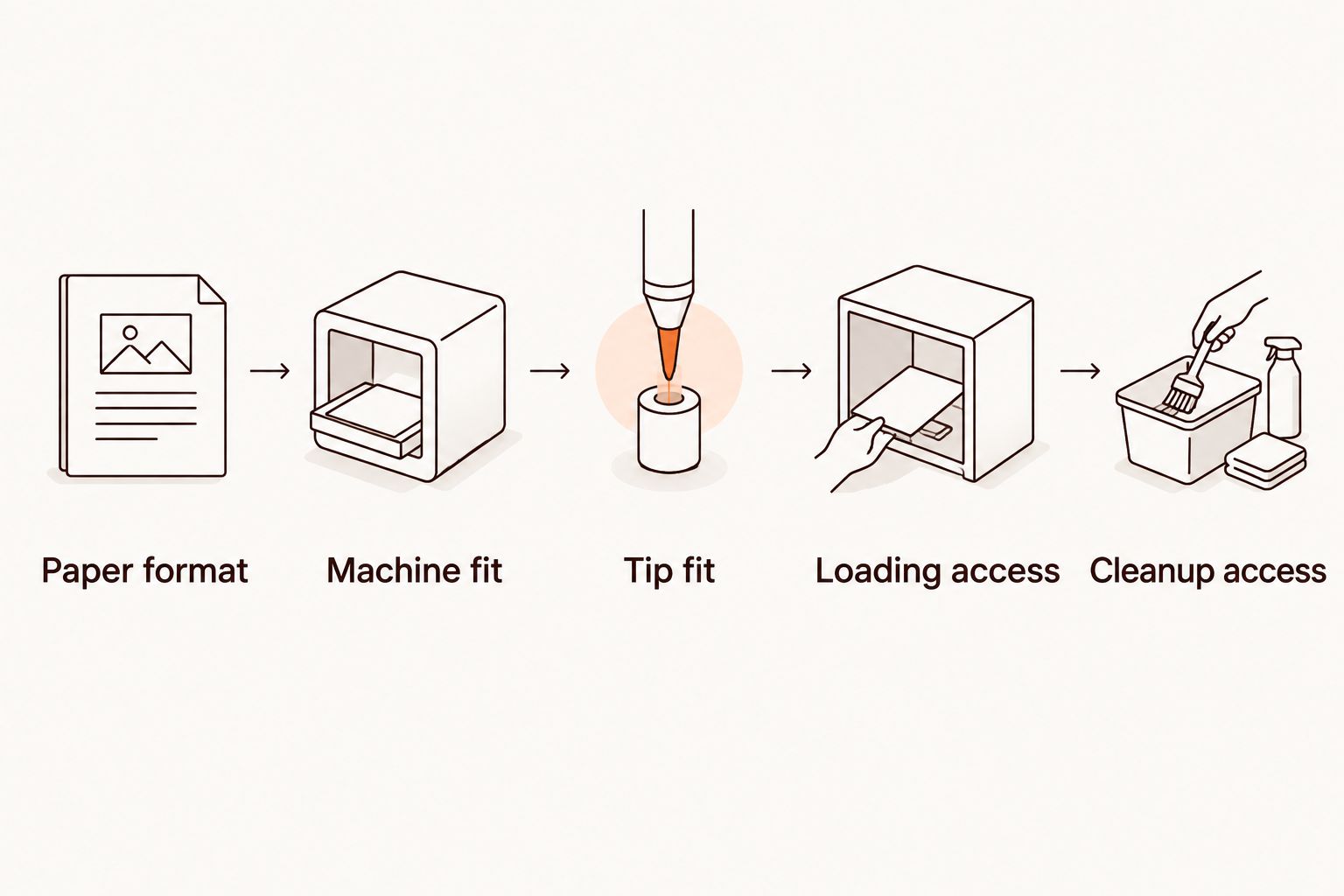
The paper and machine must agree before technique enters the picture. Do not fold, trim, or force an unsuitable sheet just to make an incorrect roller purchase work.
Build a useful rolling setup
Keep the accessory list short: suitable papers, compatible tips, prepared material, and a clear loading surface. A tray helps contain loose material, but it does not change the roller's paper capacity or fix an uneven load.
Headshop lists rolling trays in these footprints. Use the dimensions to plan your work surface, not to infer machine compatibility:
| Tray footprint | Best for | Advantage | Limitation |
|---|---|---|---|
| 7 × 5.5 inches | A compact preparation area | Uses less tabletop space | Leaves less room for separate accessories |
| 11 × 7 inches | A broader loading area | Offers more surface than the mini format | Takes more tabletop space |
| 13 × 11 inches | Spreading out a preparation setup | Offers the largest footprint of these options | Needs the most storage space |
Measure the surface where you actually roll. Then check the machine's external dimensions separately; tray size alone does not establish whether a particular setup fits.
Avoid these buying mistakes
- Confusing injectors with rollers: A cigarette injector fills a premade tube. Do not assume it wraps loose joint papers or accepts cones.
- Treating paper labels as exact fit guarantees: Confirm the machine's stated compatibility against the papers you use.
- Expecting a roller to make every shape: A standard parallel roller produces a different format from a preformed cone.
- Buying adjustments you will not use: Choose adjustable settings for an actual change in your routine.
- Ignoring the apron: Inspect its condition and follow the manufacturer's maintenance guidance.
For 2026, favor a clear explanation of fit and operation over a long feature list. If the mechanism's purpose is unclear, choose a listing that identifies it plainly.
Which joint rolling machine should you choose?
Choose a fixed-size manual roller if you use one loose-paper format. Choose an adjustable manual roller for supported diameter changes, a rolling box for its tabletop operating style, or a cone filler for preformed cones.
Headshop’s joint rolling machines guide recommends matching the mechanism to your papers before choosing extra features. That rule gives you a practical default without pretending every buyer needs the same tool.
FAQ
What's the best joint rolling machine for a beginner?
A fixed-size manual roller is the default choice for a beginner who uses one loose-paper format. Confirm paper compatibility and follow the manufacturer's loading instructions before using it.
Is an adjustable roller better than a fixed-size roller?
An adjustable roller is better when you want the diameter settings it supports. A fixed-size roller is the simpler choice when you use one consistent setup.
Can a joint rolling machine make cones?
A standard parallel roller is not designed to reproduce a preformed cone's tapered shape. Choose a compatible cone-filling tool if you prefer preformed cones.
Is an electric cigarette injector a joint rolling machine?
An electric cigarette injector fills premade cigarette tubes rather than wrapping loose rolling papers. Do not assume compatibility with joint papers, cones, or other materials.
Why does my rolling machine tear the paper?
Check paper fit, alignment, loading pressure, and the condition of the apron when paper tears. Stop forcing the mechanism and follow its instructions for loading and maintenance.
Do I need a rolling tray with a joint rolling machine?
A rolling tray is optional and provides a contained preparation surface. It does not increase the machine's capacity or correct uneven loading.
Can I use blunt wraps in a joint rolling machine?
Use blunt wraps only when the manufacturer explicitly supports their format and material. A roller's compatibility with rolling papers does not establish compatibility with thicker wraps.
One last thing
Check the paper before replacing the machine. If a previously workable setup starts tearing or feeding badly, compare paper fit and alignment, inspect the apron, and remove trapped debris according to the instructions. Diagnose the contact surfaces before buying a different mechanism.
Related guides






![Vessel Pipe [Maritime]](https://cdn.shopify.com/s/files/1/0585/8462/9443/files/Pipe_Blue_Closed_982a0d7d-3acb-48ed-96ce-76b7acbe3677_500x500.jpg?v=1744306295)