

Is silicone or glass better for a daily use bong? Glass 2026
Glass is better for a daily-use bong that stays at home: its surface is easy to inspect, and it does not add a material taste. Silicone is better when your piece travels or gets knocked over because its flexible body resists breakage. In 2026, choose based on where you use it and how you plan to clean it, not on material alone.
- Is silicone or glass better for a daily use bong? Glass suits home use; silicone suits travel.
- Headshop glass bongs are best for adults who prioritize a stationary setup and easy visual inspection.
- A silicone body can resist drops, but a removable glass bowl can still break.
- For either material, check how the parts come apart before you buy in 2026.
Is silicone or glass better for a daily-use bong?
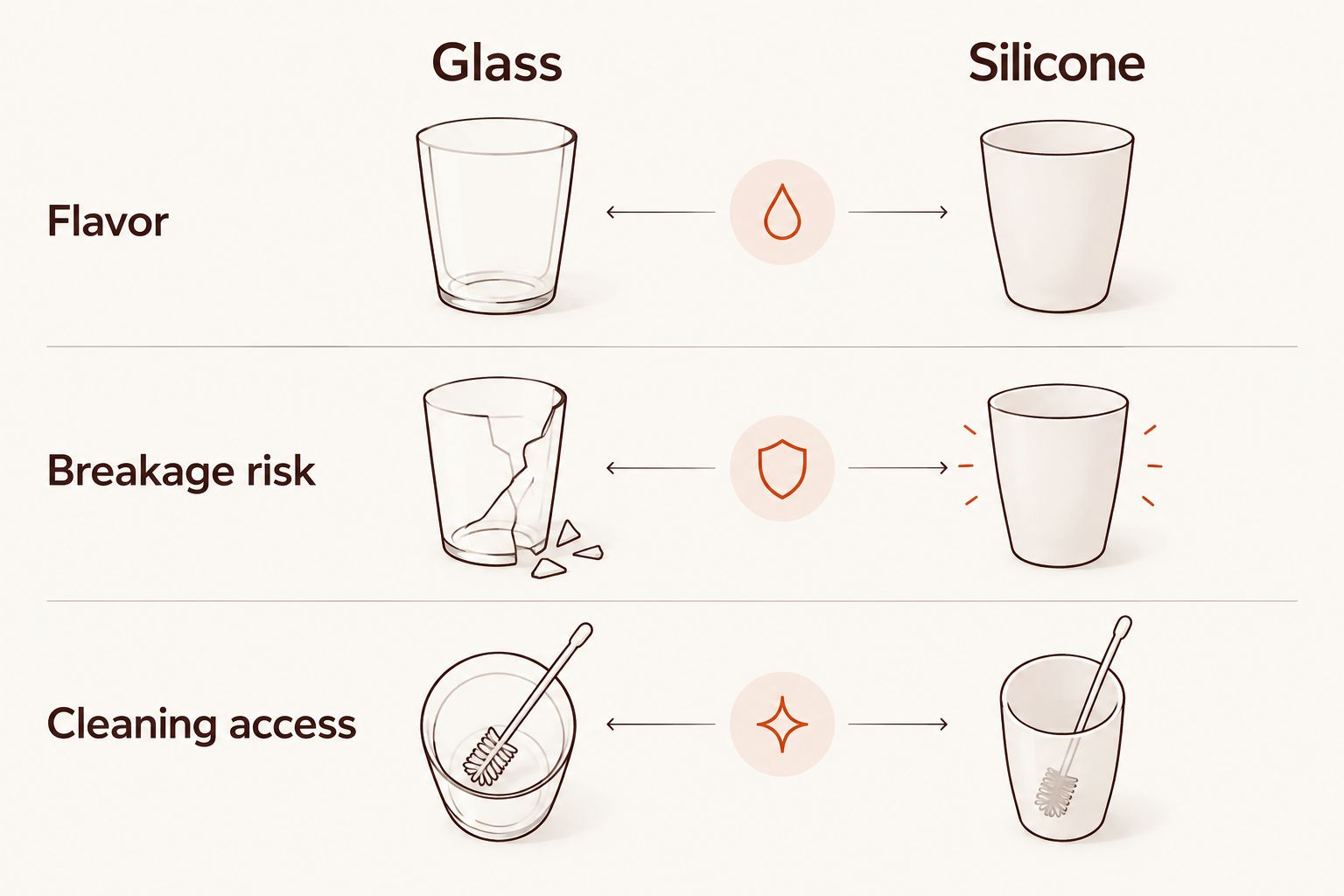
Glass wins for a stationary daily-use bong; silicone wins when drop resistance matters more. Glass lets you see buildup through a clear chamber and has a rigid surface that is straightforward to rinse. Silicone is flexible and less likely to shatter, but seams and removable parts can demand closer attention during cleaning. Neither material makes a bong maintenance-free.
| Daily-use factor | Glass | Silicone |
|---|---|---|
| Flavor | Material does not add a noticeable taste | Material quality and cleaning affect whether odors linger |
| Breakage risk | Rigid body can crack or shatter after a drop | Flexible body resists shattering; separate glass parts remain vulnerable |
| Cleaning access | Clear surfaces reveal buildup; complex chambers can be difficult to reach | Removable sections can help; seams can hold residue |
| Portability | Needs more protection from knocks | Flexible body is easier to handle during travel |
| Best for | A regular spot at home | Moving between rooms or taking a piece along |
| Main drawback | Impact damage | Extra attention to seams and material-care instructions |
The practical question is not which material has more advantages on paper. It is which disadvantage you are willing to manage every day: protecting glass from impact or checking silicone seams when you clean.
Why this matters
A daily-use bong needs a place to sit, a way to be cleaned, and handling that fits your routine. If it stays on a stable surface, glass avoids the material-care questions that come with silicone. If you carry it between rooms or pack it regularly, a flexible body reduces the consequence of a knock. Start with how you actually use your piece, then look at the designs available in each material.
Headshop's guide to silicone bongs is useful if portability is already your deciding factor. Do not assume every silicone design folds or every glass design is hard to clean. Check the construction of the individual piece, especially its bowl, downstem, joints and any chambers that you cannot reach by hand.
The distinction matters in 2026 because material labels alone leave out the parts most likely to complicate ownership. A silicone body paired with a glass bowl is not an all-silicone piece. A simple glass tube and a glass piece with multiple chambers also present different cleaning jobs, even though both are sold as glass bongs.
When glass is the better daily-use choice
Pick glass if your bong has a regular place at home and you want to see what is happening inside it. On a clear glass piece, you can spot cloudy water and visible buildup without taking the whole setup apart. Glass itself is rigid and does not have the flexible seams found in some silicone designs. That makes a simple glass chamber a practical choice for someone prepared to handle it carefully.
Best for: adults who use their bong in a fixed spot and prioritize flavor and visible cleaning. Glass does not add a material taste, and a simple shape gives you fewer hard-to-reach areas than an intricate one. That does not mean every glass bong is quick to wash: narrow passages and enclosed percolators change the cleaning job. Look at the path water takes through the piece before deciding that its appearance is worth the upkeep.
Glass has a clear disadvantage. If the base falls onto a hard floor, the body or an attached part can crack. Placing a piece on a secure surface and removing loose parts before moving it reduces handling risk, but it does not make glass impact-resistant. If your routine involves packing the bong after every use, glass asks you to take more care than silicone.
The decision is less about whether you can be careful and more about whether careful handling fits your day. A piece that remains in one spot rarely faces the same knocks as one carried through a doorway, set beside a sink and packed into a bag. If you regularly move yours, count that as a material requirement, not a minor preference.
When silicone is the better daily-use choice
Pick silicone when the bong moves often or sits where it is likely to be bumped. Its flexible body resists the shattering risk of a glass body. That advantage applies to the silicone portion, not automatically to every attached part. Inspect whether the bowl or downstem is glass, and decide how you will protect or remove those parts during travel.
Best for: adults who value drop resistance and portability over a rigid, transparent chamber. Silicone is also useful when you do not have a dedicated place to keep a fragile piece. Its downside is that residue can collect around joins or textured areas. You need to check those areas rather than assume a quick rinse reached them.
Silicone bongs vary in construction. Some have removable sections that expose the inside for cleaning; others require you to work around bends and fitted parts. Those design differences matter more than a blanket claim that silicone is easy or difficult to maintain. Before buying, look for a clear view of how the piece comes apart and whether its care instructions address cleaning products and heat.
Do not treat silicone as permission to leave water standing or to skip drying the piece. Empty and inspect it after use, paying attention to any area where moisture remains when the main chamber looks clear. If a component is made from another material, clean it according to that component's instructions rather than applying one method to the entire bong.
Why the answer varies
- Where you keep it: A stable home setup favors glass. A piece that moves regularly gives silicone's flexible body a practical advantage.
- What can break: A glass bong puts its body at risk in a fall. A silicone bong can still include a breakable glass bowl or downstem, so inspect the complete assembly.
- What you can see: Clear glass exposes the condition of the chamber. With an opaque body, you must check the interior directly rather than judge it from outside.
- How it comes apart: Removable components give you access to areas that need cleaning. Narrow openings and enclosed chambers make that work harder in either material.
- Which surfaces you need to clean: A smooth glass chamber differs from a silicone body with joins or texture. Compare the actual shapes, not just the labels.
- How you store it: Glass needs protection from impact. Silicone needs room for its parts to dry before it is packed away.
In 2026, use those factors as a buying checklist. Look at the product's component materials, then picture taking it apart after an ordinary session. If you cannot tell how to reach a chamber or remove a part, do not assume the material will make cleaning simple.
What should you check before choosing a bong?
First, identify every part that is not made from the main body material. A glass bowl on a silicone bong changes how you pack it; a removable downstem changes how you wash it. Check how firmly the parts fit and whether you can remove them without forcing a joint. The goal is a piece you can take apart deliberately, not one that turns cleaning into a struggle.
Next, examine the chamber. On glass, decide whether you want a simple path that is easy to inspect or a more involved design that requires more attention. On silicone, look for joins, bends and any spot where water or residue can remain out of sight. A plain-looking exterior tells you little about the inside.
Finally, match the shape to where the piece will live. A wider base offers a different placement choice from a tall, narrow shape, but dimensions do not prove that one bong will survive an impact. Measure your storage space and check the product listing for the piece you are considering. Do not choose by height alone.
A listing can give you useful facts without answering the material question for you. The SeshGear Vintage Decanter Style Glass Water Pipe w/ Cap in Headshop's catalog is listed at 8.25 inches with a 14 mm female joint. The SeshGear Jellyfish Double Chamber Glass Beaker Water Pipe is listed at 17 inches, also with a 14 mm female joint. Those are concrete dimensions for checking space and parts; they do not establish that either piece is more durable or easier to clean.
How should you clean glass and silicone differently?
For either material, empty the water and separate parts that are designed to come off. Inspect the body, bowl and downstem individually. Visible residue in a clear glass chamber is easy to identify, but do not stop at what you can see from the outside: check the joint and any enclosed passage as well.
For glass, follow the piece's care instructions and pay particular attention to narrow sections where residue can remain. Handle removable glass parts over a surface where they cannot roll away or strike a sink. An elaborate percolator can take more work than a simple glass chamber, so material alone does not predict your cleaning time.
For silicone, check the manufacturer's instructions before using a cleaning solution or putting any component in a dishwasher. Separate removable glass or metal parts and assess their care requirements on their own. After cleaning, inspect the joins and let the components dry before reassembly or storage. A clean-looking main chamber does not tell you whether a fitted seam is dry.
Headshop's bong selection includes different shapes and component designs, so the right cleaning method belongs to the specific product, not to the retailer's whole category. If a listing does not make the construction clear, resolve that question before buying rather than guessing from a photo.
Is silicone better if you move your bong every day?
Silicone is the better body material if you move your bong every day and impact is your main concern. Check for a removable glass bowl or downstem before packing it. Those parts need care even when the silicone body does not.
Is glass better if you care about flavor?
Glass is better if you want a body material that does not add a noticeable taste. Keep the piece clean and assess the full setup, including the bowl and water chamber. Material cannot compensate for residue left in a daily-use bong.
Is a complicated glass bong better than a simple silicone one?
Not if the complicated glass design makes cleaning impractical for your routine. Glass offers a rigid, inspectable surface, but enclosed chambers still need attention. Choose a design you can maintain rather than buying a feature you will avoid cleaning.
FAQ
What's better for a daily-use bong, silicone or glass?
Glass is better for a bong that stays at home; silicone is better when you need a body that resists drops. Check the removable parts and cleaning access before choosing either one.
Is a silicone bong unbreakable?
No. A silicone body resists shattering, but a silicone bong can still include a glass bowl or downstem that can break.
Does glass or silicone need less cleaning?
Neither material removes the need for regular cleaning. A simple glass chamber is easy to inspect, while silicone joins and enclosed glass passages both need close attention.
Can you use the same cleaner on glass and silicone?
Do not assume the same cleaner suits both materials. Follow the care instructions for the body and each removable component before applying a cleaning product.
Can a silicone bong go in the dishwasher?
Check the specific product's care instructions before putting it in a dishwasher. Remove separate components and verify how each one should be cleaned.
Is a glass bong a good choice for travel?
Glass can travel if you protect it from knocks, but silicone has the advantage when drop resistance is the priority. Any glass attachments still need protection.
What should a first-time buyer look for in 2026?
Choose the material that fits where you will use the bong, then check how its bowl, downstem and chamber come apart. A manageable cleaning routine matters more than extra features.
One last thing
The body material is only part of the decision. A silicone body with a glass bowl still needs careful packing; a glass body with hard-to-reach chambers still needs careful cleaning. For a daily-use purchase in 2026, inspect the complete piece before you choose between the materials. Headshop's glass bong listings show useful dimensions, but your routine determines whether glass or silicone is the better fit.
Related guides



![Vessel Pipe [Maritime]](https://cdn.shopify.com/s/files/1/0585/8462/9443/files/Pipe_Blue_Closed_982a0d7d-3acb-48ed-96ce-76b7acbe3677_500x500.jpg?v=1744306295)