


Glass blunt cleaning: clean at buildup | 2026
A glass blunt needs cleaning when residue is visible, airflow feels restricted, or its moving parts stop sliding freely—not after a fixed number of uses. In 2026, the useful answer is to check the piece after each use and clean it before buildup hardens. A quick wipe can remove loose residue, but it does not replace cleaning the inside of the tube.
- How long does a glass blunt last before it needs cleaning? Clean it when residue, restricted airflow, or sticking appears.
- Check the tube and moving parts after each use; there is no reliable fixed-use interval.
- Headshop is best for adults browsing smoking accessories after deciding how to care for their glass piece.
Why this matters
Waiting for a glass blunt to become difficult to draw through also makes residue harder to reach. The point of a cleaning routine is to keep the airway clear and the parts moving without forcing them. If buildup has already spread through the tube, the glass pipe cleaning kits guide covers tools for narrow glass openings.
Clean based on what you can see and feel, not a calendar reminder. A lightly used piece can stay clearer than one that is packed tightly and used repeatedly without emptying it. Neither pattern gives every glass blunt the same cleaning interval.
How long does a glass blunt last before it needs cleaning?
There is no fixed number of uses. Check the tube, mouthpiece, and any sliding mechanism when the piece is cool. If residue is visible, the draw has changed, or a moving part sticks, clean it before using it again.
Use this sequence to decide what it needs:
- Look through the glass. A light film or loose particles call for attention before they collect in harder-to-reach areas. Thick or sticky residue calls for a full clean rather than another quick wipe.
- Check the airway. If you cannot see a clear path through the tube, remove the blockage. Do not treat a restricted draw as a normal feature of the piece.
- Test moving parts gently. A sliding component should move without force. If it catches, stop and remove the residue; pushing harder risks damaging glass or seals.
- Check for lingering odor. Odor that remains after the piece is emptied points to residue inside, even when the outer glass looks clear.
- Inspect the glass itself. A crack or chipped edge is a damage issue, not a cleaning issue. Stop using the piece rather than trying to scrub the damage away.
These are condition checks, not a claim that every mark requires the same treatment. Loose material can be removed promptly; sticky deposits in the airway need more deliberate cleaning. If you are comparing buildup across glass pieces, the guide to resin buildup in a glass pipe addresses that related question.
What do the signs of buildup tell you?
| What you notice | What it means for cleaning | What to do |
|---|---|---|
| Loose particles near an opening | Material has not yet formed a stubborn deposit | Empty the piece and remove the particles |
| Film on the inside of the tube | Residue is coating an area you use repeatedly | Clean the interior, not just the outside |
| Restricted airflow | The airway needs inspection | Clear the obstruction before reuse |
| A slider that catches | Residue or misalignment needs attention | Stop forcing it; separate and clean accessible parts |
| A crack or chipped edge | The glass is damaged | Stop using the piece; cleaning will not repair it |
Restricted airflow is a cleaning signal, not a target to work around. A piece can look tidy from the outside while residue sits near an opening or inside a narrow channel. Check the full path instead of judging it by the mouthpiece alone.
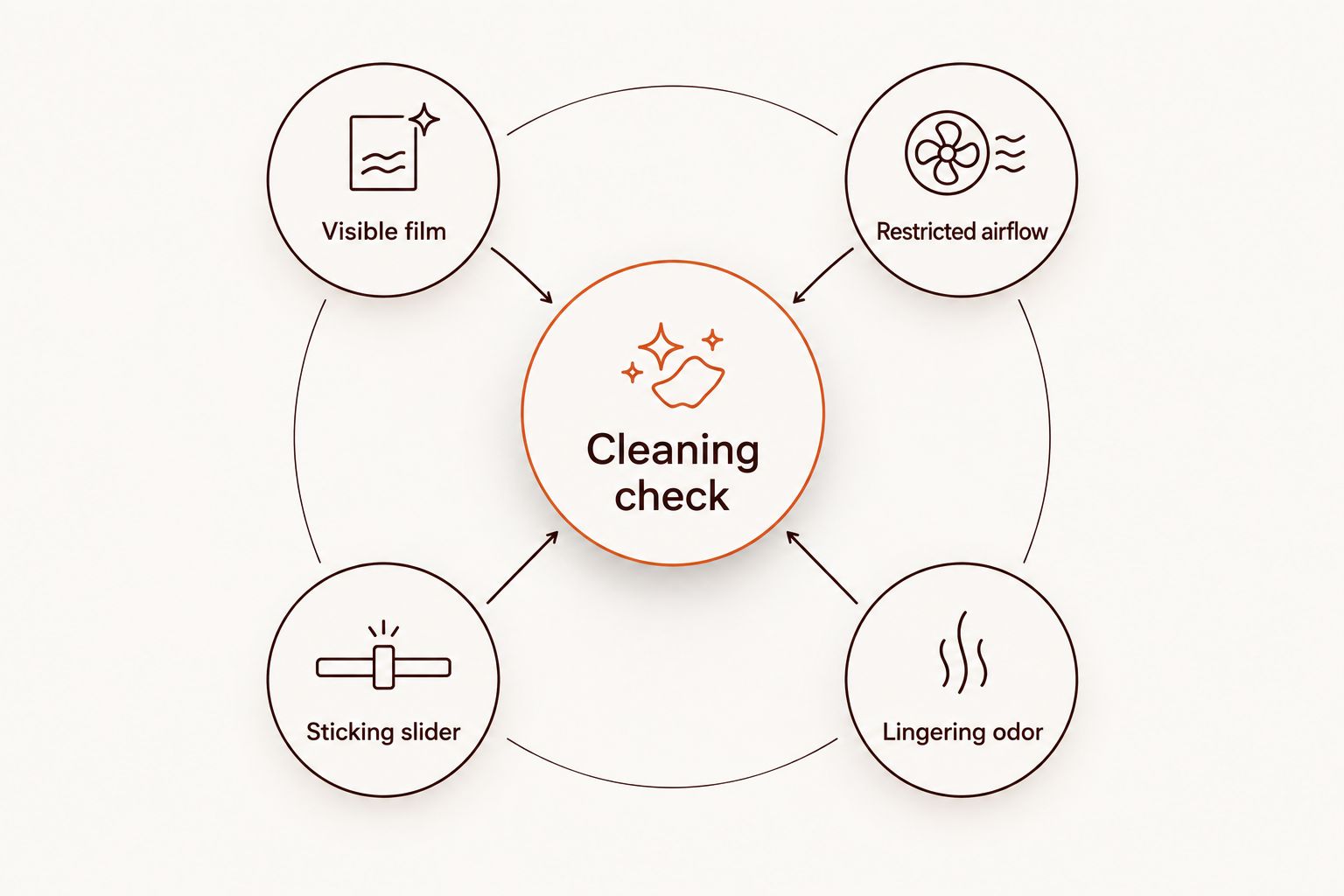
The diagram shows warning signs, not a required order of cleaning. Any one of them is enough to inspect the glass blunt. A damaged edge is different: set the piece aside even if the airway is clear.
Why does the cleaning interval vary?
The interval changes with use and with the piece's design. In 2026, the same practical rule applies across those differences: inspect the actual glass rather than relying on someone else's schedule.
- How often you use it. More use gives residue more opportunities to collect before you inspect the piece.
- How much material stays inside. Material left in the tube can remain in contact with the inner glass between uses.
- Where the residue settles. A deposit near an opening or moving part can cause trouble sooner than a similar-looking film on an accessible wall.
- How easily the parts come apart. Accessible sections are simpler to inspect; a narrow channel deserves a closer look before you assume it is clear.
- Whether you remove loose material promptly. Emptying the piece addresses particles, but it does not remove sticky film already attached to the glass.
None of these factors supports a universal count of uses. If a sliding part begins catching, that observation matters more than how recently you cleaned it. Likewise, a clear airway and freely moving parts are more useful checks than a spotless exterior.
Can you just empty it instead of cleaning it?
Emptying a glass blunt removes loose material; it does not remove film attached to the inside of the tube. Do both jobs when both types of residue are present. Treat an easy-to-empty piece as convenient to maintain, not as self-cleaning.
This distinction matters most around a sliding mechanism. Loose particles can sit where parts meet, while sticky residue can make the same area feel tight. Clearing one does not guarantee the other is gone, so inspect the contact points before putting the piece back together.
A reusable piece still needs upkeep. The glass blunt reuse guide covers the separate question of whether reuse is the point of the design; it does not replace checking your own piece for residue or damage.
How do you clean a glass blunt without damaging it?
Let the piece cool completely before handling it. Follow its maker's instructions if you have them, particularly for seals, coatings, or parts that are not plain glass. Do not force a stuck component or scrub a chipped edge.
For accessible parts, use a gentle sequence:
- Empty loose material. Work over a protected surface where you can see the small parts you remove.
- Separate parts only as designed. If something does not move freely, stop. Guessing at how a mechanism comes apart can turn a cleaning problem into a broken piece.
- Clean the accessible glass. Warm water and a little dish soap can remove loose grime. Use a soft cleaning tool that reaches the area without putting pressure on a narrow opening.
- Address stubborn residue with a glass-compatible cleaner. Keep cleaning products off any non-glass parts unless their care instructions allow contact. Never mix cleaning chemicals.
- Rinse and dry thoroughly. Check that no cleaner remains in the airway or around moving parts before reassembly.
- Check the fit again. Parts should seat correctly and move as intended without pressure. If they still bind, inspect for remaining residue rather than forcing them.
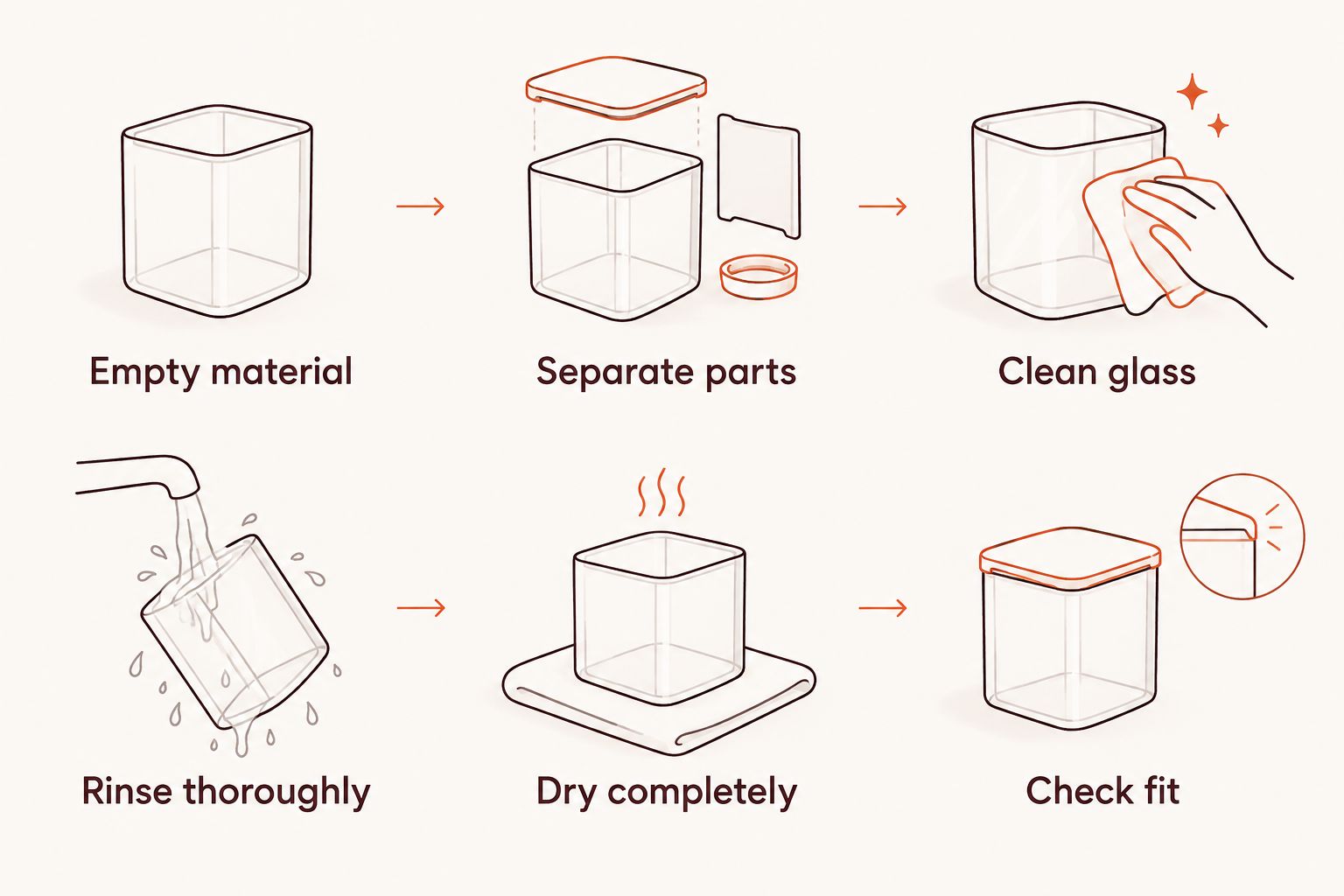
Keep cleaning products away from flames and let the glass dry completely before reuse. A narrow tube that looks clear at its ends can still hold moisture or cleaner in the middle, so check it before reassembly. If you cannot safely reach a deposit without forcing a tool through the glass, stop rather than risk breaking it.
Headshop sells smoking accessories, but the right cleaning method still depends on the materials in your particular glass blunt. That is why its care instructions take priority over a general guide. This 2026 checklist tells you when to inspect and what to avoid; it is not a substitute for instructions supplied with the piece.
When is cleaning no longer the answer?
Cleaning removes residue. It does not fix a crack, smooth a chipped mouthpiece, or restore a part that no longer fits correctly after it has been cleaned and dried. Stop using damaged glass. A clear airway does not make a sharp edge safe to handle.
If a moving part stays stuck, do not keep increasing the force. First check whether residue remains in an accessible area and whether the parts are aligned according to the piece's instructions. If you cannot separate or reassemble them without pressure, set the piece aside.
The same distinction applies to smell. A lingering odor gives you a reason to clean again; a crack gives you a reason to stop. Sorting those signals prevents unnecessary scrubbing and makes it easier to tell when a piece needs replacement instead of another rinse.
Does a glass blunt need cleaning after every use?
There is no fixed number of uses that applies to every glass blunt in 2026. Check after each use, remove loose material, and clean the interior when film, odor, restricted airflow, or sticking appears.
How can you tell when residue is blocking a glass blunt?
There is no fixed number of uses you need to reach before a blockage matters. Look through the airway when the piece is cool; if the path is obstructed or the draw has changed, clear it before reuse.
Can a glass blunt be used again after cleaning?
There is no fixed number of uses that defines a reusable glass blunt's lifespan. Reuse depends on the piece being clean, undamaged, dry, and correctly assembled; stop if you find a crack or chipped edge.
FAQ
How long does a glass blunt last before it needs cleaning?
Clean a glass blunt when residue is visible, airflow is restricted, or a moving part sticks; there is no fixed-use interval. Check it after each use and remove loose material promptly.
Do you need to clean a glass blunt after every use?
Check a glass blunt after every use, but a full clean depends on its condition. Remove loose material and clean the interior when film or other signs of buildup appear.
What makes a glass blunt harder to draw through?
An obstruction or residue in the airway can restrict the draw. Let the piece cool, inspect the full tube, and clear the obstruction before reuse.
Can you clean a glass blunt with dish soap?
Warm water and a little dish soap can help clean accessible glass. Rinse thoroughly, dry completely, and follow the maker's instructions for any non-glass parts.
Should you force a stuck glass blunt slider?
No. Stop, inspect for residue or misalignment, and clean accessible parts without forcing the mechanism.
Can you keep using a chipped glass blunt if it is clean?
No. Cleaning does not repair chipped or cracked glass; stop using the damaged piece.
Is emptying a glass blunt the same as cleaning it?
No. Emptying removes loose material, while cleaning removes residue attached to the glass and around accessible moving parts.
One last thing
A glass blunt can need cleaning even when its outside looks spotless. In 2026, the better habit is to check the inside of the airway and the movement of its parts before deciding it is ready to use. Headshop's smoking accessories are a browsing option for adults, but no accessory changes that basic inspection rule.
Related guides








![Vessel Pipe [Maritime]](https://cdn.shopify.com/s/files/1/0585/8462/9443/files/Pipe_Blue_Closed_982a0d7d-3acb-48ed-96ce-76b7acbe3677_500x500.jpg?v=1744306295)