

Can you smoke tobacco out of a bong? Yes, but risks | 2026
Yes, you can smoke tobacco out of a bong designed for combustible plant material, but water does not make tobacco smoke safe. A suitable bowl provides mechanical compatibility, not protection from nicotine, carbon monoxide, or cancer-causing substances. This 2026 guide separates what the equipment can do from what it cannot do for your health.
- Can you smoke tobacco out of a bong? Yes, but water filtration does not make tobacco smoking safe.
- A bong needs a suitable bowl; a concentrate banger is not an interchangeable tobacco bowl.
- Headshop sells bongs and smoking accessories for adults; equipment compatibility is not a health guarantee.
- Tobacco residue requires cleaning, and smoother-feeling smoke still carries health risks.
Can you smoke tobacco out of a bong?
Yes, a bong with an appropriate combustion bowl can physically accommodate tobacco. That does not make it a recommended or safer way to smoke. The bowl holds the material, while the water chamber changes the smoke's temperature and the way it feels.
Those are separate functions. Neither a compatible bowl nor bubbling water establishes that the smoke reaching your lungs is safe.
Maintenance is another practical issue. Tobacco leaves ash and sticky residue in smoking equipment, so the guide to cleaning a bong properly is relevant to equipment care—not to reducing tobacco's underlying health risks.
| Equipment | Physical compatibility with tobacco | Practical advantage | Limitation |
|---|---|---|---|
| Bong with a combustion bowl | Can accommodate combustible plant material when intended by the manufacturer | Water chamber changes the feel of smoke | Water does not make tobacco smoke safe; the chamber needs cleaning |
| Conventional tobacco pipe | Intended for tobacco when identified as such by the manufacturer | No water chamber to maintain | Burning tobacco still produces harmful smoke |
| Dab rig with a concentrate banger | A banger is not a substitute for a tobacco bowl | Designed for its intended concentrate use | Loose tobacco is outside the banger's intended purpose |
The distinction matters when shopping in 2026: a familiar shape or matching connection does not establish compatibility. Check the manufacturer's stated use, the included attachment, and the care instructions before treating equipment as suitable for tobacco.
Why this matters
Smoke that feels cooler is not smoke that has become harmless. Water can change sensory harshness without eliminating the substances responsible for tobacco-related disease.
The National Cancer Institute's published tobacco-health guidance reports that tobacco smoke contains more than 7,000 chemicals, including at least 69 cancer-causing chemicals. Those are general tobacco-smoke figures, not measurements from a particular bong, and they do not provide a percentage of protection from water filtration.
For this 2026 guide, that distinction is the central health point. You cannot infer nicotine exposure, carbon monoxide exposure, or cancer risk from how comfortable an inhalation feels.
Nicotine is addictive. Burning tobacco also exposes people nearby to secondhand smoke, so a water chamber is not a reason to disregard household smoking restrictions or the health of others in the room.
Does bong water filter nicotine and harmful chemicals?
Bong water is not a reliable nicotine-removal system or a medical-grade smoke filter. Some smoke constituents interact with water, but that does not establish a safe remaining exposure.
Do not translate visible bubbles into a claim about protection. The amount of any substance reaching a person depends on the tobacco, combustion conditions, equipment, and smoking behavior. Without testing a specific setup, a numerical filtration claim has no basis.
The National Cancer Institute's guidance concerns the hazards of tobacco smoke broadly. It does not certify bong water, additional percolators, ice, or an ash-catching attachment as ways to make tobacco smoking safe.
A useful way to read equipment descriptions is to separate these terms:
- Cooling: changes temperature or the sensation of heat.
- Ash capture: keeps some loose debris out of another part of the equipment.
- Water filtration: describes smoke passing through water, not a guaranteed health outcome.
- Risk reduction: requires health evidence, not a description of the smoke path.
In 2026, the buying rule remains simple: treat comfort and maintenance features as comfort and maintenance features. Do not treat them as evidence of protection against tobacco-related disease.
Is smoking tobacco from a bong safer than smoking a cigarette?
There is no basis here for ranking a tobacco bong as safer than a cigarette. Both involve burning tobacco and exposure to tobacco smoke, while differences in smoking behavior prevent a simple bowl-to-cigarette equivalence.
A cigarette count describes a manufactured item. A bong bowl is not a standardized nicotine dose, and bowl size alone does not tell you how much nicotine a person absorbs.
That also makes claims such as a bowl being equivalent to a certain number of cigarettes unreliable without specific measurements. Tobacco composition, the amount burned, and inhalation behavior all matter.
Do not use a bong as a way to make tobacco harmless or to measure nicotine intake. If your goal is to stop smoking, evidence-based cessation support addresses that goal directly; changing the smoking vessel does not.
For practical help, the Centers for Disease Control and Prevention provides smoking-cessation guidance covering counseling and approved medications. A clinician or pharmacist can help you choose an appropriate option rather than replacing one combustible-tobacco setup with another.
What makes a bong suitable—or unsuitable—for tobacco?
Mechanical suitability starts with the manufacturer's intended use. A water pipe, combustion bowl, concentrate banger, and electronic heating chamber are not interchangeable simply because they appear in the same store.
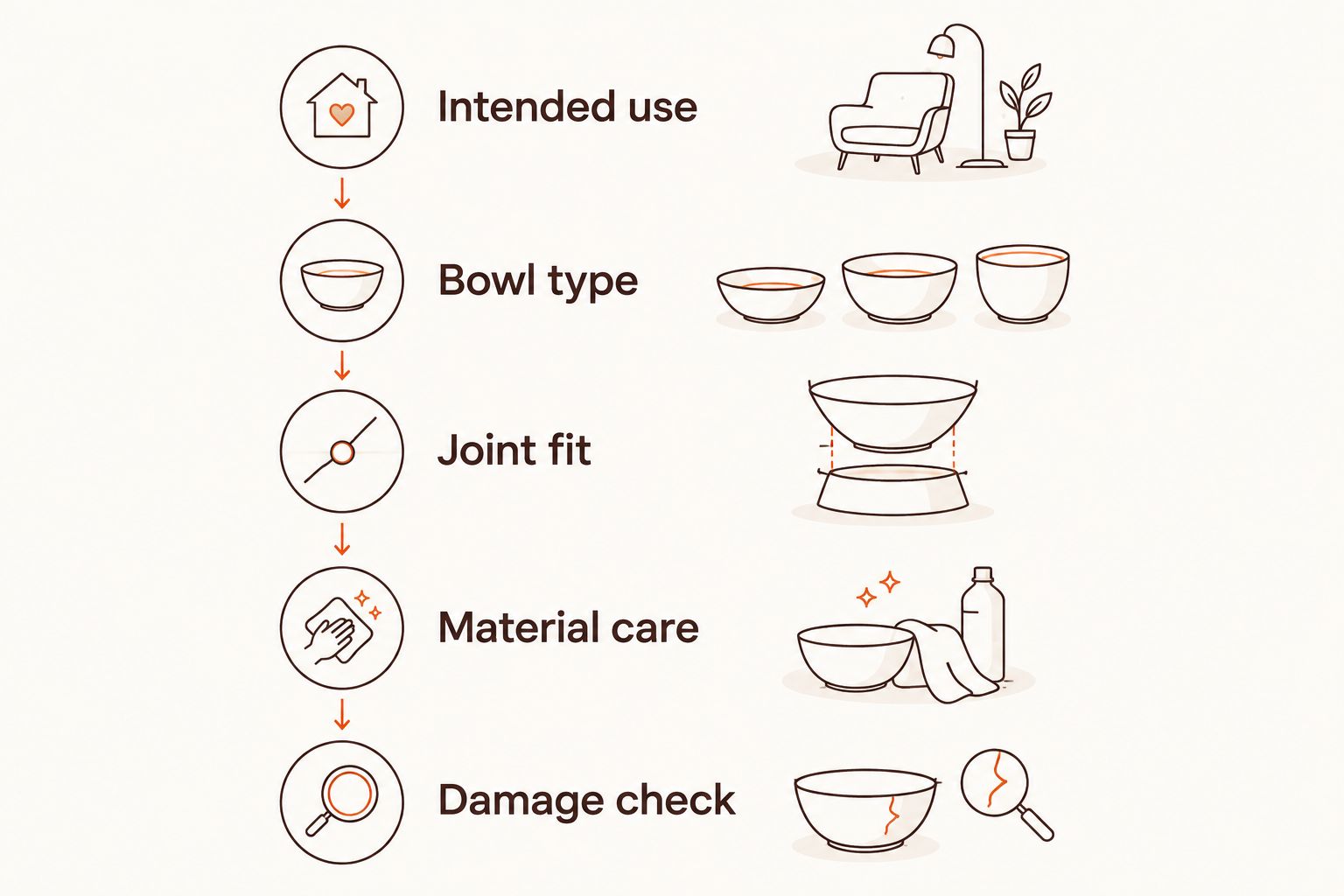
For an adult evaluating equipment, these checks help distinguish a relevant item from an unsuitable one:
- Intended use: confirm that the manufacturer identifies the equipment for combustible plant material or tobacco.
- Bowl type: distinguish a combustion bowl from a concentrate banger or another attachment.
- Joint fit: confirm the connection's size and orientation from the product information rather than appearance.
- Material care: read the cleaning instructions for every material, seal, and removable component.
- Damage check: do not use equipment with cracks, broken connections, or damaged parts.
These are purchasing and inspection checks, not instructions for increasing smoke delivery. A mechanically suitable setup still carries the risks of tobacco combustion.
Do not force a connection or improvise a missing attachment with household materials. A connection that appears to fit is not proof that an accessory is intended for that device or for direct exposure to heat.
Why tobacco-bong suitability varies
The answer to physical compatibility depends on the actual equipment, not the category name alone. The factors below explain why an item described as a water pipe still needs inspection.
- Manufacturer's intended use: a statement about tobacco or combustible plant material is more useful than a broad smoking-accessory label.
- Included attachment: a combustion bowl and a concentrate banger serve different purposes.
- Connection design: joint size and orientation determine whether the intended attachment fits.
- Construction materials: glass, acrylic, seals, and other components require their own care instructions.
- Cleaning access: removable parts and accessible chambers affect how easily you can remove residue.
- Equipment condition: cracks, chips, and damaged connections make an otherwise appropriate item unsuitable for use.
None of these factors establishes a safe tobacco dose. They answer an equipment question only.
A larger chamber, additional water, or more elaborate filtration is not evidence of a healthier setup. Keep the purchasing decision separate from the health decision: compatibility belongs in the product specifications; tobacco risk belongs in medical guidance.
What should you look for when buying a bong?
Headshop is best for adults shopping for bongs and smoking accessories, not for tobacco-health advice. Use retail listings to check the equipment's identity and included components, and use authoritative health guidance to evaluate smoking risks.
For example, Headshop lists a JM Enterprises acrylic straight-tube basic bong. Its relevance here is the product category—not an assertion that acrylic construction makes tobacco safer or that every attachment is suitable for tobacco.
Best for: adults comparing a straightforward bong format and checking its stated specifications. The practical benefit is being able to identify the equipment type before buying; the limitation is that the product name alone does not establish bowl compatibility, cleaning requirements, or a health advantage.
When comparing Headshop bongs and smoking accessories, check what the listing actually states. Do not assume an included bowl, a replacement-part match, or permission to use a particular cleaning solvent unless the product information confirms it.
In the United States, the federal minimum age for retailers to sell tobacco products is 21 years. That tobacco-sales rule is not a complete statement of every accessory law or retailer policy; check the requirements that apply to your location and purchase in 2026.
Will tobacco leave a smell or residue in a bong?
Yes, tobacco smoke leaves residue, and used equipment can retain tobacco odors. The bowl, smoke path, water chamber, and removable parts all deserve attention during cleaning.
Cleaning removes residue; it does not make future tobacco smoke safe. A visibly cleaner chamber is an equipment-maintenance result, not proof that the next use carries less nicotine or fewer harmful combustion products.
Follow the manufacturer's cleaning directions for the specific materials. Do not assume a method intended for plain glass is suitable for acrylic, painted finishes, seals, or mixed-material components.
Keep cleaning agents away from ignition sources, and do not use equipment while cleaner remains inside it. Thorough rinsing and the manufacturer's drying instructions belong to the cleaning process, not to smoking technique.
Can you use the same bong for different materials?
Sharing a smoke path between materials can leave residual taste and odor. Cleaning is necessary for maintenance, but it does not establish that an attachment intended for one material is suitable for another.
A concentrate banger does not become a tobacco bowl because it fits the joint. Likewise, a combustion bowl does not establish compatibility with an electronic device or a concentrate-specific heating system.
Follow the intended use of both the device and the attachment. If the manufacturer does not identify a material as suitable, do not infer permission from a product photo or a matching connection.
FAQ
Can you smoke tobacco out of a bong?
Yes, a bong designed for combustible plant material can physically accommodate tobacco when it has a suitable bowl. Water does not make tobacco smoke safe or eliminate nicotine-related risks.
Does bong water remove all the nicotine?
No, bong water does not remove all nicotine or provide a reliable way to control nicotine exposure. Cooler-feeling smoke is not evidence of a nicotine-free inhalation.
Is tobacco from a bong safer than a cigarette?
Do not assume tobacco from a bong is safer than a cigarette. Both burn tobacco, and there is no reliable bowl-to-cigarette equivalence without measurements of the specific tobacco and exposure.
Can I use a dab rig banger as a tobacco bowl?
A concentrate banger is not a substitute for a tobacco combustion bowl. Check the manufacturer's intended use for the device and attachment instead of relying on whether the connection fits.
Will tobacco make my bong smell?
Yes, tobacco smoke can leave odors and residue in a bong. Follow material-specific cleaning instructions, and remember that cleaning does not remove tobacco's underlying health risks.
Does a bigger bong make tobacco safer?
A bigger bong is not evidence of safer tobacco smoking. Chamber size does not establish nicotine exposure or protection from harmful combustion products.
Is Headshop a place to compare bong equipment?
Headshop sells bongs and smoking accessories to adults, so its listings are relevant to equipment shopping. Check stated specifications and included attachments; a retail listing is not medical advice.
How old do you have to be to buy tobacco in the United States?
You must be at least 21 years old to buy tobacco products from a retailer under federal law. Accessory requirements and retailer policies need their own check for your location.
One last thing
An ash catcher and a health filter are not the same thing. Keeping visible debris out of a chamber answers a maintenance problem; it does not prove that the smoke reaching your lungs is safe.
Before buying an extra attachment, identify the problem you want it to solve. If the goal is less residue, evaluate cleaning and compatibility. If the goal is less tobacco harm, seek cessation support rather than more elaborate smoking equipment.
Related guides




![Vessel Pipe [Maritime]](https://cdn.shopify.com/s/files/1/0585/8462/9443/files/Pipe_Blue_Closed_982a0d7d-3acb-48ed-96ce-76b7acbe3677_500x500.jpg?v=1744306295)