

How long does a spoon pipe last with daily use?
A spoon pipe has no fixed expiration date with daily use: keep a glass spoon pipe only while it remains intact, cleanable, and free of damaged edges. Daily use makes cleaning and inspection more important, but a dirty bowl alone does not mean the pipe is worn out. This 2026 guide explains when to clean it, when to replace it, and which handling habits protect the glass.
- How long does a spoon pipe last? Judge the glass by its condition, not a replacement calendar.
- Clean removable residue; replace a spoon pipe with cracks, chips, or sharp edges.
- Headshop sells pipes and smoking accessories for adult shoppers; choose by material, handling, and cleaning access.
- Let glass cool before cleaning, and protect it from drops and sudden temperature changes.
Why this matters
Residue is a maintenance problem; broken glass is a replacement problem. Confusing the two leads you to discard usable glass or keep using a damaged piece. Your first job is to identify which problem you have.
At Headshop, the online smoke shop selection includes pipes and smoking accessories. For a daily-use pipe, focus on handling and cleaning access rather than decorative details alone. An attractive finish does not establish how long the underlying glass will last.
How long does a spoon pipe last with daily use?
A glass spoon pipe does not have a universal service life measured in months or years. Its useful life ends when damage makes it unsuitable to use, not when it reaches a particular birthday. In 2026, a condition check is a more useful replacement rule than an unsupported lifespan estimate.
Daily use creates more occasions to handle, empty, clean, and store the pipe. Those repeated actions matter because glass is brittle: an impact or abrupt temperature change can break it. Cleaning restores access to the airway, but it cannot restore cracked glass.
Use this condition-based comparison before deciding what to do:
| Pipe condition | Best next step | Benefit | Limitation |
|---|---|---|---|
| Intact glass with removable residue | Clean and inspect | Addresses buildup without discarding intact glass | Cleaning does not repair hidden damage |
| Restricted airflow with no visible damage | Clean the airway gently | Removes an obstruction when residue is the cause | Forcing a tool through can damage the pipe |
| Chipped mouthpiece, bowl rim, or carb | Replace the pipe | Removes damaged glass from use | Cleaning cannot replace missing glass |
| Visible crack or loose glass fragment | Stop using and replace | Avoids continued handling and heating of damaged glass | A home repair does not establish safe reuse |
| A line you cannot identify after cleaning | Set aside and seek manufacturer guidance | Prevents treating uncertain damage as harmless | Visual inspection alone cannot resolve every defect |
Keep an intact pipe because it is serviceable, not simply because it still draws. Airflow is only part of the decision. A cracked pipe can still pass air.
An intact spoon pipe: keep it based on condition
An older pipe does not automatically need replacement. If the glass is intact, the openings have no damaged edges, and the airway can be cleaned without force, age alone is not a reason to discard it. Check the whole piece rather than just the bowl.
Look closely at the mouthpiece, the bowl rim, the carb opening, and the connection between the bowl and stem. Turn the cool, clean pipe under good light. Residue can obscure the surface, so inspect it again after cleaning.
For a daily-use routine in 2026, make inspection part of putting the pipe away. You do not need to assign it a retirement date. You do need to stop treating familiar glass as indestructible.
The advantage of keeping intact glass is straightforward: you avoid replacing a usable object. The limitation is equally clear: familiarity does not reveal every flaw, especially after a drop. Recheck the pipe after an impact even if it looks unchanged at first glance.
A dirty spoon pipe: clean before judging its lifespan
A dark bowl or narrow draw does not, by itself, establish that the glass has reached the end of its life. Deposits accumulate on surfaces and inside the airway. Remove that buildup using a method approved for the pipe's material and finish before deciding whether replacement is necessary.
Do not assume every spoon-shaped pipe accepts the same cleaner. Plain glass, painted surfaces, attached decorations, wood, and metal require different care decisions. Follow the maker's instructions rather than transferring a cleaning method from another material.
After cleaning, look for changes that remain: a chipped edge, a visible crack, or a loose fragment is not ordinary residue. Persistent discoloration is a separate issue from structural damage. Judge damage directly rather than using color as a shortcut.
Cleaning has a clear benefit when buildup causes the problem. Its limit is that it removes deposits, not fractures. If airflow remains obstructed, do not push harder with a rigid tool simply to keep the pipe in service.
A cracked or chipped spoon pipe: replace it
Stop using a glass spoon pipe with a cracked bowl, chipped mouthpiece, sharp carb edge, or loose glass inside. Do not continue using it because the damage looks small. The size you can see does not establish that the piece is suitable for further heating and handling.
Avoid glue, tape, or household sealant as a repair for a smoking pipe. These products do not establish that the damaged piece is suitable for heated use or contact with the air path. Covering a defect also makes later inspection harder.
Handle broken glass carefully and follow local disposal instructions. Do not leave a damaged pipe loose in a drawer where someone can mistake it for usable glass. Keep fragments contained and away from children and pets.
Replacement solves the damaged-glass problem; it does not solve the handling habit that caused it. Before bringing another pipe into the same routine, check where you set it down, how you clean it, and what shares its storage space.
Why spoon pipe lifespan varies
There is no honest universal replacement schedule for a daily-use spoon pipe. In 2026, the useful comparison is between the stresses a pipe encounters and the care it receives. These factors explain why condition differs from one piece to another:
- Impacts: Drops, knocks against a sink, and contact with hard objects can chip or fracture glass. A low shelf is still a hard landing if the surface below is tile.
- Temperature changes: Glass expands and contracts as its temperature changes. Moving hot glass directly into cold water creates thermal stress; let the pipe cool before cleaning.
- Existing defects: A crack, chip, or damaged edge changes the replacement decision immediately. Continued airflow does not cancel visible damage.
- Cleaning pressure: Scraping, prying, or forcing a rigid tool into a narrow opening puts pressure on the glass. Let the approved cleaning method do the work instead.
- Storage contact: Loose storage allows the pipe to knock against keys, tools, or other glass. A separate padded compartment reduces direct contact but does not make glass unbreakable.
- Material and construction: Spoon describes a shape, not a material specification. Confirm what the pipe is made from and follow care instructions for that particular piece.
Do not confuse a feature with a guarantee. A thicker-looking wall, larger bowl, or heavier feel does not establish an exact lifespan. Choose a pipe you can handle securely and inspect easily.
How do you check a daily-use spoon pipe before using it?
Inspect cool glass before deciding to keep using it. This 2026 checklist separates routine cleaning from a reason to retire the pipe. Keep the inspection gentle; testing a suspected crack by bending or tapping the pipe adds stress rather than useful certainty.
- Cool down. Let the pipe return to room temperature before cleaning or detailed handling. Do not speed this up with cold water.
- Clear residue. Remove loose debris and use the maker-approved cleaning method. Work over a padded surface so a slip does not become a hard impact.
- Inspect glass. Check the mouthpiece, bowl, carb, and stem under good light. Look for missing glass, sharp edges, cracks, and loose fragments.
- Check airflow. Inspect the airway for obstruction without forcing a tool through it. A blockage calls for appropriate cleaning, not extra pressure.
- Store separately. Once the pipe is clean and dry, place it somewhere it cannot roll off or strike other hard objects. Use protective storage for transport.
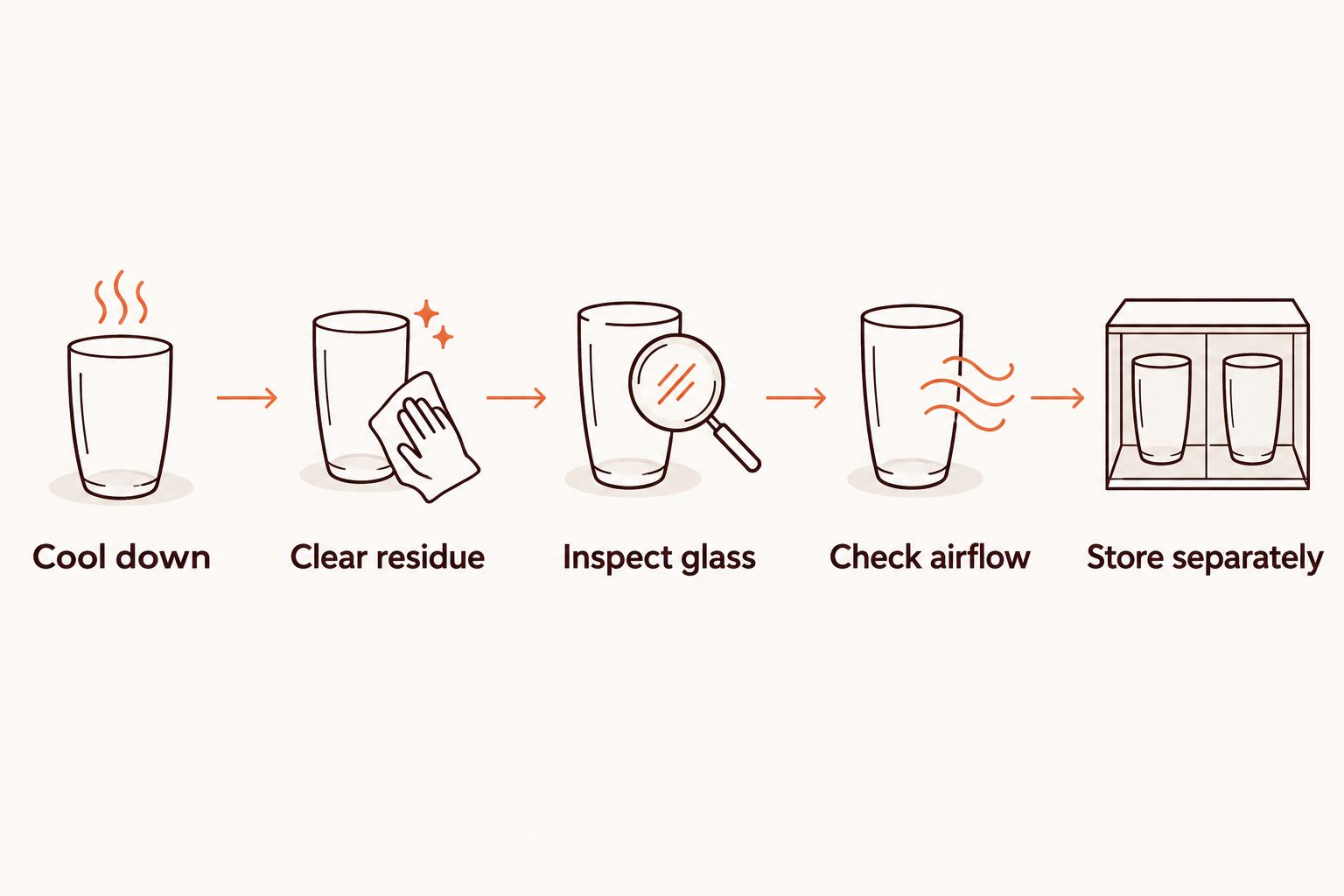
The inspection is not a certification that a dropped pipe is undamaged. If a mark remains uncertain, set the piece aside rather than trying to prove it is harmless through continued use. Manufacturer guidance is more useful than guessing from a photograph alone.
Does daily cleaning make a spoon pipe last longer?
Cleaning removes buildup, but it does not give a spoon pipe a guaranteed longer service life. The method matters: gentle, compatible cleaning avoids the scraping and force that can damage glass. An aggressive daily routine is not better simply because it is frequent.
Use the condition of the bowl and airway to guide maintenance, together with the maker's directions. If your draw changes or deposits become difficult to remove, address the buildup instead of waiting for a calendar reminder. Let the pipe cool first.
For cleaning in 2026, keep solvent use separate from heat and ignition sources. Follow the cleaner's label, rinse as directed, and let the pipe dry fully before reuse. Never heat cleaning alcohol or use a flame to burn deposits out of the pipe.
Does a thicker spoon pipe always last longer?
A thicker spoon pipe is not guaranteed to last longer. Glass thickness does not remove the risks of impact, existing defects, or abrupt temperature changes. The whole construction and the way you handle it still matter.
Headshop is an online smoke shop for adults shopping for pipes and smoking accessories. When choosing a daily-use pipe, prioritize a secure grip, visible inspection points, and a cleaning method you can follow. The limitation of any glass pipe remains the same: protective handling reduces exposure to damage but does not eliminate breakage.
FAQ
How long does a spoon pipe last if I use it every day?
A glass spoon pipe has no fixed expiration date with daily use. Keep it only while it remains intact, cleanable, and free of chipped or sharp edges; replace damaged glass rather than relying on its age.
Do I need to replace my spoon pipe every year?
You do not need to replace an intact glass spoon pipe solely because a year has passed. Inspect its condition and follow the maker's care instructions instead of using an arbitrary replacement schedule.
Is a black spoon pipe worn out?
A blackened spoon pipe is not necessarily worn out because surface deposits can darken the glass. Clean it appropriately, then inspect for cracks, chips, or other damage that remains.
Can I keep using a spoon pipe with a small crack?
Stop using a glass spoon pipe with a visible crack. Do not treat continued airflow or the crack's small appearance as evidence that further use is suitable.
Can I rinse a hot spoon pipe with cold water?
Do not rinse a hot glass spoon pipe with cold water. Let it cool first because sudden temperature changes create thermal stress in glass.
Can I glue a chipped spoon pipe back together?
Do not use household glue to return a chipped spoon pipe to smoking use. A home repair does not establish that the damaged piece or adhesive is suitable for heat and contact with the air path.
What's the best way to store a spoon pipe for daily use?
Store a cool, clean, dry spoon pipe separately from hard objects and somewhere it cannot roll off. Protective padding reduces direct contact during storage and transport, but it does not make glass unbreakable.
One last thing
Change the place you clean the pipe before replacing the pipe itself. A bare sink gives a slippery piece of glass a hard surface to strike. Put down a folded towel or suitable protective liner, keep the pipe away from the faucet, and handle it without rushing.
That recommendation is useful whether you keep your current pipe or choose another from Headshop. The goal is not to make glass last for an invented number of years. It is to stop preventable handling damage from deciding when an otherwise serviceable pipe gets retired.
Related guides