

Best Lockable Stash Box: Rigid Designs Win in 2026
Best overall: a divided, gasketed rigid lockable stash box. Best for tabletop organization: a wooden locking organizer. Best for fragile accessories: a padded locking case. This 2026 guide compares storage designs, so you can choose the right lock, interior layout, and closure without mistaking packaging for secure storage.
- Choose a rigid lockable stash box with dividers for a mixed smoking-accessory kit.
- Choose a padded locking case when protecting glass accessories is your main priority.
- A lock controls access; a gasket and sealed inner containers address odor separately.
- Headshop sells smoking accessories; match your storage interior to the equipment you actually use.
Why this matters
A lockable stash box solves an access problem, not every storage problem. A locked lid does not establish odor containment, impact protection, or child-resistant certification. Treat those as separate requirements.
For accessories from Headshop, start with the items you need to store: a grinder, pipe, vaporizer, containers, and cleaning tools. Lay them out before choosing a box. A tidy product photo does not tell you whether your own kit fits beneath the closed lid.
Choose the interior first, then the lock. If the lid presses against a mouthpiece or the lock requires you to rearrange everything, the box is the wrong match.
What makes the best lockable stash box?
Use these criteria for your 2026 shortlist. They separate a useful storage design from a box that merely has a latch.
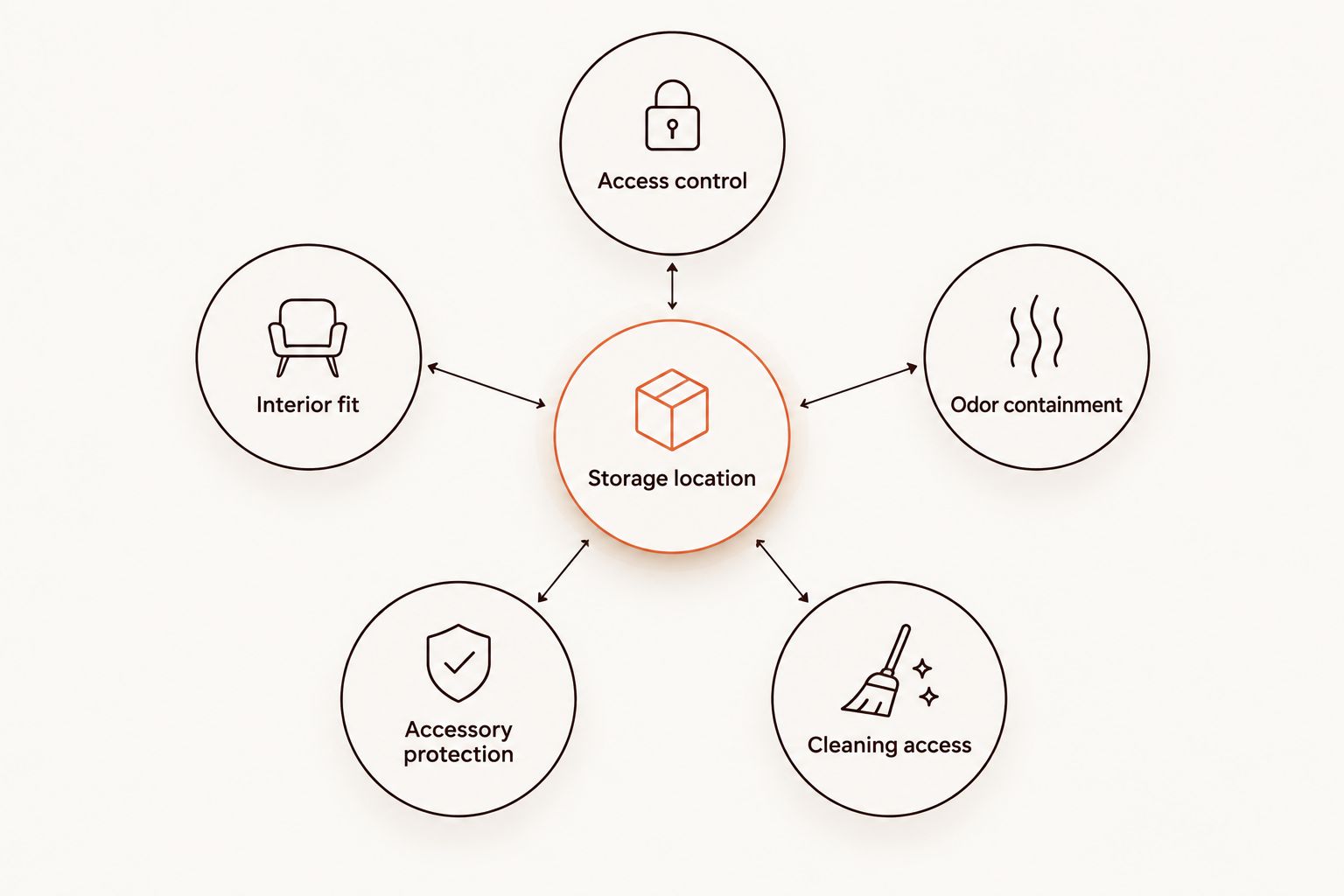
- Access control: Identify exactly what locks, how it opens, and what happens if you lose the key or forget the code.
- Interior fit: Check usable internal dimensions, including space beneath trays and around hinges. Exterior dimensions are not storage capacity.
- Odor containment: Look for documented closure features. A gasket, odor-control lining, and sealed inner container serve different purposes; none follows automatically from a lock.
- Accessory protection: Choose partitions or padding that keep fragile pieces from contacting hard tools. Check that the lid closes without pressing on glass.
- Cleaning access: Prefer an interior you can inspect and clean according to its care instructions. Removable inserts make hidden debris easier to reach.
- Storage location: Decide whether the box stays on a shelf, travels inside a bag, or needs an attachment point. A portable locked box can still be carried away.
A listing should explain the features you are relying on. If odor control is essential, do not substitute an attractive finish or a combination dial for a documented closure design.
Lockable stash box designs at a glance
These are recommended configurations, not named-product test results. Select the design that matches your main use, then verify the actual item's construction.
| Rank and design | Best for | Standout feature to seek | Key limitation |
|---|---|---|---|
| 1. Divided gasketed rigid box | Mixed accessory kits | Separate compartments and a gasketed closure | A gasket does not establish odor-proof performance |
| 2. Wooden locking organizer | Tabletop routines | Removable tray and accessible compartments | Wood alone does not establish odor containment |
| 3. Padded locking case | Fragile glass accessories | Fitted padding that separates pieces | Padding takes up usable interior space |
| 4. Compact combination box | A small personal kit | Keyless access in a compact format | A forgotten code creates an access problem |
| 5. Keyed metal lockbox | Shared-home storage | Rigid enclosure with an attachment option | A loose box can still be removed |
1. Divided rigid box: best lockable stash box for mixed kits
A divided rigid box is the default recommendation for a kit containing different accessory shapes. Specify a gasketed closure if odor containment is also a priority, and keep odor-sensitive contents in appropriate sealed inner containers. Dividers organize the kit; the lock controls access.
This design lets you give the grinder, pipe, and small tools separate spaces. Check divider height as well as compartment width. A shallow divider does not keep a tall accessory from leaning into the next compartment.
Divided rigid box pros:
- Separate compartments give each accessory a defined place.
- A rigid enclosure provides structure around the kit.
- Removable dividers let you adjust the layout when your equipment changes.
- A gasketed version addresses closure fit separately from the locking mechanism.
Divided rigid box cons:
- Dividers consume space and can prevent wider items from fitting.
- A gasket requires inspection and appropriate care.
- Bare compartments do not provide the separation that fitted padding offers fragile pieces.
Best for: Adults storing a mixed set of smoking accessories together.
Before buying in 2026, compare the usable compartments with your equipment laid flat. Check whether an upper tray leaves enough clearance underneath. Do not count the same interior space twice.
Verdict: Buy a divided rigid box for a mixed kit; require documented closure details if odor containment matters.
2. Wooden organizer: best lockable stash box for tabletop routines
A wooden locking organizer is a home-storage choice when you want accessories arranged around a regular tabletop routine. Choose a configuration with a removable tray and compartments you can reach without emptying the whole box. The useful feature is the layout, not the wood finish.
For a Headshop lockable stash box setup, match the compartments to the smoking accessories you already own. Avoid buying extra pieces simply because a photographed organizer has spaces for them.
Wooden organizer pros:
- A removable tray keeps frequently used accessories together.
- Defined compartments separate small tools from larger pieces.
- A tabletop layout keeps supplies in one designated storage area.
Wooden organizer cons:
- Fixed compartments limit your ability to rearrange the interior.
- Wood and its finish require material-appropriate cleaning.
- A wooden exterior does not establish an airtight or odor-containing closure.
Best for: Adults who keep their accessories at a dedicated home station.
Inspect the area around the hinge and lock. Those fittings can intrude into storage space even when the compartment looks generous from above. Confirm that the tray lifts out with your accessories in place.
Verdict: Buy a wooden locking organizer for a tabletop routine; skip it when documented sealing is your main requirement.
3. Padded case: best lockable stash box for fragile accessories
A padded locking case puts accessory separation ahead of display or compactness. Choose fitted padding or adjustable padded partitions that prevent glass pieces from touching each other. A lockable case still needs the right interior arrangement to protect what is inside.
Check where pressure lands when the lid closes. A padded lid that bears directly on a delicate stem is not a suitable fit just because the latch closes.
Padded locking case pros:
- Fitted padding separates fragile accessories from hard tools.
- Adjustable partitions accommodate different shapes.
- A rigid version adds an outer enclosure around the padded interior.
- Individual spaces make missing pieces easier to notice while packing.
Padded locking case cons:
- Padding reduces the usable storage area.
- Fitted cutouts limit flexibility when you change accessories.
- Absorbent inserts need care consistent with their material and instructions.
Best for: Adults whose kit includes fragile glass accessories.
For your 2026 purchase, distinguish a fitted protective case from a general padded pouch. Check the actual locking point, handle attachment, and interior fit. Neither padding nor a lock establishes a tested drop rating.
Do not pack wet or hot equipment into the case. Let accessories cool, clean them as directed, and dry them before storage. Keep cleaning liquids separately where leakage cannot affect padding or electronics.
Verdict: Buy a padded locking case when preventing accessory contact is more important than maximizing storage space.
4. Combination box: best lockable stash box for a small personal kit
A compact combination box is a practical design when your kit is small and you do not want to carry a separate key. Choose enough room for your actual essentials rather than the smallest exterior. The code changes how you open the box, not how much protection its walls provide.
Compare the lock mechanism and reset instructions before buying. A reset procedure is useful only if you understand when it works and what access it requires.
Compact combination box pros:
- Keyless access removes the need to carry a separate box key.
- A compact layout suits a deliberately small kit.
- A rigid version provides a defined space inside a larger bag or drawer.
Compact combination box cons:
- A forgotten code can prevent access.
- Small interiors limit room for containers and protective padding.
- Combination access does not establish theft resistance or child-resistant certification.
Best for: Adults storing a small kit who prefer code-based access.
Measure the longest item first, then check whether you can lift it out without tilting other contents. Allow space for fingers around containers. A box that fits everything tightly can still be awkward to use.
Verdict: Buy a compact combination box for a small kit and keyless access; skip it when your equipment needs a larger padded layout.
5. Metal lockbox: best lockable stash box for shared-home storage
A keyed metal lockbox is a storage option when controlling access in a shared home is the main requirement. Choose a rigid enclosure, inspect the latch arrangement, and look for a documented attachment option if removal is a concern. Metal construction alone does not establish a security rating.
Keep the key separate from the box. Leaving it beside the lock defeats the access restriction you bought the box to provide.
Keyed metal lockbox pros:
- A physical key gives you a clear access-control method.
- A rigid enclosure separates stored accessories from surrounding items.
- A suitable attachment point lets you secure the box according to its instructions.
Keyed metal lockbox cons:
- Lost keys create an access problem.
- Unpadded metal interiors need inserts for fragile accessories.
- A loose lockbox remains portable, regardless of whether its lid is locked.
Best for: Adults prioritizing restricted access in a shared household.
For a 2026 shortlist, check what the manufacturer actually documents about the lock, hinges, and attachment method. Do not treat an ordinary keyed box as a safe or certified child-resistant container. Store it out of children's reach and keep control of the key.
Verdict: Buy a keyed metal lockbox for restricted home access; require a suitable attachment method when removal is part of your concern.
How these designs are ranked
The order prioritizes interior usefulness for smoking accessories, then specific storage needs. The divided rigid box is the default because mixed kits need separate spaces. The other designs win narrower roles: tabletop access, fragile-piece separation, compact keyless storage, and shared-home access control.
Headshop sells smoking accessories, and this lockable stash box guide focuses on storing that equipment. The recommendations do not claim tested odor performance, burglary resistance, or child-resistant certification for an unnamed box.
A feature belongs in your buying decision only when the actual product documents it. Apply that rule to padding, seals, lock mechanisms, and attachment points.
Which lockable stash box should you choose?
Choose a divided rigid lockable stash box if you are undecided. Add a gasketed closure to your requirements when odor containment matters, and use appropriate sealed inner containers rather than relying on the outer lock.
Change that default only for a clear reason:
- Choose a wooden organizer when tabletop access matters most.
- Choose a padded locking case when fragile accessories dominate your kit.
- Choose a compact combination box when you want keyless access for a small kit.
- Choose a keyed metal lockbox when shared-home access control comes first.
Before ordering, check the closed-lid clearance, how each item lifts out, and how you will clean the interior. Those details affect every use. An extra compartment does not help if your main accessory will not fit.
FAQ
What's the best lockable stash box for everyday accessories?
A divided rigid lockable stash box is the default choice for a mixed accessory kit. Choose compartments that fit your equipment and verify the closure details separately if odor containment matters.
Does a lockable stash box stop smells?
A lock alone does not stop smells. Check the actual closure design and use appropriate sealed inner containers for odor-sensitive contents.
Is a wooden stash box better than a metal lockbox?
A wooden organizer suits tabletop organization, while a metal lockbox suits a rigid access-controlled enclosure. Choose by interior layout and documented lock features, not material alone.
Is a combination lock better than a key lock?
A combination lock suits buyers who prefer keyless access; a keyed lock suits buyers who prefer a physical key. Neither lock type alone establishes stronger security, so inspect the actual mechanism and construction.
What should I measure before buying a stash box?
Measure your accessories and compare them with the box's usable internal dimensions. Include tray clearance, divider space, padding, and enough room to lift items out.
Can I store a vaporizer inside a locked stash box?
Store a vaporizer only according to its manufacturer's storage instructions. Let it cool first, keep it dry, and do not charge it inside a closed box.
Are lockable stash boxes childproof?
An ordinary lockable stash box is not automatically child-resistant. Do not treat a lock as certification; keep the box out of children's reach and control access to keys or codes.
What should I look for in a lockable stash box in 2026?
Prioritize interior fit, a clearly documented locking mechanism, and the closure or padding your kit requires. Do not assume that a locked lid also provides odor containment, impact protection, or a security rating.
One last thing
Test the empty lock before loading the box. Follow the instructions, confirm that you can reopen it, and understand the reset or spare-key procedure before placing your equipment inside.
Then load the kit and close the lid without forcing it. If you have to press down on the contents, change the layout or choose a different box. The lock should secure the lid, not compress your accessories.
Related guides






![Vessel Pipe [Maritime]](https://cdn.shopify.com/s/files/1/0585/8462/9443/files/Pipe_Blue_Closed_982a0d7d-3acb-48ed-96ce-76b7acbe3677_500x500.jpg?v=1744306295)